

From L-R: Attorney General and Commissioner for Justice,Ondo State, Dr. Olukayode Ajulo (SAN); DG National Institute of Police Studies, Prof. Olu Ogunsakin; Senior Special Assistant to the President on Administration and Operations, Mrs Oyinade Nathan-Marsh; President Nigeria Bar Association, Mazi Afam Osigwe (SAN); Chairman NGF Committee on State Police/Governor of Ogun State, Prince Dapo Abiodun; Chief of Staff to the President, Rt. Hon. Femi Gbajabiamila; Special Assistant to the President on Legal Matters, Tomi Belgore; Attorney General of the Federation and Minister for Justice, Chief Lateef Olasunkanmi Fagbemi (SAN); Senior Special Assistant to the President on Planning and Research, Mr. Dubem Moghalu; Attorney General Lagos State and Commissioner for Justice, Mr. Lawal Pedro (SAN); Representative of Inspector General of Police, DIG Isyaku Mohammed; Director General NGF Secretariat, Dr. Adulateef Shittu; Director General Nigeria Law Reform Commission, Prof. Dakas Dakas, in a group photograph after the Inauguration of Presidential Working Group on State Policing, at the State House Abuja. Tuesday, 7th July 2026
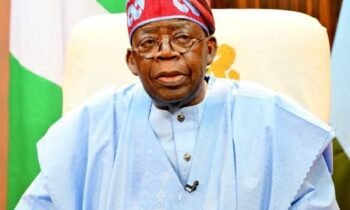
President Bola Ahmed Tinubu has inaugurated a Presidential Working Group to draft the National Policing Bill, a key step toward implementing state police across Nigeria following the National Assembly’s passage of the Constitution Alteration (State Police) Bill, 2026.
Represented by his Chief of Staff, Femi Gbajabiamila, the President inaugurated the committee at the Presidential Villa in Abuja, describing the proposed legislation as the legal foundation required to operationalise Nigeria’s planned dual policing system.
The constitutional amendment establishes the framework for two tiers of policing—a Federal Police Service and 36 State Police Services—but the National Policing Bill will provide the legal mechanisms needed for implementation.
“The Constitution Amendment Bill establishes the framework for dual policing, but it does not operationalise it. That work is left to the National Policing Bill,” Tinubu said in a statement delivered on his behalf.
According to the President, the legislation will establish minimum policing standards, define state readiness certification requirements, strengthen federal-state coordination, introduce accountability mechanisms, provide human rights safeguards and set fiscal conditions for the operation of state police.
He said the Working Group has been mandated to produce a technically robust and implementation-ready draft bill for transmission to the National Assembly immediately after the constitutional amendment process is completed.
“We must not wait until the constitutional process is concluded before beginning this important assignment,” the President said, stressing the need to avoid implementation delays.
Gbajabiamila will chair the Working Group, whose membership includes the Attorney-General of the Federation, the President of the Nigerian Bar Association (NBA), the Chairman of the Nigeria Governors’ Forum (NGF), the National Security Adviser, the Inspector-General of Police, and the Chairman of the NGF Committee on State Police. A dedicated secretariat will provide administrative support.
Speaking on behalf of the Nigeria Governors’ Forum, Dapo Abiodun pledged the governors’ commitment to ensuring the swift implementation of the reform.
He said governors would work with their respective State Houses of Assembly to accelerate ratification of the constitutional amendment once transmitted for approval.
Abiodun described the proposed state police structure as a response to Nigerians’ long-standing demand for community-based policing, arguing that it would decentralise law enforcement and improve security delivery across the country.
He cited the performance of regional security initiatives such as Amotekun in South-West Nigeria as evidence that decentralised policing could strengthen internal security.
The Ogun State governor also said state police would substantially expand Nigeria’s security workforce.
“If each state deploys about 6,000 personnel, we will add nearly 200,000 officers to complement the existing federal police,” he said.
He commended the Tinubu administration for beginning implementation planning before the constitutional amendment process is completed, describing the move as evidence of proactive governance.
Attorney-General of the Federation and Minister of Justice Lateef Fagbemi described the initiative as timely, given Nigeria’s growing security challenges.
“There is no denying the fact that we are in a critical moment security-wise, and all hands must be on deck,” he said.
Fagbemi also urged state governors to ensure the speedy ratification of the constitutional amendment by their respective legislatures, describing the reform as a shared national responsibility.
President of the Nigerian Bar Association, Afam Osigwe, reaffirmed the association’s support for state police, arguing that Nigeria’s security needs can no longer be effectively addressed through a single national police force.
However, he cautioned that the enabling legislation must contain strong legal safeguards to prevent political abuse, protect citizens’ rights and ensure accountability.
“We must ensure we do not create a monster. The right legal framework must guarantee accountability and prevent oppression,” Osigwe said, pledging the NBA’s support in drafting legislation that balances enhanced security with constitutional protections.
The inauguration was attended by Attorneys-General and Commissioners for Justice from Plateau, Lagos and Ondo States, representatives of the Inspector-General of Police and the National Security Adviser, alongside other senior government officials.
The establishment of the Working Group marks the federal government’s latest effort to accelerate one of Nigeria’s most significant constitutional and security reforms, aimed at decentralising policing and strengthening internal security through a coordinated federal-state policing framework.
Top of Form