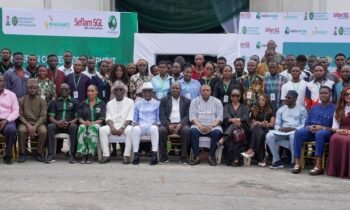


The Nigerian Content Development and Monitoring Board (NCDMB) has called for improved access to oil and gas assets, financing, technology and international markets to help indigenous companies expand operations and compete more effectively in the global energy industry.
The Board said the next phase of Nigeria’s local content development must focus on building financially stronger, technologically capable and commercially competitive Nigerian companies that can acquire and operate assets, execute complex projects and expand beyond the domestic market.
The call was made by the NCDMB’s General Manager of Corporate Communications, Dr. Obinna Ezeobi, who represented the Board at the 2026 Energy Conference of the Association of Energy Correspondents of Nigeria (NAEC), held on October 8 at Eko Hotel and Suites, Lagos.
The conference, themed “Access to Assets: Empowering Players and Driving Growth,” examined how indigenous businesses could overcome barriers to ownership, investment and participation across Nigeria’s energy value chain.
Ezeobi said the theme aligned with the objectives of the Nigerian Oil and Gas Industry Content Development (NOGICD) Act, which provides a framework for increasing Nigerian participation in the petroleum industry.
He also highlighted the Nigerian Content 10-Year Strategic Roadmap, launched in 2017, which targets 70 per cent local content participation by 2027.
According to him, the roadmap is built around five strategic pillars and four enabling factors, with emphasis on improving access to critical assets, strengthening indigenous operating and service companies, and developing the capabilities required for sustainable growth.
NCDMB’s $400m fund supports indigenous companies
Ezeobi identified the Nigerian Content Intervention Fund (NCI Fund) as a major instrument for helping indigenous companies overcome financing constraints and build capacity across the oil and gas value chain.
He said more than 130 Nigerian companies had accessed over $400 million through the fund, which is domiciled with the Bank of Industry and the Nigerian Export-Import Bank.
The funding is intended to support eligible Nigerian businesses seeking to expand their operations and participate in industry opportunities that require significant capital investment.
Access to finance remains a critical issue for indigenous oil and gas companies, particularly those seeking to acquire equipment, develop technical infrastructure, undertake complex engineering projects or move into asset ownership.
The capital-intensive nature of the petroleum industry can make it difficult for smaller domestic firms to compete with multinational operators and established international service providers.
Ezeobi also cited Project 100, an NCDMB initiative designed to support high-potential indigenous companies through capacity development, financial linkages, market access and tailored business support.
Other programmes include the Nigerian Content Equipment Certification initiative, the Nigerian Oil and Gas Parks Scheme (NOGaPS) and vendor development programmes intended to strengthen local industrial capacity and improve the competitiveness of Nigerian suppliers.
Local content rises from 5% to 61%
The NCDMB representative said Nigerian content in the oil and gas industry had increased from approximately 5 per cent in 2010 to 61 per cent after 16 years of implementing the Nigerian Content Act.
He said the next stage should focus on equipping domestic companies with the skills, technology, financing and business systems required to compete in international markets.
The Board is also promoting partnerships between Nigerian and foreign companies, alongside regional cooperation designed to help indigenous businesses access opportunities outside Nigeria.
The reported increase in local content reflects the expansion of Nigerian participation in the petroleum industry. However, further progress will depend on the ability of domestic companies to undertake higher-value activities, develop technical expertise and compete for larger projects.
For Nigeria, the distinction between local participation and indigenous ownership is important. A higher local content share does not automatically translate into greater Nigerian ownership of producing assets, advanced manufacturing capacity or control of sophisticated technology.
Achieving the 70 per cent target by 2027 will therefore require sustained investment in domestic capabilities, improved access to capital and stronger commercial partnerships.
NAEC identifies barriers to asset ownership
In his welcome address, NAEC Chairman Ugo Amadi called for expanded opportunities for indigenous companies to acquire and develop oil and gas assets.
He identified high entry costs, funding constraints and lengthy approval processes as major obstacles preventing local firms from taking advantage of available opportunities.
Greater access to producing assets could enable qualified Nigerian companies to build operational experience, increase production capacity and retain more value within the domestic economy.
However, acquiring an asset is only the first step. Operators also need financing for development, access to infrastructure, technical expertise and the ability to manage operational, environmental and commercial risks.
Reducing barriers to investment while maintaining appropriate regulatory and technical standards will be essential to ensuring that asset transfers and acquisitions translate into sustainable production and value creation.
PETAN calls for consolidation among local service firms
The Chairman of the Petroleum Technology Association of Nigeria (PETAN), Engr. Wole Ogunsanya, advocated stronger collaboration and consolidation among indigenous oilfield service companies.
He said companies could pool their technical capabilities and resources to undertake larger and more complex projects that might be difficult to execute individually.
Collaboration could also improve access to specialised equipment, skilled personnel, technology and financing while allowing companies to share risks and strengthen their competitive positions.
For Nigerian service providers seeking international contracts, scale, technical depth and a proven record of project delivery are important considerations.
Stronger partnerships could therefore help indigenous firms move into higher-value segments of the oil and gas supply chain and compete more effectively across Africa and other markets.
Sahara Power executive says access goes beyond assets
Conference Chairman and Group Managing Director of Sahara Power Enterprise Group, Kola Adesina, represented by the company’s Head of Corporate Communications, Bethel Obioma, said access should not be restricted to physical assets.
He argued that capital, technology, markets, partnerships, professional networks and business opportunities were equally important to industrial growth.
“Access is actually much greater and more important than assets,” Adesina said, emphasising the role of ideas, mentors, financing and partnerships in helping businesses develop.
His remarks highlighted the broader challenges facing indigenous energy companies. Even where asset opportunities exist, businesses may struggle to participate without adequate capital, technical capabilities and commercial relationships.
A more comprehensive approach to local content development would therefore need to address the wider business environment in which Nigerian companies operate.
Decade of Gas targets wider economic value
The Minister of State for Petroleum Resources (Gas), Ekperikpe Ekpo, represented by his Senior Technical Adviser, Engr. Abel Nsa, said Nigeria must move beyond ownership of its substantial natural gas resources to their development, financing and conversion into economic value.
He said the Federal Government’s Decade of Gas initiative was designed to promote the use of natural gas in industrialisation, power generation, transportation, manufacturing, fertiliser production and liquefied petroleum gas adoption.
Expanding gas utilisation could create opportunities for indigenous companies in engineering, construction, fabrication, maintenance, logistics and related technical services.
However, realising the economic potential of Nigeria’s gas resources will require investment in production, processing and transportation infrastructure, as well as reliable financing and commercially sustainable demand.
For local businesses, access to these opportunities will depend on their ability to meet technical requirements, deliver projects competitively and secure the capital needed to expand.
Indigenous firms face a new competitiveness test
The discussions at the NAEC conference underscored the need to move Nigeria’s local content agenda beyond participation targets towards stronger domestic ownership, technology development and international competitiveness.
The NCDMB’s intervention fund, Project 100, equipment certification, industrial parks and vendor development programmes provide mechanisms for strengthening local capabilities. Their long-term impact, however, will depend on how effectively they translate into sustainable businesses, skilled employment and higher-value domestic production.
With the 2027 local content target approaching, the central challenge is to ensure that Nigerian companies can secure financing, access critical assets, adopt advanced technologies and compete for major projects on commercial terms.
For Nigeria’s energy industry, broader access to assets and opportunities could deepen indigenous participation. The ultimate measure of success will be whether domestic companies become stronger operators, more capable technology providers and competition.