

SINGAPORE — The Central Bank of Nigeria (CBN) has stepped up efforts to strengthen Nigeria’s financial ties with Asia, engaging Singapore’s central bank and signing a cooperation agreement with the Global Finance & Technology Network (GFTN) to advance financial innovation, market development and cross-border investment.
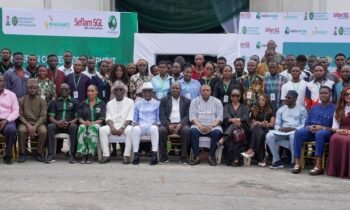
The engagements, led by CBN Governor Olayemi Cardoso, also included the Nigeria–Asia Financial Connectivity Dialogue, convened by the Nigerian apex bank in collaboration with J.P. Morgan, Nigerian Exchange Group (NGX Group) and FMDQ Group.
The initiative is aimed at translating Nigeria’s ongoing financial-sector reforms into stronger international partnerships, improved access to investment and more effective connections between Nigerian and Asian financial markets.
The Singapore engagements took place as Cardoso travelled to Bangkok for the International Monetary Fund (IMF) and World Bank Annual Meetings.
In discussions with the Monetary Authority of Singapore (MAS), the CBN delegation exchanged views on financial-sector development, regulatory frameworks, market connectivity and emerging financial technologies.
The discussions explored potential areas of cooperation between the two institutions, with an emphasis on leveraging their respective experiences to support financial-market development and innovation.
CBN, GFTN sign financial innovation MoU
In a further move to deepen bilateral financial cooperation, the CBN and GFTN signed a memorandum of understanding (MoU) establishing a framework for collaboration on financial innovation.
The agreement is expected to provide a platform for connecting relevant institutions and innovation ecosystems in Nigeria and Singapore, identifying shared priorities and developing practical opportunities for cooperation.
The partnership reflects the growing importance of financial technology, digital infrastructure and cross-border collaboration in modernising financial services and strengthening the competitiveness of emerging markets.
For Nigeria, closer engagement with Singapore could create opportunities to learn from an established international financial centre while developing solutions suited to the country’s banking system, capital markets and wider digital economy.
However, the practical benefits of the agreement will depend on the specific initiatives developed, the institutions involved and the extent to which the partnership translates into measurable improvements in financial services and market access.
Cardoso seeks stronger investor confidence
Speaking at the Nigeria–Asia Financial Connectivity Dialogue, hosted at J.P. Morgan’s Singapore offices, Cardoso said Nigeria was seeking to build deeper, more liquid and internationally connected financial markets.
The session was anchored by Dapo Olagunji, Managing Director of J.P. Morgan West Africa, and brought together investors, financial institutions, businesses and Nigerians living and working across Asia.
Cardoso said reforms undertaken in recent years were intended to establish the foundations for a more transparent, predictable and accessible financial system.
He highlighted the foreign-exchange market reforms as part of efforts to remove distortions, improve transparency and restore confidence in the rules governing market participation.
“The real test of reform is not whether you can attract capital once; it is whether you create the confidence for capital to stay, return and grow,” the CBN governor said.
He stressed that credible monetary policy, stronger governance, improved market functioning and predictable regulations were essential to attracting sustainable domestic and international investment.
According to Cardoso, economic stabilisation should serve as a foundation for broader participation by long-term institutional investors, stronger market infrastructure and deeper integration with international financial markets.
His remarks underscore the CBN’s effort to position Nigeria as a more predictable destination for capital, particularly as investors assess currency-market conditions, monetary policy credibility and the wider business environment.
Financial connectivity seen as a route to investment
The dialogue examined Nigeria’s reform programme and the conditions required to deepen capital formation, strengthen foreign-exchange market confidence and attract sustained international participation.
Panellists included Temi Popoola, Group Managing Director and Chief Executive Officer of NGX Group; Zeal Akaraiwe, Group Managing Director and CEO of FMDQ Group; Aderinola Shonekan, Director of Trade and Exchange at the CBN; and Olumayokun Ajibade, Special Adviser to the Governor on Financial Markets and Economic Policy.
The discussion was moderated by Gbolahan Taiwo, J.P. Morgan’s Chief Economist for Africa.
Participants examined the role of financial-market infrastructure, regulatory confidence and stronger institutional relationships in supporting investment flows between Nigeria and Asian economies.
For Nigerian businesses, stronger financial connectivity could potentially improve access to international capital, facilitate trade finance and create additional channels for engagement with Asian investors and financial institutions.
Closer links between banks, exchanges and other market institutions could also support more efficient payments and settlement arrangements, although specific initiatives and implementation timelines were not detailed in the announcement.
Payments, fintech and artificial intelligence in focus
Cardoso said Nigeria’s engagement with Asia extended beyond attracting short-term investment to building lasting relationships among financial institutions, businesses, markets and people.
He identified opportunities to strengthen links between Nigerian and Asian banks, improve cross-border payment and settlement channels, and expand financial connections for Nigerians living and working across the region.
The governor also highlighted the potential of financial technology and artificial intelligence to improve service delivery, strengthen risk management, broaden financial inclusion and enhance regulatory capabilities.
These technologies are becoming increasingly important to financial institutions seeking to reduce transaction friction, improve operational efficiency and respond to evolving risks in digital finance.
For Nigeria, effective adoption would require appropriate regulatory safeguards, reliable digital infrastructure and sustained cooperation between financial institutions, technology providers and regulators.
Nigeria looks to deepen Asian engagement
The Singapore meetings form part of a broader programme of institutional and financial-market engagement across Asia, including planned meetings in Beijing.
The CBN’s outreach signals an effort to complement domestic reforms with stronger international partnerships and closer connections to global investment networks.
For investors, the key test will be whether these engagements produce tangible outcomes, including improved access to capital, stronger correspondent banking relationships, more efficient cross-border transactions and greater participation in Nigeria’s financial markets.
While the MoU and dialogue establish platforms for cooperation, their long-term value will depend on implementation, policy consistency and the ability of Nigerian institutions to convert international interest into sustainable investment and commercial activity.