

POWERCHINA I²-ESS Energy Storage Center has urged the Nigerian government to create a stable and predictable investment environment capable of attracting Chinese energy storage manufacturers and accelerating local production of renewable energy technologies.
The company said stronger collaboration between the government, international investors and Nigerian businesses could help develop domestic manufacturing capacity, create technical jobs and improve the reliability of electricity supply through solar power and battery storage solutions.
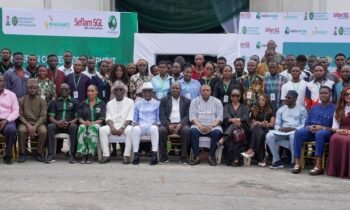
The call was made by Timmy Shi, Regional Director for Africa at POWERCHINA I²-ESS Energy Storage Center, during a panel discussion at the Association of Energy Correspondents of Nigeria (NAEC) Energy Conference and Awards, where the company received the award for Excellence in Sustainable Manufacturing & Energy Storage Company of the Year.
Shi said Nigeria’s growing demand for renewable electricity presented an opportunity to build a domestic energy storage industry, provided international companies could operate in an environment that supports long-term investment and local industrial development.
She stressed that attracting foreign manufacturers should go beyond importing finished products to encouraging investments in local factories, partnerships with Nigerian companies, technical training and after-sales support.
“We appreciate NAEC, its leadership, and the Award Screening Committee for this recognition of our contributions to clean energy transition, energy storage innovation, and the development of reliable renewable energy solutions in Nigeria,” Shi said while responding to the award.
She reaffirmed the company’s commitment to supporting Nigeria’s transition towards a more reliable and sustainable energy future.
Nigeria urged to prioritise local energy storage manufacturing
Shi said international energy companies should contribute to building Nigeria’s industrial and technical capabilities rather than relying exclusively on imported equipment and foreign expertise.
According to her, local manufacturing, technology partnerships and skills development would help establish a stronger foundation for the country’s emerging renewable energy market.
She noted that manufacturers entering Nigeria should also provide quality products, dependable after-sales services and technical education to ensure that energy storage installations remain reliable throughout their operational lives.
The development of local capacity, she added, could improve access to technical support, create employment opportunities and strengthen the participation of Nigerian businesses in the renewable energy value chain.
For Nigeria, the potential economic benefits extend beyond electricity generation. A stronger domestic energy storage industry could support engineering services, equipment assembly, distribution, installation, maintenance and other activities associated with clean energy deployment.
However, attracting manufacturing investment will require more than market demand. Investors must also consider policy consistency, access to finance, infrastructure, foreign-exchange conditions, logistics and the availability of skilled workers.
Battery storage key to expanding solar power
Shi said increasing reliance on solar energy was creating greater demand for battery storage systems capable of improving electricity reliability.
Solar panels generate electricity when sunlight is available, while battery storage can retain surplus power for use when generation falls or demand rises. Combining the two technologies can improve the availability of electricity for households, commercial establishments and industrial users.
Nigeria’s persistent electricity supply challenges have also created opportunities for decentralised energy systems that can serve customers independently of, or alongside, the national grid.
Shi argued that expanding the country’s electricity supply would require solutions beyond conventional grid infrastructure, including distributed renewable energy and storage technologies.
For businesses, these systems can potentially reduce exposure to unreliable grid supply and reliance on diesel or petrol generators, although their financial viability depends on installation costs, electricity demand, financing arrangements and operating conditions.
The wider deployment of solar and storage solutions could also support businesses in areas where extending or strengthening grid infrastructure is difficult or costly.
Skills development and after-sales service essential
Shi identified education and technical training as critical components of a sustainable energy storage market, particularly as more young people, installers and businesses enter the renewable energy sector.
She said training would help local participants understand energy storage technologies, improve installation standards and keep pace with developments in global markets.
The POWERCHINA executive also highlighted the challenges international manufacturers can face when entering unfamiliar markets, including differences in language, culture, commercial practices and customer requirements.
She said stronger communication with local stakeholders would enable foreign companies to understand Nigeria’s market conditions and tailor their products and services to local needs.
As competition increases in the renewable energy industry, she added, manufacturers must distinguish themselves through product quality, technical support, customer education and an understanding of the operating environments in which their systems will be deployed.
For Nigeria, developing these capabilities will be important to ensuring that the growth of renewable energy translates into durable technical expertise and stronger domestic participation.
Predictable policies needed to unlock Chinese investment
Shi called for closer cooperation between the Nigerian government and international energy companies, arguing that government support should extend beyond attracting foreign businesses to creating conditions that encourage domestic manufacturing.
She cited investments involving Nigerian solar panel companies as an example of how international participation could contribute to local industrial development.
She said stronger cooperation between Nigeria and Chinese manufacturers could facilitate the establishment of factories and other energy technology businesses, provided investors had confidence in the country’s long-term business environment.
A predictable policy framework would help investors assess project risks, plan capital expenditure and make longer-term commitments to manufacturing, technology transfer and workforce development.
For Nigeria, the opportunity is to convert growing demand for solar power and battery storage into investment that creates local value rather than relying predominantly on imported equipment.
Achieving that objective would require a coordinated approach involving government policy, private capital, domestic enterprises, technical institutions and international manufacturers.
NAEC honours energy storage innovation
POWERCHINA I²-ESS Energy Storage Center received the award at the NAEC Energy Conference and Awards, held on Thursday, alongside other individuals and organisations recognised for their contributions to Nigeria’s energy industry.
Dr Adeola Yusuf, Chairman of the Conference Planning Committee, said the awards were based on the committee’s assessment of nominees’ contributions, achievements, innovation and broader impact on the sector.
He said the initiative was designed to recognise organisations and individuals whose work was helping to advance Nigeria’s energy industry.
The recognition comes amid growing interest in renewable energy, energy storage and decentralised electricity solutions as Nigeria seeks to address power supply constraints and expand access to reliable electricity.
For POWERCHINA, the award provides an opportunity to reinforce its commitment to Nigeria’s clean energy transition. For the country, the larger challenge will be to translate rising demand for energy storage into domestic manufacturing, technical expertise, investment and more reliable power for homes and businesses.