

Shell’s Nigeria Reset: From Divestment to Renewed Investment

0

Shell’s posture towards Nigeria has shifted markedly over the past decade. Persistent security challenges, regulatory uncertainty, and fiscal disputes had pushed the company—and its peers—into a defensive mode, characterised by asset divestments and restrained capital deployment.


Shell’s Global Chief Executive Officer, Wael Sawan’s description of a “sea change” captures this reversal. Shell is no longer merely holding ground; it is actively deepening exposure. Recent investments—$5 billion in Bonga North, $2 billion in HI, and expanded gas commitments linked to NLNG—suggest a deliberate recalibration of Nigeria within Shell’s global portfolio.

The decision to acquire additional interests in OML 118 (Bonga Block), following TotalEnergies’ divestment, further reinforces that view. In an industry where majors routinely exit high-risk jurisdictions, buying into Nigeria at this scale signals renewed confidence in long-term stability.


Stability and the Premium on Certainty

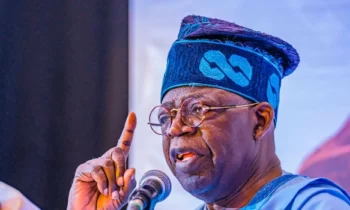
At the core of Shell’s calculus is what Sawan repeatedly emphasised: policy stability. For long-cycle offshore projects, investment horizons stretch across multiple decades, not political terms. In that context, the Tinubu administration’s reform agenda—particularly in fiscal policy, energy governance, and engagement with investors—appears to be reducing uncertainty that once carried a heavy risk premium.

“Stability now has a premium,” Sawan noted, a remark that reflects how global capital increasingly favours jurisdictions with predictable rules, even amid broader macroeconomic challenges.

For Nigeria, this matters. Deep-offshore projects like Bonga South West require vast upfront capital, complex financing structures, and sustained regulatory clarity. Without confidence in long-term policy direction, such projects simply do not advance to Final Investment Decision (FID).

Incentives, Discipline and the New Bargain

President Tinubu’s approval of targeted, investment-linked incentives underscores a shift in how Nigeria is positioning itself. Rather than blanket concessions, the administration is signalling a more disciplined, project-specific approach—one that ties incentives to new capital inflows, incremental production, local content, and in-country value addition.

This approach reflects lessons from past cycles, where generous fiscal terms did not always translate into commensurate economic benefits. By insisting that Bonga South West reach FID within the administration’s first term, Tinubu is also placing execution timelines at the centre of the new bargain between government and investors.

For Shell, these incentives appear to have provided what Sawan called a “line of sight” to investment—an essential condition for board-level approval in today’s capital-constrained energy landscape.

Beyond Shell: A Broader Market Signal

While Shell’s planned $20bn investment is significant on its own, its wider implication lies in the signal it sends to other international oil companies, financiers, and service providers. Major projects tend to cluster; once a flagship investment moves forward, it often unlocks ancillary capital across the value chain.

In that sense, Bonga South West could serve as a test case for Nigeria’s ability to convert policy reforms into bankable projects. Success would strengthen the argument that Nigeria is regaining competitiveness in the global contest for energy capital, even as the energy transition reshapes investment priorities.

A Calculated Bet

Shell’s endorsement of Tinubu’s leadership does not eliminate Nigeria’s structural challenges—ranging from infrastructure deficits to security risks—but it suggests that, for at least one major global player, the balance of risk and reward is shifting.

Ultimately, the proposed $20bn investment represents a calculated bet: that Nigeria’s reforms will outlast political cycles, that incentives will be implemented as promised, and that stability will be sustained long enough to justify decades-long capital commitments.

Whether this confidence proves contagious will depend on execution. For now, Shell’s message is clear: in a volatile global energy market, Nigeria is once again back in serious contention.


Leave a Reply

Your email address will not be published. Required fields are marked *