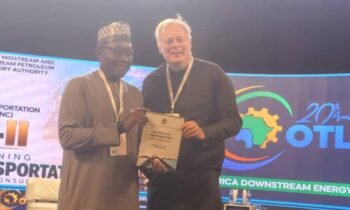


The Petroleum Products Retail Outlets Owners Association of Nigeria (PETROAN) has urged the Rivers State Government to develop a comprehensive Compressed Natural Gas (CNG) programme to cut transportation costs, attract investment and unlock greater economic value from the state’s abundant gas resources.
PETROAN National President, Dr Billy Gillis-Harry, made the call while speaking to journalists in Lagos during an inspection of CNG refuelling locations.
He urged Rivers State to study and adapt the emerging CNG model being implemented in Lagos, while developing a strategy tailored to its own oil and gas resources, industrial base, transportation network and economic needs.
According to Gillis-Harry, Rivers has a strategic advantage that could enable it to become one of Nigeria’s leading hubs for CNG and gas-based transportation.
“Rivers State has the resources, the industrial base and the strategic position to become a major CNG and gas-based transportation hub. We should not continue to produce gas without fully taking advantage of it to improve the lives of our people,” he said.
CNG could lower transport costs
PETROAN said wider adoption of CNG could reduce operating costs for commercial transport operators, particularly buses, taxis and other high-mileage vehicles.
The association also identified potential benefits including new investment, job creation, stronger local businesses and improved energy security.
It said CNG could provide a comparatively lower-emission alternative to petrol and diesel for transportation, while allowing Rivers State to capture more value from its natural gas resources within the local economy.
The proposal comes as Nigeria seeks to expand domestic gas utilisation and develop alternative transportation fuels amid persistent pressure on households and businesses from high energy and transport costs.
To accelerate adoption, PETROAN is proposing a Rivers State CNG Conversion and Transportation Programme.
The proposed initiative would include CNG vehicle conversion centres along major transportation corridors, financial incentives to reduce conversion costs and partnerships between the state government, private investors and gas companies to establish refuelling infrastructure.
PETROAN also wants CNG-powered buses incorporated into Rivers State’s public transportation system, alongside a gradual transition of government-owned vehicles operated by ministries, departments and agencies to CNG.
The association said the programme should be supported by a broad stakeholder framework involving the Rivers State Government, gas producers, petroleum marketers, transport operators, vehicle conversion companies, financial institutions and other relevant stakeholders.
Affordable financing critical to CNG adoption
PETROAN said access to affordable financing would be crucial, particularly for commercial transport operators that may struggle to meet the upfront cost of converting vehicles from petrol or diesel to CNG.
Lower-cost financing could allow more transport operators to convert their vehicles while spreading the investment over a longer period.
The association believes this could accelerate the development of a commercially sustainable CNG market in Rivers State by creating simultaneous demand for converted vehicles and refuelling infrastructure.
CNG creates new opportunities for petroleum marketers
PETROAN stressed that the expansion of CNG should complement Nigeria’s downstream petroleum industry rather than threaten the traditional retail fuel business.
The association said petroleum marketers could become major participants in the emerging gas economy by investing in CNG facilities and converting existing filling stations into multi-energy outlets.
Such stations could offer petrol, diesel, CNG and other approved energy products, allowing marketers to diversify their businesses as Nigeria’s transportation fuel mix evolves.
Gillis-Harry said petroleum marketers should be positioned to participate actively in the country’s transition towards a broader and more diversified energy market.
Rivers can adapt the Lagos model
PETROAN commended the Lagos State Government for demonstrating how a subnational government can support CNG adoption through infrastructure development, vehicle conversion and public transportation initiatives.
However, the association cautioned against simply replicating the Lagos model in Rivers State.
Instead, it said Rivers should develop its own approach based on its position as a major oil and gas-producing state, its industrial capacity, transportation requirements and access to gas resources.
PETROAN also said Rivers could collaborate with the Federal Government’s Presidential Initiative on Compressed Natural Gas and Electric Vehicles (Pi-CNG & EV) and other stakeholders to accelerate the development of CNG infrastructure.
From oil production to gas utilisation
For Rivers State, PETROAN said the opportunity extends beyond reducing fuel costs.
A well-developed CNG ecosystem could position the state as a major gas-utilisation hub, attract private capital, create new businesses and employment opportunities, and increase domestic consumption of locally produced gas.
The association therefore called on the Rivers State Government to develop a practical and sustainable CNG roadmap with clear targets for vehicle conversion, refuelling infrastructure, public transportation, financing and private-sector participation.
PETROAN said it was ready to work with the Rivers State Government, Federal Government, gas producers, petroleum marketers, transport operators, investors and other stakeholders to advance the initiative.
The association’s broader proposition is for Rivers State to move from being primarily known as an oil-producing jurisdiction to becoming a major centre for gas utilisation, CNG infrastructure and gas-based transportation—capturing more economic value from the resources produced within the state.