

The Delta State Government has reaffirmed its commitment to developing a highly skilled workforce capable of driving investment, indigenous participation and industrial growth across Nigeria’s oil and gas and emerging energy sectors.
The state government said sustained investment in human capital was essential to ensuring that Delta, one of Nigeria’s major oil-producing states, could translate its natural resource wealth into broader economic opportunities for its people.
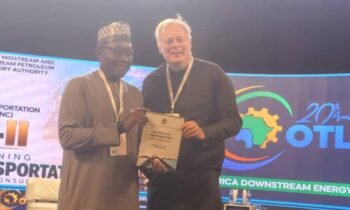
The state’s position was conveyed by the Commissioner for Oil and Gas, Hon. (Chief) Peter Uviejitobor, who represented Governor Rt. Hon. Sheriff Oborewori at the 2026 Human Capacity Development (HCD) Conference of the Oil & Gas Trainers Association of Nigeria (OGTAN).
In a goodwill message at the conference, Oborewori said his administration remained committed to building a prosperous, inclusive and economically resilient Delta State through its MORE Agenda, with skills development and economic empowerment forming a central part of the strategy.
The governor commended OGTAN for creating a platform for industry stakeholders to examine the future of human capital development in Nigeria’s oil and gas sector.
Delta steps up investment in skills development
Oborewori said the changing structure of the global energy industry had made investment in people more important than ever.
According to him, advances in digitalisation, automation, artificial intelligence, cleaner energy technologies and changing global energy markets are rapidly transforming the skills required by businesses and energy companies.
He said Delta State had consequently expanded investments in technical colleges, vocational education, innovation hubs, entrepreneurship programmes and other institutions focused on workforce development.
The objective, he said, was to equip young people with industry-relevant skills, improve employability, encourage innovation and create sustainable economic opportunities.
The governor stressed that the state’s skills-development strategy extended beyond conventional education.
“It is about building a workforce capable of driving industrial growth, attracting investments, supporting indigenous participation, and positioning Delta State as a leading hub for energy, manufacturing, and technology-driven enterprises.”
Oil-producing state seeks bigger economic returns from energy
As one of Nigeria’s leading oil-producing states, Delta recognises that the long-term sustainability of its petroleum industry depends on developing professionals who can compete in an increasingly sophisticated global energy market, the governor said.
He linked human capital development to the effective implementation of Nigeria’s Petroleum Industry Act (PIA), the achievement of Nigerian Content objectives and the long-term competitiveness of the energy sector.
The governor also stressed the importance of strengthening the capacity of Nigerian professionals to take on increasingly complex roles within the industry.
Rather than relying primarily on foreign expertise, he said Nigeria must develop the technical, commercial and digital capabilities required to increase indigenous participation and retain more value within the domestic economy.
OGTAN urged to prepare workers for energy transition
Oborewori described training organisations such as OGTAN as strategic partners in Nigeria’s workforce development agenda.
He said the association’s work in industrial skills development, internationally recognised certification, research and innovation could help strengthen the competitiveness of Nigeria’s oil and gas industry.
The governor urged oil and gas companies, regulators, educational institutions, development partners and training organisations to deepen collaboration to close existing skills gaps.
He called for closer alignment between training curricula and emerging industrial requirements, while encouraging greater access to apprenticeships, technology transfer and industry-based learning.
AI, robotics, renewables among emerging skills priorities
According to the governor, Nigeria’s workforce development strategy must anticipate the changing energy landscape rather than focus exclusively on traditional oil and gas skills.
He identified gas development, renewable energy, digital technologies, robotics, artificial intelligence and industrial automation among areas where Nigerian workers would increasingly need expertise.
This, he said, would help prepare the country’s workforce for new opportunities emerging from the transformation of the global energy industry.
The governor’s message comes as Nigeria seeks to attract investment into its gas industry while simultaneously developing new energy technologies and expanding indigenous capacity across the petroleum value chain.
For Delta State, the strategy is to ensure that the transition from natural-resource dependence to a more diversified, technology-driven economy is supported by a workforce capable of attracting and sustaining investment.
The state government said continued collaboration between government, industry and training institutions would therefore remain critical to transforming Delta’s oil and gas advantage into jobs, enterprise opportunities, technology transfer and long-term economic resilience.