




… Nigeria’s Bonga Southwest/Aparo deepwater project moves closer to Final Investment Decision as partners execute key agreements and target up to $21 billion in investment
Nigeria’s deepwater oil industry has moved a major step closer to a new investment cycle, with the Nigerian National Petroleum Company Limited (NNPCL) and its partners advancing the Bonga Southwest/Aparo (BSWAp) project towards Final Investment Decision (FID).
NNPCL, Shell Nigeria Exploration and Production Company Limited (SNEPCo), Esso Exploration and Production Nigeria (Deepwater) Limited and Nigerian Agip Exploration Limited (NAE) have executed addenda to the Oil Mining Lease (OML) 118 Production Sharing Contract (PSC) and the related Dispute Settlement Agreement (DSA).
The agreements give effect to fiscal and commercial terms approved by the Federal Government for the development of the BSWAp project, potentially unlocking between $15 billion and $21 billion in investment over the life of the project.
NNPCL announced the development in a statement signed by its Chief Corporate Communications Officer, Andy Odey.
The milestone comes as Nigeria seeks to attract fresh capital into its oil and gas sector after years of declining upstream investment and production challenges. The BSWAp development is therefore significant not only for the participating companies but also for the country’s efforts to expand crude output, strengthen foreign-exchange earnings and restore investor confidence in deepwater projects.
Bonga Southwest project targets 175,000 barrels per day
The BSWAp project is projected to reach peak production of approximately 175,000 barrels of oil per day, alongside about 140 million standard cubic feet of gas per day, according to NNPCL.
At that production level, the project could become one of Nigeria’s most important new deepwater developments and provide a significant addition to national crude oil output.
The project is also expected to generate substantial economic activity through spending on engineering, fabrication, offshore construction, marine logistics, operations and other services.
For Nigeria, the investment could translate into higher government revenues and foreign-exchange inflows, while creating opportunities for indigenous companies across the oilfield services value chain.
Tax reforms clear path for deepwater investment
The latest agreements follow President Bola Ahmed Tinubu’s approval of the Deep Offshore Oil and Gas Projects Incentives (Tax Remission) Order, 2026, which forms part of the government’s broader efforts to improve the competitiveness of Nigeria’s deepwater petroleum industry.
The policy measures are aimed at making large-scale offshore projects more commercially attractive at a time when international oil companies are increasingly demanding competitive fiscal terms before committing billions of dollars to complex developments.
NNPCL Group Chief Executive Officer, Bayo Ojulari, said the execution of the agreements demonstrated the government’s efforts to translate petroleum-sector reforms into actual investment.
“The execution of the BSWAp PSC and DSA Addenda demonstrates the effectiveness of President Tinubu’s reforms in translating policy into investment.”
Ojulari said the project would demonstrate that Nigeria has a competitive fiscal framework and a clear pathway for sustainable investment in the energy sector.
“NNPC Ltd will continue to work closely with the federal government, our partners and other stakeholders to ensure that this project delivers maximum value for the federation and the Nigerian people,” he said.
BSWAp completes Pre-FEED phase
The OML 118 contractor parties have also completed the project’s Pre-Front End Engineering Design (Pre-FEED) phase.
The partners said the work had helped mature the technical and commercial scope of the development and positioned the project to proceed to the Front End Engineering Design (FEED) stage.
However, the transition remains subject to the required partner, assurance and governance approvals.
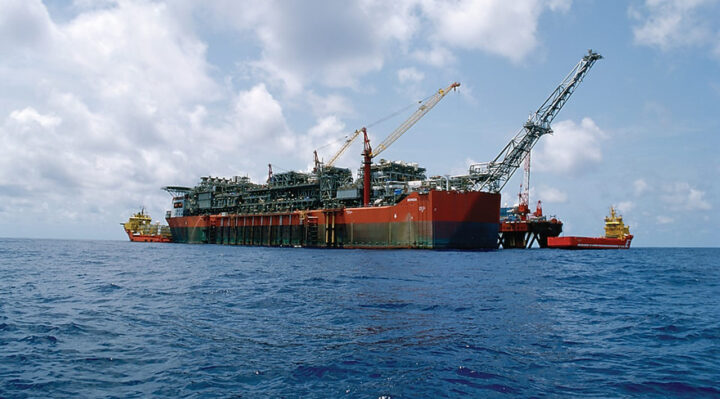
The partners have also selected a preferred Floating Production Storage and Offloading (FPSO) contractor following a competitive process.
The selection is still subject to applicable partner, regulatory, assurance and governance requirements. Once approved, the preferred contractor will provide a basis for advancing the FPSO concept into FEED and completing the engineering and commercial work needed to move the project towards FID.
Any eventual award of the FPSO Engineering, Procurement, Construction and Installation (EPCI) contract will similarly remain subject to the necessary approvals.
Potential boost for Nigeria’s local content industry
Beyond crude production, the BSWAp development could have a wider impact on Nigeria’s industrial base.
Billions of dollars in project expenditure could create opportunities for Nigerian contractors, fabricators, marine operators, engineering firms and other service providers, particularly if local-content requirements are effectively integrated into project execution.
The project is expected to support employment and skills development while increasing technology transfer and strengthening domestic capabilities in offshore engineering, fabrication, logistics and marine services.
For Nigeria’s local oil and gas industry, the scale of BSWAp offers the prospect of a new pipeline of contracts extending beyond the traditional upstream operators to indigenous suppliers and service companies.
A test of Nigeria’s investment reforms
The movement of BSWAp towards FID will also be closely watched by investors as a test of whether Nigeria’s recent petroleum-sector reforms can convert policy changes into large-scale capital commitments.
Deepwater projects typically require substantial upfront investment, long development timelines and sophisticated offshore infrastructure. Consequently, fiscal stability, regulatory certainty and timely project approvals are critical to securing investment.
The BSWAp agreements therefore represent more than a contractual milestone. They signal an attempt by Nigeria to rebuild confidence among international oil companies and accelerate the development of large offshore resources.
If the project reaches FID and subsequently enters full development, the resulting investment could provide a significant boost to Nigeria’s oil production, fiscal revenues, foreign-exchange liquidity and oilfield-services industry.
NNPCL said it would continue working with the Federal Government, regulators, partners and other stakeholders to advance BSWAp safely, competitively and responsibly while maximising value for Nigeria.