


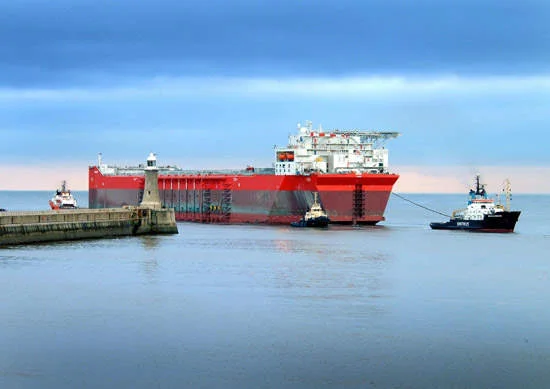


Nigeria has approved a special production-linked tax incentive for Shell Plc’s Bonga Southwest Aparo deepwater oil project, a move aimed at unlocking an estimated $20 billion in investment, accelerating delayed offshore developments, and strengthening the country’s crude oil production capacity.
According to a Bloomberg report, President Bola Tinubu approved revised fiscal terms that grant Shell and its partners a tax credit of $11.50 for every barrel of crude oil produced from the Bonga Southwest Aparo field—more than double the standard production-linked incentive currently available under Nigeria’s fiscal regime.
The incentive, according to people familiar with the matter cited by Bloomberg, is designed to help move the long-delayed project toward a Final Investment Decision (FID) after years of regulatory and commercial uncertainty.
Incentive to Extend Beyond Shell
The report said the enhanced tax credit will not be limited to Shell’s project. The Federal Government plans to extend the same incentive to other international oil companies developing new deepwater projects in Nigeria, with the programme expected to remain in place until at least 2029.
The policy is part of a broader strategy by the Tinubu administration to restore investor confidence, attract fresh upstream capital, and reverse years of declining investment caused by insecurity, crude oil theft, pipeline vandalism, ageing infrastructure, and policy uncertainty.
Bonga Southwest Aparo Seen as Strategic Investment
The Bonga Southwest Aparo field is regarded as one of Nigeria’s largest undeveloped deepwater oil assets.
According to the Nigerian National Petroleum Company Limited (NNPC Ltd.), the project is expected to produce approximately 150,000 barrels of crude oil per day when operational, making it one of the country’s most significant offshore developments and a major contributor to future production growth.
Industry estimates place total investment in the project at around $20 billion, making it one of the largest potential foreign direct investments in Nigeria’s energy sector.
Shell Confirms Project Progress
Responding to enquiries, a Shell spokesperson said the company remains committed to advancing the project.
“Shell continues to progress the Bonga Southwest Aparo project toward development and will communicate material updates through official channels,” the company said.
Officials from NNPC Ltd. and the Office of the President’s Special Adviser on Energy did not publicly comment on the reported fiscal approval.
Tinubu Administration Deepens Upstream Reforms
The enhanced tax incentive represents another milestone in the Federal Government’s ongoing efforts to improve the competitiveness of Nigeria’s petroleum industry.
Since assuming office in 2023, President Tinubu’s administration has introduced several executive orders aimed at attracting new investments, improving fiscal terms, and unlocking stalled oil and gas projects.
Earlier reforms capped production tax credits at 20% of a licence holder’s annual tax liability for operating cost recovery. The newly approved incentive for deepwater projects significantly expands that support, reflecting the higher costs and longer investment cycles associated with offshore developments.
Industry analysts believe the improved fiscal terms could substantially enhance the commercial viability of Nigeria’s deepwater projects, where capital expenditure and operating costs are considerably higher than for onshore assets.
Nigeria’s Oil Production Continues Recovery
The announcement comes as Nigeria records its strongest crude oil production levels in more than four years.
Data released by the Nigerian Upstream Petroleum Regulatory Commission (NUPRC) showed the country’s average crude oil production increased to 1.56 million barrels per day in June, the highest monthly output since April 2020.
The production recovery has been supported by improved security around critical oil infrastructure, increased upstream investment, and ongoing government reforms targeting the sector.
Investors Seek Greater Legal Certainty
Despite the improved fiscal incentives, investors remain cautious over the long-term stability of executive orders, which can be amended or challenged by future administrations.
To strengthen legal certainty, Bloomberg reported that Shell requested the Federal Government to publish the new tax-credit order in Nigeria’s Official Gazette, a step that would provide stronger legal backing for the incentive.
According to internal government documents cited in the report, authorities have already begun the gazetting process.
Why It Matters
The enhanced tax credit signals Nigeria’s determination to compete for global upstream investment at a time when international oil companies are prioritising projects with stronger fiscal returns.
If the incentive successfully unlocks the Bonga Southwest Aparo project and other deepwater developments, Nigeria could attract tens of billions of dollars in new investment, increase crude oil production, boost foreign exchange earnings, and reinforce its position as Africa’s leading oil producer while improving long-term government revenue from the petroleum sector.
Top of Form
Bottom of Form