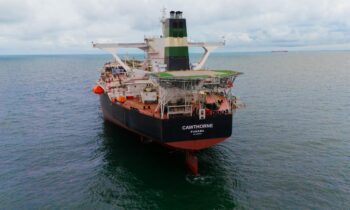


Nigeria recorded its lowest petrol import level in February 2026, as domestic refining—led largely by the Dangote Petroleum Refinery—accounted for the bulk of fuel supplied to the local market.
Industry data contained in a factsheet on Nigeria’s midstream and downstream petroleum operations showed that total daily petrol supply dropped from 64.9 million litres in January to 39.6 million litres in February, representing a decline of 25.4 million litres per day or 39.1 per cent.
The sharp reduction was largely attributed to a significant fall in petrol imports, indicating that Nigeria relied far less on foreign refined products during the period.
Despite the decline in overall supply, domestic refining accounted for the overwhelming share of petrol available in the country. According to the data, average domestic supply stood at 36.5 million litres per day, representing about 92 per cent of total petrol supply in February.
Imported petrol accounted for only 3.1 million litres per day, or roughly eight per cent of the total supply, highlighting the growing contribution of local refining capacity to Nigeria’s downstream petroleum sector.
The figures signal a structural shift in Nigeria’s fuel supply chain as increased domestic refining—particularly from the Dangote refinery—continues to reduce the country’s dependence on imported petroleum products.
The report also noted that calculations of national fuel sufficiency for the month included gross Premium Motor Spirit (PMS) stock held at the Dangote refinery, further underscoring the refinery’s stabilising role in domestic supply.
As a result, Nigeria maintained 31 days of petrol sufficiency in February, indicating that available fuel stocks were enough to meet national demand for about a month.
Fuel consumption data showed that average daily petrol demand stood at 36.6 million litres, slightly below the 39.6 million litres per day supply level, suggesting that available volumes were adequate to meet market needs despite the decline in imports.
However, broader consumption statistics indicated that overall petrol demand across the economy remained elevated. Based on the national benchmark of 50 million litres per day, actual petrol usage measured through truck-out volumes averaged 56.9 million litres daily, about 13.8 per cent above the benchmark.
Demand for diesel (Automotive Gas Oil) also exceeded projections. While the benchmark consumption level was 14 million litres per day, actual usage averaged 20.3 million litres per day, representing about 45 per cent above expected demand.
In contrast, aviation fuel consumption remained largely stable. Against a benchmark of 3 million litres per day, average daily usage stood at 2.9 million litres, reflecting a marginal 3.3 per cent shortfall.
Domestic refining activities extended beyond petrol production. Local refineries supplied an average of 8.2 million litres of diesel per day in February, although some facilities experienced operational disruptions.
In addition, three modular refineries collectively contributed about 0.368 million litres per day to domestic fuel supply, while the WalterSmith refinery continued the introduction of hydrocarbons into its processing system as part of efforts to ramp up operations.
Consumption of other petroleum products remained robust. Cooking gas demand averaged 4,194 metric tonnes per day, reflecting sustained household and commercial usage.
Nigeria’s strategic fuel reserves also remained stable during the period. Diesel stocks were sufficient for 48 days, aviation fuel reserves could last 73 days, while cooking gas reserves stood at 22 days.
Beyond liquid fuels, Nigeria’s gas sector maintained strong supply levels, with total average daily gas supply reaching 4.771 billion standard cubic feet per day.
Of this volume, 3.018 billion cubic feet per day was supplied to the Nigeria LNG plant, while 1.763 billion cubic feet per day was delivered to the domestic market.
Gas utilisation across sectors showed that power generation consumed 0.536 billion cubic feet per day, commercial users accounted for 0.628 billion cubic feet, while gas-based industries utilised about 0.440 billion cubic feet per day.
Meanwhile, several major gas infrastructure projects continued to progress. The Ajaokuta–Kaduna–Kano (AKK) gas pipeline has reached 79.23 per cent completion, while the OB3 River Niger crossing project stands at 59.50 per cent.
Other ongoing projects include the Escravos–Odidi pipeline expansion, now 67.34 per cent completed, the Odidi–Warri pipeline expansion at 11.18 per cent, and the ELPS midline compressor project, which has achieved 93 per cent completion.