




…as minister hails President Tinubu’s Initiative on making life easy for students
The Federal Government has launched an expansion of its compressed natural gas (CNG) transportation initiative across tertiary institutions, targeting 20 federal universities under Project SPROUT to reduce students’ commuting costs.
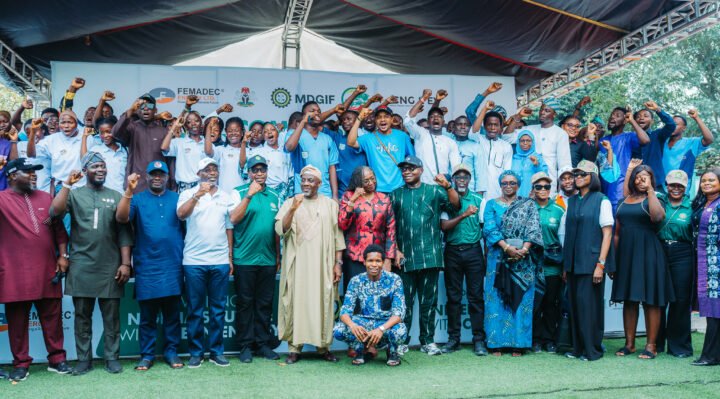
Minister of Education, Dr. Tunji Alausa, disclosed this at the commissioning of CNG refuelling and vehicle conversion facilities at the University of Lagos (UNILAG), alongside facilities at the University of Ibadan, Federal University of Technology Akure and Federal University Oye-Ekiti.
Alausa said the programme, known as the Special Palliative Relief on University Transportation (Project SPROUT), was designed to address the rising cost of transportation faced by students commuting between their accommodation, lecture halls and laboratories.
He said the initiative would begin with a pilot involving one tertiary institution in each of Nigeria’s six geopolitical zones, before expanding to 20 federal universities.
“With today’s commissioning of four institutions, we are well on the way to achieving our objective,” the minister said.
The project is part of the Federal Government’s broader drive to promote the use of natural gas as a transportation fuel and ease the economic burden on students through cheaper and more efficient mobility options.
Alausa said savings from the switch to CNG-powered vehicles should translate into lower fares for students, urging university managements and transport operators to work together to ensure that the benefits of reduced operating costs are passed on to commuters.
“For most of our students who make several trips a day between their accommodation, lecture halls and laboratories, even a modest saving on each journey can make a difference,” he said.
He stressed that the success of the programme would depend not only on the availability of CNG infrastructure but also on affordable fares and reliable shuttle services across participating campuses.
The minister commended President Bola Tinubu for supporting the expansion of natural gas utilisation in Nigeria’s transportation sector, as well as the Nigerian Midstream and Downstream Gas Infrastructure Fund (MDGIF), FEMADEC Energy Limited and the Presidential Compressed Natural Gas Initiative for their contributions to the programme.
He also acknowledged engineers and technicians involved in installing the equipment and preparing the facilities for operations. Alausa, however, emphasised the importance of safety, maintenance and regulatory compliance, directing university managements and operators to ensure regular staff training, proper equipment maintenance and clear emergency procedures.
He said commercial operations at the facilities should commence only after the necessary regulatory approvals had been obtained. Beyond transportation cost relief, the minister said the vehicle conversion centres could provide practical training opportunities for students, particularly those studying engineering and other related disciplines.
He encouraged universities to collaborate with facility operators to provide supervised exposure to vehicle conversion, equipment maintenance and CNG station operations, potentially strengthening technical skills and employability. Alausa also urged students to provide feedback on transport fares, routes and waiting times to help university authorities assess whether the programme was delivering the intended benefits. The commissioning of the four facilities represents a step in the Federal Government’s effort to expand CNG adoption within the university system, promote cleaner transport alternatives and improve access to affordable campus mobility.