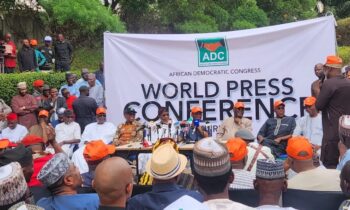


The Economic and Financial Crimes Commission (EFCC) on Tuesday opposed to the “Bill for an Act to Establish National Electoral Offences Commission to Provide for the Legal Framework for Investigation and Prosecution of Electoral Offences for the general Improvement of the Electoral Process in Nigeria.”
Crime Commission made its position known at a one-day public hearing on the matter in Abuja on Tuesday.
According to EFCC, the offences proposed therein were those the Nigeria Police, Ministry of Justice, EFCC, Independent Corrupt Practices and other related offences Commission (ICPC), and even INEC (in Section 145 of the Electoral Act, 2022) had been empowered under the extant laws to investigate and prosecute.
The EFCC chairman, Abdulrasheed Bawa, who was represented by Assistant Commander, Deborah Ademu-Eteh, stressed that there was no need to create an agency solely for the purpose of prosecuting electoral offences, especially, when the electoral process was seasonal in nature.
He, therefore, suggested that the existing law enforcement agencies should be strengthened to achieve maximum output, instead of creating a new agency.
However, the Independent National Electoral Commission (INEC), in its reaction to the bill, emphasized the importance of the country having an electoral Offences Commission, and therefore declared its support for the bill seeking to prosecute election offenders.
INEC stated emphatically that, the electoral process cannot be complete without such a commission.
The commission’s chairman, Professor Mahmood Yakubu, while declaring his support for the bill, said the proposed law would enable the commission to clampdown on electoral crimes and ensure effective prosecution of electoral offenders, particularly, high-profile politicians, who sponsor thugs to carry out violence acts.
To ensure total reform of the electoral process, the INEC chairman sought the amendment of Clause 44 of the bill, which empowers the Attorney General of the Federation to make rules and regulations with respect to the functions or powers of the proposed commission. He said giving such powers to the AGF could conflict with the work of the commission, as it should be independent.
He disclosed that since the 2015 general election, about 125 cases of electoral offences had been filed in various courts, with 60 convictions secured, the most recent one being in Akwa Ibom State.
Yakubu believes proper reform of the electoral process would not be achieved without stiff sanctions on violators of the laws. He lamented that INEC was saddled with too many responsibilities, including prosecution of electoral offenders, under the Electoral Act, saying it has been very challenging for the commission.
The INEC chairman said the commission looked forward to the day when highly placed sponsors of thuggery would be arrested and prosecuted.
He asked for the amendment to Clause 33, which gave the Federal High Court, High court of a State or the High Court of Abuja the jurisdiction to try alleged offenders, to provide for the setting up of electoral offences tribunals, rather than giving the Attorney General of the Federation (AGF) additional powers, as contained in Clause 44 of the proposed law.
He urged the National Assembly to pass the bill to prevent it from suffering the fate of previous efforts that were inchoate at the end of the lifespan of the assembly.
The chairman of INEC stated, “The Bill for an Act to establish the National Electoral Offences Commission is a critical legislation. It has been part of all national conversations on constitutional and electoral reforms for the last 13 years.
“The Justice Mohammed Uwais Committee on electoral reforms recommended it in 2009, echoed by the Sheikh Ahmed Lemu Committee, following the post-election violence of 2011 and, most recently, by the Senator Ken Nnamani Committee on Constitutional and Electoral Reform in 2017.
“In addition to our responsibilities, the commission is required to prosecute electoral offenders. However, the commission’s incapacity to arrest offenders or conduct investigation that leads to successful prosecution of, especially, the high-profile offenders, led to the suggestion to unbundle the commission and assign some of its extensive responsibilities to other agencies, as recommended by the Uwais and Nnamani committees.
“For those who argue that the solution does not lie in expanding the federal bureaucracy by creating a new commission, we believe that the National Electoral Offences Commission should be seen as an exception. While there are other security agencies that deal with economic and financial crimes, I am yet to hear anyone who, in good conscience, thinks that it is unnecessary to have established the anti-corruption agencies.”
Speaker of the House of Representatives, Hon. Femi Gbajabiamila said electoral crimes produced poor political leadership, as vote riggers are helped to take control of governments against the democratic will of the electorate.
The House of Representatives had at plenary on June 30 passed the “Bill for an Act to Establish National Electoral Offences Commission to Provide for the Legal Framework for Investigation and Prosecution of Electoral Offences for the general Improvement of the Electoral Process in Nigeria” through second reading.
The bill was sponsored by Chairman, Committee on Electoral Matters, Hon. Aishatu Dukku, as well as Hon. Kingsley Chinda, and Hon. John Dyegh.
Clause 19 of the draft bill proposes a penalty of 15 years imprisonment for impersonation, undue influence, and bribery. While Clause 26 proposes that grabbing, looting, destruction of ballot papers or any other electoral document is punishable by imprisonment for at least 20 years or a fine of N40, 000,000.
In their goodwill message, Executive Director of Policy and Legal Advocacy Centre (PLAC), Clement Nwankwo, while lending support to the bill, suggested that the 20 years imprisonment and N40 million fine for ballot snatching and vote buying, as stipulated in Clause 26 of the proposed law should be reduced in line with reality.
Nwankwo said, “The punishments in law must be commensurate with the offence identified. Looking at the electoral offences commission propositions here, it includes the proposal that says at least 20 years imprisonment for ballot snatching. I think that is overwhelming. N40 million as fine to those ones running around, snatching ballot boxes certainly cannot be afforded and their sponsors are going to hide and disappear, leaving them to bear the brunt of it.”