




… Industrialist says group may redirect funds from steel and other businesses into power as Africa seeks to close huge energy deficit
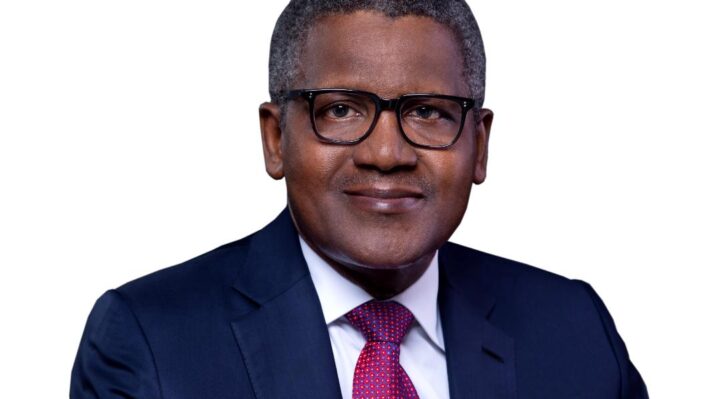
Africa’s richest man, Aliko Dangote, says his conglomerate plans to invest more than $10 billion in the power sector over the next three to four years, potentially redirecting capital from projects such as steel to tackle Africa’s electricity deficit and accelerate industrialisation.
Dangote said unreliable power and inconsistent government policies remain major barriers to investment and economic growth across the continent, warning that Africa cannot create enough jobs or build competitive industries without a dependable electricity supply.
He disclosed in an interview with Al Jazeera, arguing that Africa must move urgently from exporting raw materials and importing finished goods to building industries that create value, jobs and wealth on the continent
Power investment seen as industrialisation catalyst
Dangote said inadequate electricity supply remains one of the biggest obstacles to industrial development and investment across Africa.
He estimated that more than 600 million Africans still lack access to electricity, describing the situation as unacceptable for a continent seeking to create jobs, expand manufacturing and achieve sustained economic growth.
“Africa cannot create growth without power,” he said, stressing that reliable electricity was fundamental to economic development.
Dangote argued that governments capable of delivering dependable electricity would also create conditions for stronger economic activity and potentially reduce the political pressure associated with seeking electoral support.
For businesses, he said, the availability of affordable and reliable electricity would reduce operating costs and create a stronger foundation for manufacturing and other productive activities.
Policy uncertainty, electricity shortages deter investment
The industrialist identified inconsistent government policies and inadequate electricity supply as two major factors that have historically discouraged investment in Africa.
He said frequent changes in government policies had created uncertainty for investors, while unreliable power had increased the cost and complexity of operating businesses on the continent.
Dangote, however, said investors willing to take a long-term view of Africa’s economic potential remained committed to the continent.
“For some of us that really mean business, we are here,” he said, arguing that private-sector investment would be essential to creating jobs and building industries.
Africa must reduce import dependence
Dangote also warned that Africa’s dependence on imported goods was ultimately unsustainable because the continent could face increasing pressure on its foreign-exchange resources.
He said African countries needed to develop productive capacity and process more of their raw materials locally rather than exporting commodities and importing finished products.
“One day we will not have money to import what we are consuming. So how can we remain an import continent? It has to change,” he said.
He argued that African investors must have greater confidence in the continent and commit capital to businesses capable of creating local value.
According to him, increasing domestic production would help create jobs, retain more economic value within African economies and strengthen the continent’s industrial base.
Dangote defends investment strategy amid monopoly criticism
The businessman also addressed criticism that the rapid expansion of his businesses across major sectors could create monopolistic positions.
Dangote said such criticism would not alter his investment strategy, comparing his approach to that of a footballer who must remain focused on the game rather than the spectators.
He maintained that the government had not granted his businesses exclusive rights to operate in any sector and argued that other investors had opportunities to compete.
“There’s nothing that the government gave us and said, ‘This is only for Dangote,’” he said, adding that governments establish policies and investment opportunities that businesses can choose to pursue.
Using a 100-metre race as an analogy, he argued that investors who chose not to participate should not blame those who entered the market and succeeded.
IPO and broader investment strategy
Dangote said his broader investment philosophy was aimed at widening participation in businesses, spreading wealth and strengthening corporate governance.
“We want to make sure it’s about spreading the wealth. It’s about getting more people in the business. It’s also about corporate governance,” he said.
His comments come as the Dangote Group continues to expand its footprint across Nigeria’s industrial economy, including refining, fertiliser and other strategic sectors.
Calls for local processing of African resources
Dangote also renewed his call for Africa to process more of its raw materials domestically before exporting them.
He argued that commodities such as cocoa should increasingly be processed within Africa so that a larger share of the value generated from the continent’s natural resources remains within African economies.
He suggested that governments could eventually introduce stronger incentives or restrictions to encourage domestic processing once the economic benefits of local value addition become more evident.
For Dangote, the broader objective is to move Africa away from a commodity-exporting model towards an industrial economy built around local manufacturing, energy supply and value addition.
‘Africa must get to the promised land’
Dangote acknowledged that criticism and opposition would continue as his businesses expand, but said he remained committed to his long-term objectives.
He described industrial development as a responsibility requiring significant commitment and sacrifice, arguing that Africa’s economic future depends on its ability to mobilise domestic and international capital into productive sectors.
“The distraction will continue. But we have what you call a very thick skin,” he said.
“We have a target, and we’re getting to our target. And if we don’t do it, believe me honestly, Africa will be in trouble.”
The proposed $10 billion-plus power investment, if implemented as outlined, would represent a significant expansion of private-sector capital into Africa’s electricity industry and underscore the growing link between energy security, industrialisation and economic competitiveness.