




…Gastech 2026: CEO says Africa must expand gas, renewables and infrastructure to turn energy resources into industrial growth
By Ayomide Bello
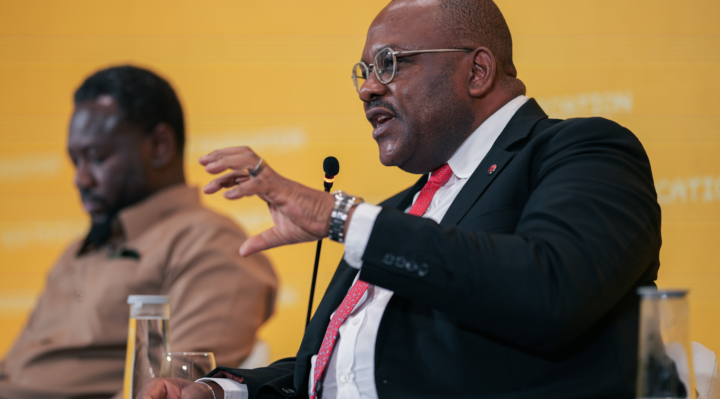
Heirs Energies Chief Executive Officer, Osayande Igiehon, has called for a practical shift in Africa’s energy strategy from managing energy scarcity to building energy sufficiency, arguing that the continent must develop more supply and the infrastructure needed to deliver reliable power to homes, businesses and industries.
Igiehon made the case during three high-level engagements at Gastech 2026 in Bangkok, where global energy leaders, policymakers, investors and technology providers gathered under the theme, “Where Global Energy Supply Meets Demand.”
The event, which opened at the Bangkok International Trade and Exhibition Centre (BITEC), brought together more than 50,000 energy professionals from over 150 countries to discuss energy security, investment, infrastructure, technology and the changing dynamics of global energy demand.
At the opening ceremony, Igiehon joined discussions that featured Thailand’s Prime Minister, Anutin Charnvirakul, Energy Minister Akanat Promphan, and former British Prime Minister Tony Blair, who participated in a fireside conversation on geopolitics, energy security and the importance of reliable and affordable energy to economic growth.
The opening discussions set the tone for four days of debate around how the global energy system can respond to rising demand while maintaining affordability, reliability and security of supply.
Africa needs more energy, not less
Speaking during the Day Two session, “Power for All: Delivering Universal Energy Access in an Electrifying World,” Igiehon focused on Africa’s persistent electricity-access deficit.
He noted that nearly 600 million people across Africa still lack reliable access to electricity, arguing that the continent’s immediate priority should be to expand energy supply while simultaneously modernising the energy system.
Rather than framing the energy transition as a choice between hydrocarbons and renewables, Igiehon advocated an approach that deploys all available resources, including natural gas, hydro, solar, wind and energy storage.
For Africa, he said, “we must add energy to the system before transforming the system.”
The argument reflects the continent’s dual challenge of meeting immediate energy needs while pursuing longer-term decarbonisation objectives.
Igiehon also pointed to Nigeria’s significant gas resources and its potential to increase supply to domestic, regional and international markets. But he stressed that greater production would only deliver economic value if it translates into reliable electricity for hospitals, schools, households, businesses and industrial facilities.
Reliable energy, he said, is ultimately an economic-development issue because it supports productivity, employment and industrial expansion.
Africa’s problem is energy delivery
On Day Three, during “Rising Economies, Rising Demand: How the Next Industrial Age Gets Powered,” Igiehon turned to the investment and infrastructure constraints limiting Africa’s ability to convert growing energy demand into economic growth.
He argued that Africa does not fundamentally have an energy-demand problem but an energy-delivery problem.
According to him, attracting the capital required to close the gap will depend on credible offtake arrangements, interconnected infrastructure, predictable policy and reliable payment mechanisms.
He identified three broad priorities for narrowing Africa’s energy-delivery gap: maximising existing brownfield assets, developing interconnected new infrastructure, and combining gas, renewable energy, storage and stronger electricity grids.
The issue is particularly significant for African businesses, many of which rely on expensive backup generation to compensate for unreliable grid electricity.
Igiehon said the cost of such self-generation diverts corporate capital away from productive investment, including expansion, employment and innovation.
OML 17 highlights domestic gas potential
Drawing on Heirs Energies’ operations, Igiehon cited the company’s experience at OML 17 as an example of how upstream gas development can support Nigeria’s domestic electricity market.
He said gas production from the asset has increased from approximately 50 million standard cubic feet per day (MMscf/d) to 135 MMscf/d, with all of the gas directed to the Nigerian domestic market.
The supply currently supports five power plants and contributes to electricity generation serving millions of Nigerians.
The example underscores the potential link between upstream investment, domestic gas supply and power generation, particularly as Nigeria seeks to reduce its persistent electricity deficit and strengthen industrial capacity.
From resources to economic value
Across his Gastech engagements, Igiehon consistently emphasised that Africa’s energy challenge cannot be addressed solely through debates about the pace or composition of the energy transition.
Instead, he argued that the continent must increase energy availability, build the infrastructure required to move that energy to consumers and create investment conditions that allow projects to become commercially viable.
For Nigeria, the strategy places natural gas at the centre of both domestic energy security and industrial development, while leaving room for renewable energy, storage and other technologies to expand the overall energy mix.
The broader message from Gastech 2026 was that Africa’s abundant energy resources will have limited economic impact unless they can be converted into dependable and affordable energy.
For Igiehon, the objective is therefore not simply to produce more energy, but to build an integrated system capable of turning Africa’s resources into reliable power, productive industry, jobs and sustained economic growth.