


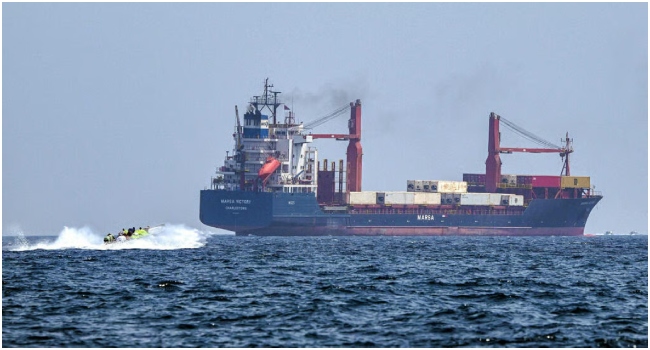


Global crude oil prices climbed to as high as $120 per barrel early Thursday, as escalating tensions in the Middle East disrupted supply expectations and rattled global energy markets, heightening concerns over fuel costs and inflation.
Key benchmarks, including Brent crude, have recorded sharp gains in recent days amid fears of supply shortages driven by geopolitical instability linked to the intensifying U.S.–Iran conflict.
At International crude oil prices have surged, with Brent crude reaching approximately $119–$120 per barrel and West Texas Intermediate (WTI) trading around $107–$108 per barrel.
The United States has ramped up pressure on Iran, maintaining a naval blockade around the strategic Strait of Hormuz—a critical artery for global oil shipments. The administration of Donald Trump has insisted the blockade is effective and will remain in place.
U.S. Treasury Secretary Scott Bessent claimed in a post on X that Iran’s oil sector is coming under severe strain due to the blockade, warning of an imminent production decline and potential fuel shortages within the country. He also highlighted that Kharg Island—Iran’s main oil export hub—is nearing storage limits, a development that could force Tehran to scale back output significantly.
Energy analysts caution that sustained tensions could push oil prices even higher, worsening global inflationary pressures and increasing economic uncertainty.
For Nigeria, Africa’s largest oil producer, the development presents a mixed outcome. Higher crude prices typically boost government revenues and foreign exchange earnings, offering fiscal relief.
However, the benefits come at a cost for citizens. Rising crude prices are already translating into higher domestic fuel prices, with Premium Motor Spirit (PMS) now selling between ₦1,245 and ₦1,350 per litre, significantly increasing transportation and living expenses.
Industry experts describe the situation as a “double-edged sword.” While increased oil earnings could strengthen public finances, ordinary Nigerians are likely to bear the immediate burden through higher fuel costs and inflation across goods and services.
They note, however, that Nigeria’s growing local refining capacity could help cushion the impact compared to previous periods when the country relied heavily on imported petroleum products. Without domestic refining, analysts warn, fuel prices could have surged even further, potentially leading to widespread scarcity and long queues at filling stations.