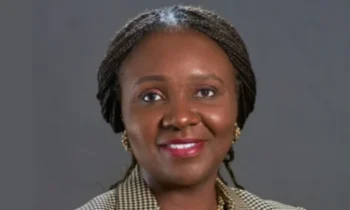


Farouk Ahmed calls for predictable regulation, modern refining, stronger regional cooperation and investment in infrastructure to build a competitive and resilient African downstream energy market.
LAGOS, Nigeria — Engr. Farouk A. Ahmed, former pioneer Authority Chief Executive of the Nigerian Midstream and Downstream Petroleum Regulatory Authority (NMDPRA), has urged African energy stakeholders to translate industry dialogue into tangible investments, infrastructure development and more reliable energy supplies as OTL Africa Downstream Energy Week marks its 20th anniversary.
Ahmed said Africa’s downstream petroleum industry had reached a critical stage of transformation, requiring stronger collaboration among regulators, policymakers, operators and investors to address infrastructure deficits, financing constraints, supply-chain inefficiencies and the changing dynamics of global energy markets.
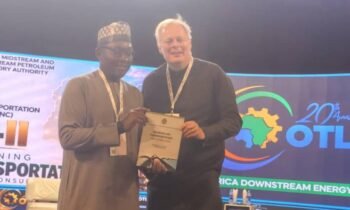
In his goodwill message to mark the anniversary, Ahmed said OTL Africa had spent two decades providing a platform for industry engagement, knowledge sharing and collaboration, helping stakeholders examine challenges and develop solutions for the continent’s petroleum and energy sectors.
He described the milestone as evidence of the platform’s resilience and continuing relevance to an industry whose performance directly affects transportation, manufacturing, electricity generation, agriculture, trade and household welfare.
“Twenty years is more than a milestone; it is a testament to vision, resilience, consistency, and the power of partnership,” he said.
Ahmed, who brings more than four decades of experience in petroleum regulation and industry development, said the effectiveness of industry institutions depended on their ability to respond to changing market realities while sustaining professional standards and stakeholder confidence.
Predictable regulation critical to downstream investment
The former regulator identified regulatory certainty, transparency, credible data and meaningful stakeholder consultation as essential conditions for attracting long-term investment into Africa’s downstream petroleum industry.
He argued that effective regulation must balance public-interest objectives with the commercial realities facing operators and investors.
According to him, well-designed and consistently enforced regulations provide the stability required for investment, competition and sustainable market development.
For African energy markets, this is particularly important as governments seek to expand refining capacity, modernise distribution infrastructure and strengthen domestic petroleum supply chains amid changing global market conditions.
Ahmed said platforms such as OTL could help bridge the gap between regulatory objectives and commercial realities by encouraging constructive engagement and helping industry participants develop common solutions.
His message highlights a central investment challenge for the continent: regulatory reforms must be matched by transparent implementation, commercially viable projects and confidence that established rules will be applied fairly.
Infrastructure gaps threaten Africa’s energy ambitions
Ahmed said Africa had the potential to build a more integrated, competitive, efficient and resilient downstream energy market, but realising that ambition would require sustained investment and coordinated policy action.
He identified modern refining capacity, storage facilities, distribution networks, appropriate technology and stronger regional cooperation as key priorities for improving energy security and market efficiency.
Infrastructure constraints can increase transportation and distribution costs, disrupt product availability and limit the ability of domestic refiners and marketers to serve consumers efficiently.
For Nigeria, which occupies an important position in Africa’s petroleum industry, the development of competitive refining and distribution infrastructure has implications for domestic fuel supply, industrial activity, trade and the country’s wider energy investment prospects.
Across the continent, better-connected infrastructure and more effective regional trading arrangements could help improve the movement of petroleum products between markets, although progress will depend on financing, regulatory coordination and commercially sustainable cross-border arrangements.
Ahmed also stressed the need for transparent market practices and regulatory frameworks that encourage investment while protecting consumers and the public interest.
Global energy transition raises the stakes
The anniversary message comes as African petroleum markets confront the combined pressures of energy security, financing requirements, environmental sustainability and changes in global energy demand.
For African countries, the challenge is to develop energy infrastructure that supports economic growth while responding to evolving technologies, environmental considerations and international investment requirements.
Ahmed said stakeholders must address these challenges through coordinated and decisive action rather than isolated initiatives.
The implications extend beyond downstream petroleum. Efficient fuel supply chains support manufacturing, agriculture, transport and trade, while dependable energy availability remains essential to industrial productivity and economic competitiveness.
For international investors, Africa’s ability to establish predictable regulatory regimes, improve infrastructure and develop integrated markets will influence the attractiveness of downstream projects and related energy services.
The former NMDPRA chief’s message therefore places collaboration and implementation at the centre of the continent’s energy development agenda.
Human capital and institutional continuity
Ahmed also called for greater investment in professional development and the transfer of industry knowledge to younger generations of regulators, engineers, entrepreneurs and energy executives.
He said the experience accumulated over decades of petroleum regulation and industry development should be preserved and shared to strengthen institutional capacity.
According to him, Africa’s energy future will depend not only on infrastructure and capital but also on the competence, integrity and innovative capacity of the professionals responsible for operating and regulating the industry.
The emphasis on human capital reflects the importance of building institutions capable of administering increasingly complex energy markets, overseeing infrastructure investments and maintaining regulatory standards.
OTL urged to focus on measurable outcomes
While congratulating OTL’s founders, organisers, sponsors, exhibitors, speakers and delegates, Ahmed challenged the platform to expand its role beyond conferences and exhibitions into a stronger catalyst for practical solutions, strategic partnerships and investment opportunities.
He urged stakeholders to ensure that discussions at industry gatherings lead to concrete projects and measurable improvements across Africa’s energy value chain.
“The conversations held here must translate into action; the partnerships formed here must mature into projects; and the ideas generated here must contribute to tangible improvements across Africa’s energy value chain,” he said.
He called on regulators to strengthen fairness, transparency and policy predictability; operators to pursue efficiency, innovation and responsible business practices; investors to provide long-term capital; and policymakers to improve the business environment.
Ahmed said no single group could build Africa’s energy future in isolation, stressing that progress would require trust, partnership and a shared commitment to industry development.
As OTL Africa Downstream Energy Week celebrates two decades of engagement, his message places the emphasis on the next phase of the continent’s energy development: converting industry cooperation into investment, infrastructure, efficient markets and broader access to reliable energy.
He concluded by expressing the hope that OTL’s next 20 years would deliver stronger partnerships, greater investment, smarter regulation and more resilient energy markets across Africa.