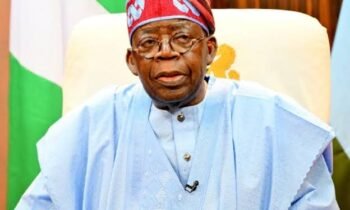


… calls for faster implementation of Electricity Act 2023, stronger state regulators and private investment to improve power supply and drive economic growth.
Vice President Kashim Shettima has urged Nigerian state governments to take responsibility for addressing their electricity challenges, establish functional state electricity markets and stop relying solely on the Federal Government to resolve local power supply problems.
Shettima said the Electricity Act 2023 provided states with the legal framework to develop and regulate intrastate electricity markets, attract private investment and expand access to reliable electricity for businesses, households and public institutions.
He spoke on Wednesday at the opening of the National Stakeholders’ Workshop on the Electricity Act 2023, held at the State House Banquet Hall, Presidential Villa, Abuja.
The workshop, themed “Unlocking the Opportunities of the Electricity Act 2023 for Sustainable Energy Development and Economic Growth in Nigeria,” brought together federal and state government institutions, electricity regulators and other stakeholders to discuss implementation of the law.
In a speech delivered on his behalf by the Deputy Chief of Staff to the President, Ibrahim Hadejia, Shettima said Nigeria’s ambition to build a competitive industrial economy would remain constrained unless electricity reforms translated into reliable and affordable power for productive activities.
He described the Act as an opportunity for states to decentralise electricity governance and develop markets suited to their economic needs and energy resources.
“The Act empowers states to develop and regulate intrastate electricity markets within the applicable constitutional and statutory framework,” he said.
“The size, diversity and endowments of this nation demand this decentralisation. Electricity supply must become a shared responsibility, pursued with innovation and accountability across the federation. Our states must shed the habit of waiting for Abuja to provide every answer.”
Shettima Identifies Investment Opportunities Across States
The Vice President urged states to leverage their natural resources to develop electricity markets capable of supporting agriculture, manufacturing, healthcare, education and other economic activities.
He cited solar energy potential in Sokoto, Borno and Katsina states, natural gas resources in Delta, Rivers and Bayelsa, and hydropower opportunities in Niger and Kebbi.
According to him, developing these resources through viable electricity markets could help states improve energy access, attract businesses and create jobs.
However, Shettima warned that the passage of legislation alone would not improve electricity supply without effective institutions, technical capacity and consistent implementation.
He urged states that had yet to establish electricity regulatory bodies to begin the necessary legislative and institutional preparations without delay.
“Legislation cannot implement itself. States yet to act must begin their legislative and institutional preparations promptly. They need to establish functional electricity regulatory bodies with technical competence and capacity,” he said.
FG Proposes National Electricity Reform Peer Review
To accelerate implementation of the Electricity Act, Shettima proposed a voluntary National Electricity Reform Peer Review and Implementation Framework involving the Nigerian Electricity Regulatory Commission (NERC), the Federal Ministry of Power, the Nigeria Governors’ Forum (NGF) and state electricity regulators.
The proposed framework would enable states to exchange experiences, strengthen regulatory institutions and assess progress in electricity market development, investment readiness, consumer protection and access to power.
Shettima said the arrangement would also help states identify implementation challenges, obtain technical assistance and adopt practical solutions developed elsewhere in the country.
“No state needs to purchase with failure the knowledge another state has already acquired,” he said.
He added that annual voluntary reviews would encourage cooperation and accountability without undermining the constitutional and statutory powers of individual states.
The proposal comes as states continue to establish regulatory institutions and assume responsibility for electricity markets within their respective jurisdictions.
Private Investment Critical to Electricity Reform
Shettima said the Federal Government could not finance the transformation of Nigeria’s electricity sector through public funds alone, making private capital, technology and technical expertise essential to expanding supply.
He urged states to create transparent licensing processes, predictable regulatory systems, commercially viable markets, investment safeguards and credible dispute-resolution mechanisms to attract investors.
“Private capital must arrive with technology and expertise. Transparent licensing, predictable regulation, commercially viable markets, investment safeguards and credible dispute resolution will earn investors’ confidence,” he said.
The Vice President also stressed the need to protect electricity consumers from arbitrary billing, poor service delivery and unfair commercial practices.
He said electricity companies must be held accountable for service quality, adding that the ultimate measure of the law’s success would be its impact on ordinary Nigerians.
“The final verdict on this law will be delivered wherever a Nigerian reaches for a switch,” he said.
States Need Credible Regulators, NGF Says
The Permanent Secretary of the Federal Ministry of Power, Mahmuda Mamman, who represented the Minister of Power, Joseph Tegbe, said successful implementation of the Electricity Act would depend on states’ ability to establish credible regulatory institutions and commercially sustainable electricity markets.
He emphasised the importance of effective state-level governance in translating the legal reforms into improved power supply and investment opportunities.
The Director-General of the Nigeria Governors’ Forum, Dr Abdulateef Shittu, disclosed that work was ongoing on a standard tariff framework for state electricity markets.
He said the framework was intended to protect consumers while providing sufficient incentives to attract investment into electricity generation, distribution and other market activities.
Shittu also urged stakeholders to ensure that any proposed amendments to the electricity legal framework built on the progress already achieved rather than undermine existing reforms.
Meanwhile, the Head of Compliance at the Electricity Commission, Hauwa Yakubu, said regulatory transfers had been issued to 17 states, with Akwa Ibom the latest to receive approval.
She said the commission was supporting emerging state regulators through peer-to-peer training, technical engagement and institutional capacity-building initiatives.
Electricity Act Opens State Markets
President Bola Tinubu signed the Electricity Act 2023 into law in June 2023, replacing the Electric Power Sector Reform Act 2005.
The legislation provides a framework for states to regulate electricity generation, transmission and distribution within their jurisdictions, subject to applicable constitutional and statutory provisions. NERC retains responsibility for interstate electricity matters and other functions assigned to it under the law.
Lagos, Edo and Kaduna had established state electricity laws when the federal legislation was signed.
Akwa Ibom subsequently advanced its transition to state-level regulation, with NERC issuing an order dated August 18, 2026, transferring intrastate regulatory responsibilities to the Akwa Ibom State Electricity Regulatory Commission (AKSERC).
The order set February 17, 2027, as the deadline for completing the transition. The commission had also reported in July that 16 states had fully transitioned to state-level regulation.
The growing number of state electricity markets signals a shift towards decentralised regulation, potentially creating opportunities for state governments to develop local generation projects, attract independent power producers and improve electricity distribution within their territories.
However, the effectiveness of the reforms will depend on regulatory competence, market design, investment conditions, tariff sustainability and the ability of operators to provide reliable electricity.
Electricity Debt and Low Generation Remain Major Challenges
The push for state-level electricity reforms comes amid persistent challenges in Nigeria’s power sector, including inadequate generation, weak transmission and distribution infrastructure, liquidity constraints and mounting debts owed to electricity market participants.
Generation companies reportedly said in March that they were owed approximately ₦6.8 trillion as of the end of February.
National electricity output has also remained around 4,000 megawatts for extended periods, despite installed generation capacity of approximately 14,000MW.
The gap between installed capacity and actual output highlights the structural challenges facing the sector, including gas supply constraints, infrastructure limitations, maintenance requirements and market liquidity problems.
For businesses, unreliable electricity increases operating costs, weakens productivity and encourages reliance on expensive diesel and petrol generators.
The development of functional state electricity markets could provide an additional route for businesses and communities to secure more dependable power, particularly where state governments can facilitate embedded generation, renewable energy projects, industrial power arrangements and private distribution networks.
Nevertheless, decentralisation alone will not guarantee better electricity supply. States will need to establish competent regulators, enforce market rules, protect consumers and create conditions under which electricity investments can recover their costs.
The central test of the Electricity Act 2023 will therefore be whether the emerging state markets can mobilise capital, expand electricity access and deliver measurable improvements in power supply to households and businesses across Nigeria