

Nigeria’s federal government says it is engaging fuel marketers and industry regulators to ensure petrol prices more accurately reflect declining global crude oil prices, as consumers continue to question why pump prices have remained high despite the recent fall in international oil markets.
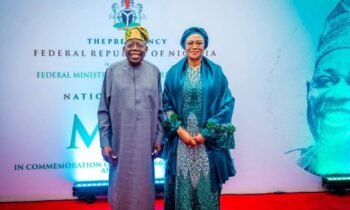
Minister of Finance and Coordinating Minister of the Economy, Taiwo Oyedele disclosed the move on Monday after the Federal Executive Council (FEC) meeting chaired by President Bola Tinubu at the Presidential Villa in Abuja.
The announcement comes after Brent crude prices retreated to about $75–76 per barrel following easing geopolitical tensions in the Middle East, prompting calls for domestic fuel prices to decline accordingly.
“We are working to strike a balance between ensuring operators remain commercially viable and protecting Nigerians from unfair pricing,” the minister said.
He said the government is working with the Nigerian Midstream and Downstream Petroleum Regulatory Authority (NMDPRA) and the Federal Competition and Consumer Protection Commission (FCCPC) to promote a transparent and competitive downstream petroleum market in line with the Petroleum Industry Act (PIA).
He added that fiscal measures introduced by the Tinubu administration—including the suspension of Value Added Tax (VAT), excise duties and other levies on petroleum products—have helped cushion consumers from higher global energy prices and kept Nigerian petrol prices below those in neighbouring countries.
He also urged transport operators benefiting from the government’s Presidential Compressed Natural Gas (CNG) Initiative to pass fuel-cost savings on to commuters through lower transport fares.
FEC Approves Infrastructure, Health and Youth Reforms
Beyond fuel pricing, the Federal Executive Council approved a series of major infrastructure, healthcare and public sector reforms aimed at supporting economic growth and improving public services.
The council approved N2.078 trillion for 23 road construction and rehabilitation projects across 10 states, including strategic highways in Lagos, Kaduna, Abuja, Kogi, Niger, Oyo, Cross River, Taraba, Adamawa, Ebonyi and Kwara.
Minister of Works David Umahi said the projects are expected to improve logistics, reduce transportation costs and strengthen connectivity across key economic corridors.
The government also approved a N1.83 trillion tax-credit road programme to be executed by Dangote Group, covering approximately 401 kilometres of federal highways, alongside additional funding for ongoing road projects.
In the aviation sector, FEC approved N34.4 billion for the construction of a new airstrip in Gboko, Benue State. Minister of Aviation and Aerospace Development Festus Keyamo said the facility would support agriculture, improve security operations and facilitate humanitarian and emergency medical services.
Maritime Projects Worth N286 Billion Cleared
The council also approved maritime infrastructure projects valued at about N286 billion to modernise port operations and strengthen maritime safety.
The projects include the acquisition of pollution-control vessels, pilot boats, firefighting vessels and dredging of the Escravos Channel through a public-private partnership involving the Nigerian Ports Authority.
Officials said the investments are expected to improve navigational safety, increase port efficiency, protect Nigeria’s marine environment and support growth in the country’s blue economy.
NYSC to Become Civilian-Led
FEC approved sweeping reforms to the National Youth Service Corps (NYSC), ending the long-standing practice of military leadership of the scheme.
Minister of Youth Development Ayodele Olawande said the NYSC would retain its one-year service period but introduce expanded digital and professional skills training, while operational leadership transitions to civilians. The military will continue to provide security for corps members.
The reforms also include digitalisation of NYSC operations, improved welfare and orientation camp facilities, professional certification programmes and amendments to the NYSC Act to align the scheme with current national development priorities.
Government Expands Health Spending
The Federal Executive Council further approved health interventions worth approximately N73.9 billion.
The package includes the establishment of a National Snakebite Treatment and Research Centre, procurement of tuberculosis medicines, reproductive health commodities and 10 compressed natural gas-powered mobile blood donation clinics.
Minister of Health and Social Welfare Muhammad Ali Pate said the investments are designed to strengthen Nigeria’s healthcare system, improve access to essential medicines and reduce dependence on imported medical supplies.
The latest approvals reflect the Tinubu administration’s broader strategy of combining infrastructure investment, energy market reforms, healthcare expansion and youth development initiatives to support long-term economic growth and improve public service delivery.