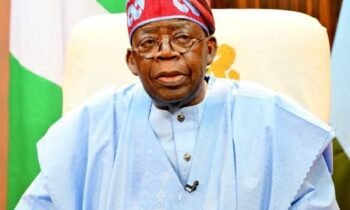


Just a few days before the inauguration of the 10th National Assembly in June, some aggrieved members of the All Progressives Congress (APC) on Thursday met with the party’s National Working Committee (NWC) officials at its national headquarters in Abuja.
The aggrieved members are Senators Abdulaziz Yari, Orji Kalu, Mohammed Musa, and Sadiq Umar.
Addressing the NWC, Kalu, a Senate President aspirant, said giving every part of the country a pie makes the country beautiful. He argued that the party should not zone the leadership of the yet-to-be inaugurated National Assembly based on the number of votes each zone contributed to the victory of the President-Elect, Bola Tinubu.
According to him, a zone with low votes in the last election can turn out to give a large number of votes to the party in future elections.
Also, Yari, who presented the protest letter by the aggrieved Senators-elect to the APC chairman, urged the party to review the zoning formula reviewed days ago for the purpose of justice and equity.
The APC Chairman, Abdullahi Adamu; National Secretary, Iyiola Omisore; and National Women Leader, Beta Edu were also present at the meeting to hear them out.
The APC NWC had on Monday zoned the leadership of the 10th National Assembly.
The party organ zoned the Senate President to the South-South, Senator Godswill Akpabio (Akwa Ibom); Deputy Senate President to the North-West, Senator Barau Jibrin (Kano).
Others are the Speaker of the House of Representatives (North-West) – Abass Tajudeen (Kaduna), and Deputy Speaker South East – Ben Kalu (Abia).
On Tuesday, APC National Publicity Secretary Felix Morka, on Channels Television’s Politics Today, said the South-South zone, which Akpabio represents, has not produced a Senate President since the beginning of the Fourth Republic in 1999.
The zoning formula by the APC has fuelled protests by many high-ranking members of the party including Governor Rotimi Akeredolu of Ondo State who described it as “an unworkable and skewed arrangement that reinforces injustice”.
Meanwhile, a member representing Okigwe North Federal Constituency of Imo State, Hon Miriam Odinaka Onuoha, has warned that the nation must thread cautiously even as decisions are being made to produce those who will emerge leaders of the 10th National Assembly.
Hon Miriam who is seeking to become Speaker of the House of Reps, says the world is watching keenly and looking at how women are being treated when it comes to Nigerian polity.
According to the lawmaker who was a guest on Channels Television’s Sunrise Daily on Thursday, the contest for the National Assembly leadership ties into the SDG measurement index for Nigeria, in that it reflects the nation’s stance on equality and the role of women in the society.
Comparing Nigeria to countries like Tanzania, Uganda, and South Africa, where women are currently Speakers of Assemblies, the legislator said she cannot see Nigeria taking a lead in the community of nations.
“Mind you, the number of women participating in politics and parliament (in the hierarchy), is a yardstick to measure the country’s adherence to the Sustainable Development Goals (SDG).
“So, it’s a measurement index for us, so you can see that by an abysmal 5 percent, we are nowhere, compared to these other countries I have reeled out who are over 46 percent.
“It is something that should worry us at this time,” Hon Onuoha asserted.
While noting that her desire to be Speaker is not new feat seeing that Madam Patricia Etteh led the Green Chambers about 16 years ago, the parliamentarian was of the opinion that rising to her political height and surviving the “tsunami of the general election” should give credence as to why she is deserving of the leadership role.
Speaking further as regards what qualifies her for the position of Speaker, Hon Onuoha said she should be elected by her colleagues because she qualifies and possesses the requisite requirements to lead the House.
Ms Onuoha added that she will be bringing fresh ideas to tackle Nigeria’s problems. She further stated that pragmatic solutions proffered for the nation’s dwindling economy, mass poverty, unemployment and constant threats to national security.
According to her, making her Speaker of the House gives Nigeria grounds to make an argument for inclusivity and diversity which reflects the true nature of Nigerian society.
At a different occasion, the Executive Director of Policy and Legal Advocacy Centre (PLAC), Clement Nwankwo, has enjoined the incoming National Assembly (NASS), to exert its powers as entrenched in the constitution fully.
“I think that the National Assembly needs to get to the point where it can exercise its power and sanction an agency of government that violates the exercise of its power,” Nwankwo said during Channels Television’s Sunrise Daily on Thursday.
He stated that the powers of the national assembly to give or allocate zero budget to an agency or commission should be such that it helps to enforce accountability and the powers of oversight of the National Assembly.
The PLAC boss also noted that there are too much arbitrary powers in the hands of presiding officers, and committee chairmen against members of the committee.
“The problem is when you have members-elect, presiding officers or leadership that has not been chosen from amongst themselves, that has been dictated to them, and that, I think is what we see with the reaction.
“The party with the majority should have the constitutional power to be given the privilege to elect its own presiding officer for the National Assembly and as well leadership of the committee.
“What we should see is that that leadership that emerges does not become subservient to the executive,” he stated.
Nwankwo faulted the bills and proposal’s vetting system of the National Assembly, adding that there are expectations from people as to what the National Assembly should do constitutionally.
“The executive comes up making a request for loans and they simply say ‘Yes, carry go’. The executive is taking decisions that the national assembly is not responding to,” he said.
According to him, the manifested incompetence of government officials is due to the incautions review of nominations and appointment of these officials into public office.
“The executive nominates people for positions and you don’t ask questions, that’s why you had what you had with Adamawa State where the Resident Electoral Commissioner (REC), went rogue and that’s why we have so many RECs who are party members.
“Been appointed, the National Assembly didn’t do its job and that is part of what influenced the outcome of the elections when you appoint partisans into the electoral commission,
“You should have a situation where the National Assembly exercises its power without necessary recourse to the situation,” he said.