




By Dan D. Kunle
There are moments in the life of a nation when a business dispute stops being merely a business dispute. It becomes a reflection of the deeper economic model a country has inherited.
There are moments when a lawsuit, a regulatory decision, an import licence, or a confrontation between powerful commercial interests reveals something much deeper about the structure of a country’s economic configuration.
Nigeria is now at such a moment.
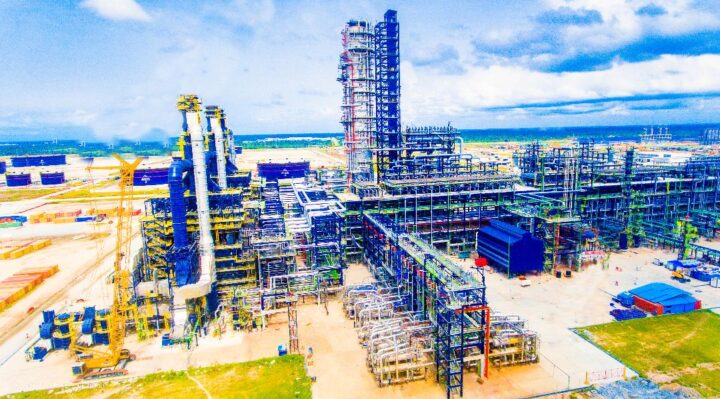
The current battle surrounding the Dangote Refinery is not simply about petrol imports. It is not merely a disagreement between a private refinery, fuel marketers, regulators, or the Nigerian National Petroleum Company Limited (NNPCL).
It is a struggle over the future direction of Nigeria’s economy.
At stake is whether Africa’s largest oil producer will finally become a serious industrial economy capable of refining its own resources and retaining value within its borders, or whether it will remain trapped in a system that exports crude oil, imports refined products, and continuously transfers wealth abroad.
That is why this moment matters.
And that is why the debate around the Dangote Refinery must be understood far beyond personalities, politics, or commercial rivalries, even those reminiscent of the industrial rivalries of the Rockefeller and Ford era in the United States.
The real issue is whether Nigeria is prepared to defend productive industrial capacity or continue rewarding a system built around dependence and a rentier structure.
Nigeria’s Long History of Broken National Ambition
Nigeria has seen too many strategic national projects collapse without delivering meaningful economic transformation.
The automobile industry offers a striking example. In the 1970s and early 1980s, Nigeria built one of the most ambitious automotive industrialisation programmes in Africa. Assembly plants such as Peugeot Automobile Nigeria (PAN), Volkswagen of Nigeria, Anambra Motor Manufacturing Company (ANAMMCO), Leyland Nigeria, Steyr Nigeria, and National Truck Manufacturers produced passenger cars, buses, trucks, and agricultural vehicles using Completely Knocked Down (CKD) kits.
The long-term vision extended beyond assembly to full industrial integration, local parts manufacturing, steel production, tyres, batteries, glass, and a broader supply chain ecosystem. At its peak, the Peugeot 504 became a national symbol of industrial progress.
Yet this momentum collapsed from the mid-1980s due to policy inconsistency, foreign exchange instability, trade liberalisation, and deteriorating infrastructure. Local manufacturers were exposed to import competition they could not withstand, and the industry gradually disappeared, another lost opportunity in Nigeria’s industrial journey.
The same pattern repeated elsewhere.
Nigeria once possessed one of the most important railway networks in West Africa, alongside Nigeria Airways, Nigerian Telecommunications Limited (NITEL), and the National Fertilizer Company of Nigeria (NAFCON).
Over time, neglect, corruption, poor maintenance, and inconsistent policy destroyed much of this infrastructure. The textile industry, once a major employer, collapsed under the combined pressures of smuggling, weak power supply, and poor policy support. NEPA became synonymous with unreliable electricity. Ajaokuta Steel Complex never fulfilled its promise.
Each failure followed the same tragic pattern: enormous potential weakened by poor governance, inconsistent policy, vested interests, and weak execution.
There are strong indications that ongoing reforms under President Bola Ahmed Tinubu seek to address these structural weaknesses. However, consistency and execution will determine whether history repeats itself or changes course.
That history matters today because many Nigerians now fear that the country may once again undermine one of the few large-scale industrial platforms capable of altering its economic trajectory.
The Oil Paradox That Weakened Nigeria
Few contradictions are as striking as Nigeria’s petroleum sector.
For decades, Nigeria exported crude oil while importing refined petroleum products – a structurally flawed arrangement for a major oil-producing nation.
Refining creates jobs, strengthens energy security, reduces foreign exchange pressure, and retains value within national borders. Yet Nigeria failed to build and sustain this capacity.
State-owned refineries suffered chronic inefficiency, poor maintenance, and repeated rehabilitation failures. As local refining collapsed, imports became the norm.
Crude oil left Nigeria. Refining happened abroad. Finished products returned at significant cost.
Over time, this evolved into a complex economic system involving traders, shipping companies, financiers, depot owners, foreign exchange dealers, insurers, and politically connected intermediaries.
The ordinary Nigerian bore the cost – through inflation, currency weakness, public debt, subsidy burdens, and lost industrial opportunities.
Nigeria exported crude and imported refined fuel, unemployment, and economic vulnerability.
Why Dangote Refinery Changes the Equation
The Dangote Refinery represents the most significant attempt in decades to reverse this structural imbalance.
This is not simply about one businessman. It represents refining capacity, petrochemicals, logistics infrastructure, fertilizer production, marine systems, and thousands of jobs within Nigeria.
Most importantly, it represents industrial execution at a scale the Nigerian state struggled unsuccessfully to achieve for decades.
For the first time, Nigeria possesses domestic refining infrastructure capable of substantially reducing dependence on imports.
That changes the political economy of the downstream sector.
And that is precisely why tensions have escalated.
The Import System and the Structure of Dependence
Nigeria’s subsidy and import regime created one of the most expensive fiscal structures in the country’s history.
Beyond subsidies lies a broader ecosystem – freight, foreign exchange allocations, financing, storage margins, and trading profits.
Over time, an uncomfortable reality emerged: many interests benefited from Nigeria’s inability to refine fuel locally.
This is the issue Nigerians are now confronting.
The Dangote Refinery disrupts this structure.
The Monopoly Argument, NNPCL, and Institutional Contradictions
One of the most common criticisms directed at the Dangote Refinery is the fear of monopoly.
That concern should not be dismissed. Competition is essential in any healthy economy.
However, the argument must be examined more carefully.
Dangote’s legal challenge is aimed at limiting an import regime that has historically undermined domestic refining capacity. Seeking to curtail indiscriminate import licences is not an attempt to eliminate competition; it is an effort to correct a structural imbalance.
The position advanced by NNPCL raises deeper questions.
As a 7.2% shareholder in the Dangote Refinery, NNPCL stands to benefit directly from its success. At the same time, it remains a dominant participant in the importation of refined petroleum products.
This dual role presents a clear and troubling conflict of interest.
In effect, NNPCL operates simultaneously as:
- a shareholder in domestic refining,
- a participant in fuel importation, and
- a central actor in the regulatory and commercial framework.
Such an arrangement blurs the lines between national interest and institutional incentives.
On one hand, NNPCL benefits from the refinery’s success as a strategic asset capable of reducing foreign exchange outflows and strengthening energy security. On the other hand, it continues to defend an import-dependent structure that undermines that very investment.
This contradiction weakens the credibility of the monopoly allegation.
The real issue is not monopoly, it is structural transition.
Local refining is industrial policy. The real question is whether Nigeria is willing to protect productive capacity while encouraging broader competition over time.
Nigeria’s Defining Economic Choice
Nigeria now stands before a historic decision.
It can continue defending a model built on crude exports, imported fuel, and structural dependency.
Or it can move toward a system grounded in refining, industrialisation, and domestic value creation.
President Bola Tinubu’s reform agenda suggests an awareness of these structural challenges. However, long-term success will depend on consistent policy support for domestic production.
Conclusion
Nigeria has already lost too many strategic opportunities. It has watched industries collapse, infrastructure decay, and economic potential erode. It cannot afford another episode of self-sabotage.
If Nigeria undermines domestic refining at the moment meaningful capacity has emerged, history may record this as yet another missed opportunity.
But if Nigeria supports productive investment, strengthens transparency, and protects industrial capacity while encouraging competition, this moment could mark the beginning of genuine transformation.
This is an opportunity the current administration must not miss.
Nigeria must stop exporting crude and importing poverty.
Nigeria must refine more of its own wealth.
Nigeria must strengthen industrial capacity.
Nigeria must protect productive capital.
Nigeria must reward value creation instead of dependency.
And above all, Nigeria must finally build an economy that works first for Nigerians.
Dan D. Kunle writes from Abuja