




Global oil markets fell sharply after the United States and Iran announced a deal to end military operations, raising expectations that disruptions to crude supplies and shipping routes in the Middle East could ease.
Pakistan’s Prime Minister, Shehbaz Sharif, who played a mediating role in the negotiations, announced that Washington and Tehran had reached an agreement that would halt “military operations on all fronts, including in Lebanon.” The deal is expected to be formally signed in Switzerland on Friday, June 19.
Details of the agreement remain limited, with officials still clarifying the scope of commitments made by both sides. However, the announcement immediately triggered a decline in crude prices as traders priced in the possibility of renewed oil flows through the strategic Strait of Hormuz.
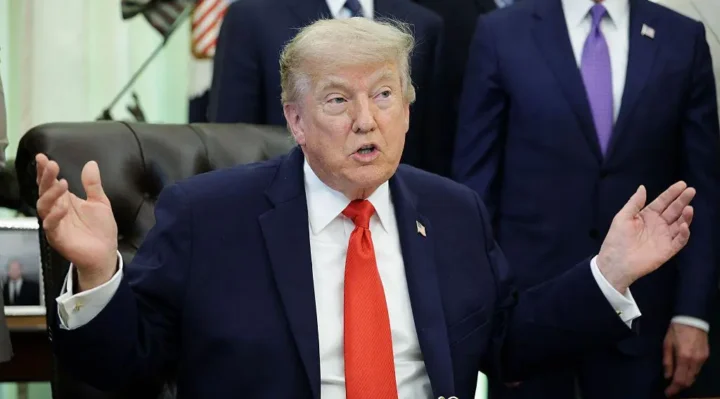
US President Donald Trump welcomed the development, saying “let the oil flow,” as markets reacted to expectations that one of the world’s most important energy corridors could reopen.
Brent crude, the global benchmark, fell about 4.8 per cent to $83.18 per barrel, while US crude prices dropped roughly 5.6 per cent to $80.13 following the announcement.
Iran’s Deputy Foreign Minister, Kazem Gharibabadi, confirmed on state television that a deal had been finalised, while Iran’s military leadership described the outcome as a success for Tehran.
The conflict began on February 28 after US and Israeli airstrikes targeted locations in Iran, triggering retaliatory attacks by Tehran against Israel and US-linked interests in the Gulf region. The escalation disrupted shipping activity through the Strait of Hormuz, a critical route responsible for transporting about 20 per cent of global oil and liquefied natural gas supplies.
Energy analysts warned that despite the market reaction, uncertainty remains. Vandana Hari of energy research firm Vanda Insights said the lack of clarity around the agreement could continue to create volatility in oil markets.
“The absence of full details about the deal may keep traders cautious,” she said, adding that oil prices could experience further swings until implementation steps become clearer.
The reopening of the Strait of Hormuz would ease pressure on global energy markets by restoring one of the world’s busiest crude shipping routes and reducing concerns over supply shortages.
However, analysts say the durability of the agreement will depend on whether both countries maintain the ceasefire and whether broader regional tensions are resolved.
For oil-producing countries, including Nigeria, the development could bring mixed consequences. A return of Middle East supply would reduce the geopolitical premium that had supported crude prices, potentially putting downward pressure on export earnings. However, improved global stability could lower shipping costs and reduce energy market uncertainty.