


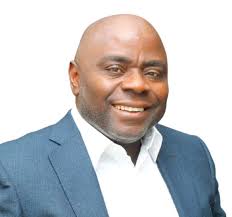


Why We Keep Expanding While Others Are Idle – MG Vowgas Boss
… Tinubu Restoring Investor Confidence in Oil, Gas Sector
…Nigeria Must Build New Steel Rolling Mill to Industrialise
$4bn Annual Steel Import Bill Hurting Nigeria’s Fabrication Industry
Only Indigenous Firm with ASME Certification, We’re Scaling Up
This interview with Ejiofor Alike, the Managing Director and Chief Executive Officer of MG Vowgas Limited, Mr. Godwin Izomor, highlights the company’s aggressive investments in fabrication capacity, Nigeria’s industrial limitations caused by the absence of functional steel rolling mills, and how President Bola Ahmed Tinubu’s administration has helped restore investor confidence in the oil and gas industry. He also spoke on the importance of local content and the expected commissioning timeline of MG Vowgas’ ongoing expansion projects. Excerpts:
Many indigenous companies complain of lack of jobs and idle facilities, but MG Vowgas is expanding. What is driving your new investments?
The key to our continued investments is simple: delivering high-quality jobs to clients. Once you deliver a good job, it opens the door to another. The oil and gas industry is highly technical, and fabrication is an area where not everybody can survive. It is capital-intensive and requires deep expertise.
Fabrication is not just welding. You must understand the in-depth requirements of fabrication, because without competence and strong systems, you cannot survive in the sector.
MG Vowgas is the only truly indigenous Nigerian company with ASME (American Society of Mechanical Engineers) certification. Other indigenous companies that have ASME certification originally obtained it when they were still foreign-owned firms before later localising.
We are the first and only fully indigenous company that has been able to sustain the ASME stamp over the years. Our stamp is renewed every three years, and we have consistently sustained that renewal, unlike others.
We also operate a Welding Management System, issued under ISO international standards. Today, MG Vowgas is the only company in Nigeria with that certification. It used to be held by MG Vowgas and Saipem, but Saipem is no longer in Nigeria.
During the Buhari administration, foreign investors held back investments, blaming delays around the Petroleum Industry Bill. Now that Nigeria has the Petroleum Industry Act (PIA), what has changed under Tinubu?
We must give credit to the government of President Bola Tinubu. In the oil and gas industry, he has done excellently. If there is any area where this government deserves strong credit, it is oil and gas.
We are seeing international oil companies launching new projects again. The industry is responding positively. Shell has launched Bonga North and is preparing Bonga South-West. What impact will such projects have on indigenous companies?
It is a very good development. Nigerian companies must support the government to encourage the IOCs to increase investments in the sector.
Oil and gas is critical because it has a unique ability to circulate value within the economy. If one company wins a project, about 10 indigenous companies can also benefit directly or indirectly from the same project.
If we get the oil and gas industry right, it will generate strong multiplier effects across the economy. Banks will benefit, SMEs will benefit, and more Nigerians will be engaged across the value chain.
President Tinubu understands this clearly, and his administration is making efforts to create an enabling environment.
The PIA itself is not a perfect document, which is why the President has introduced concessions to attract more international investments. Indigenous companies do not have robust funding capacity to independently drive massive investments, so Nigeria still needs international companies to bring capital into the sector.
Lack of a functional steel rolling mill has been identified as a major obstacle to Nigeria’s industrialisation. How does this affect the oil and gas industry?
The absence of a functional steel rolling mill is a major challenge. Nigeria cannot industrialise without a working steel rolling mill. Steel rolling mills are critical infrastructure for any nation seeking industrial development.
President Tinubu’s administration should look into this issue very critically.
I expect the government to mandate the Nigerian Content Development and Monitoring Board (NCDMB) to use the Local Content Fund and partner with local or international investors to build a new steel rolling mill, separate from the Ajaokuta Steel Complex, because Ajaokuta is burdened by too many longstanding problems.
Government equity in a new steel rolling mill can be financed through the Local Content Fund.
We need steel rolling mills in Nigeria to support our industrialisation drive. We already have fabrication yards capable of producing critical heavy equipment components. But the cost of importing steel into Nigeria is extremely high and continues to weaken local capacity.
Some foreign interests are also working against Nigeria’s economy by ensuring that Ajaokuta does not work, so Nigeria remains dependent on steel imports.
Today, Nigeria spends about $4 billion annually importing steel. If we can spend $4 billion every year importing steel, why can’t we build a functional rolling mill locally? We must look inward for a sustainable solution.
What else should Tinubu’s administration do to encourage indigenous investments in oil and gas?
This administration is already taking steps to encourage investments by offering incentives and concessions to attract international companies.
I must commend President Tinubu for his strong understanding of the oil and gas industry and the efforts he has made to restore investor confidence. He has created an environment where foreign investors can trust Nigeria again.
During the eight years of the Buhari administration, international oil companies did not make major investments because the government was not ready to offer the concessions required to attract capital. Investors naturally want to take their funds to locations where they can earn adequate returns.
President Tinubu is making concessions that encourage investors to bring money into the country.
When should Nigerians expect the commissioning of your ongoing projects?
We are going to invite the Nigerian Content Development and Monitoring Board (NCDMB) and some media organisations for a tour of our facilities between April and June.
The tour will include our Onne facility, Warri facility, and our ongoing expansion project at our main facility in Port Harcourt.
So MG Vowgas is building in Onne in addition to Port Harcourt?
Yes. We are building a new facility in Onne. At the moment, two major projects are ongoing simultaneously: the Onne facility and the Warri facility.
This interview by Ejiofor Alike was culled from THISDAY Newspaper.