


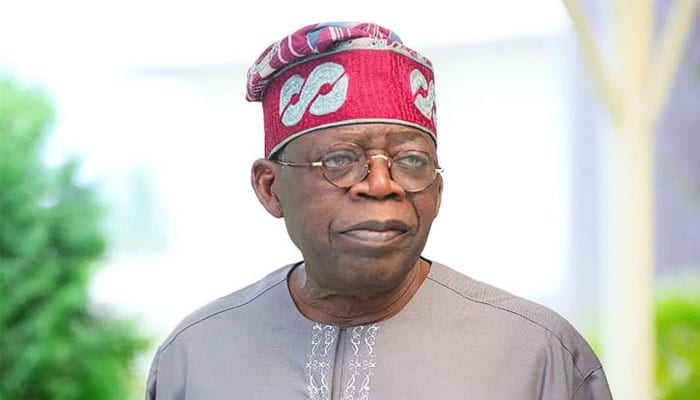


ABUJA, Nigeria — President Bola Ahmed Tinubu has welcomed Nigeria’s latest economic growth figures, saying the country’s 4.43 per cent real Gross Domestic Product (GDP) growth in the second quarter of 2026 signals that economic reforms implemented by his administration are beginning to deliver stronger macroeconomic performance.
The National Bureau of Statistics (NBS) reported that Nigeria’s GDP grew by 4.43 per cent year-on-year in Q2 2026, compared with 4.23 per cent recorded in the corresponding quarter of 2025.
The latest performance was supported by growth across key sectors, including agriculture, manufacturing, oil and gas, and services. The services sector continued to account for the largest share of aggregate economic output.
In nominal terms, Nigeria’s GDP stood at ₦119.27 trillion in Q2 2026, representing an 18.43 per cent increase from the ₦100.7 trillion recorded in Q2 2025.
Tinubu: Reforms Have Stabilised Economy
Reacting to the report on Monday, President Tinubu said the figures demonstrated that the difficult economic reforms undertaken since May 2023 were laying the foundation for stronger and more sustainable growth.
He said his administration had deliberately prioritised measures aimed at stabilising the economy, arguing that the benefits of those policies would increasingly become visible to households and businesses.
“In the past three years, we tried to do the hard part by implementing the necessary reforms to stabilise the economy. Now the economy is stabilised, and we have laid the foundation for a prosperous nation,” Tinubu said.
The president said the government did not introduce the reforms to create hardship but to establish conditions under which economic prosperity could eventually reach a wider proportion of Nigerians.
He described the latest GDP performance as evidence that the administration’s Renewed Hope Agenda was beginning to produce measurable results.
Nigeria Records Trade Surpluses, Tinubu Says
Tinubu also pointed to developments in Nigeria’s external and financial position as evidence of improving economic conditions.
According to the president, Nigeria is now recording trade surpluses, while foreign-exchange reserves have reached their highest level in 17 years. He also said the country’s credit rating had improved and that investors who previously exited Nigeria were beginning to return.
The president highlighted increased oil and gas production and ongoing infrastructure projects, including roads, railways and major highways, as additional indicators of economic recovery and investment.
He also cited developments in the education sector, including the absence of university strikes and the expansion of student financing through the Nigerian Education Loan Fund (NELFUND).
Tinubu said affordable credit was also being extended to civil servants through the Nigerian Consumer Credit Corporation (CreditCorp).
Government Plans More Relief for Households
Despite the improvement in headline economic indicators, the president acknowledged that significant challenges remain for vulnerable Nigerians.
He said the government would in the coming weeks intensify measures aimed at easing the cost-of-living pressures facing households.
These measures, he said, would include cheaper transportation options, increased food production and additional relief programmes targeted at communities and vulnerable groups.
The emphasis on household-level relief reflects the administration’s broader challenge of translating improving macroeconomic indicators into tangible improvements in living standards.
Tinubu Pledges Stronger Microeconomic Outcomes
The president said his administration would not consider the latest GDP figures a reason to slow down economic reforms.
“Under our watch, the economy is on the irreversible path to experience even more growth that all homes will feel at the dining table and in their pockets,” Tinubu said.
He added that the government remained committed to converting stronger and more consistent macroeconomic performance into improved microeconomic outcomes for Nigerian households and businesses.
“We are not resting on our oars. We are fully committed to translating consistent, stronger economic performance into better microeconomic outcomes for our citizens,” he said.
Tinubu also stressed the need to preserve the progress recorded so far, saying the government must remain vigilant to ensure that economic gains are sustained.
The Q2 2026 GDP performance therefore places renewed emphasis on the next phase of Nigeria’s economic reform agenda: ensuring that stronger output growth, improving external balances and increased investment ultimately translate into higher household purchasing power, greater business activity and broader economic opportunity.