

By Ishaya N.U.Adamu PhD
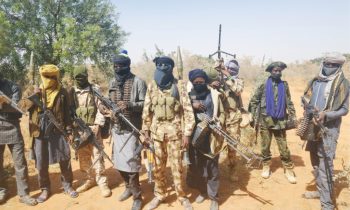
The escalation of insecurity across Nigeria has led to widespread school closures, mass abduction, and persistent disruption in educational access.
In many Nigerian towns today, silence has replaced the once familiar laughter of schoolchildren. The chalkboards remain blank, the dust on desks grows thicker, and playgrounds that once echoed with joy now lie eerily still. These are not abandoned buildings from a distant past; they are the present reality of thousands of schools shut down due to insecurity. The consequences go far beyond interrupted lessons; they strike at the moral core of the nation, the strength of the state, and the future of millions of children.
A Crisis Measured in Numbers and Tears
The scale of Nigeria’s education collapse is staggering. According to UNICEF:
11,536 schools have been closed in Nigeria since December 2020 due to insecurity.
More than 1.3 million children had their learning directly interrupted during the 2020/2021 academic year alone.
Nigeria now has conservativily 18.3 million out-of-school children, the highest number in the world.
Beyond closures, the country has also witnessed a wave of school attacks unprecedented in its history.
Since the Chibok abduction in 2014, at least 2,496 students have been abducted in 92 documented school attacks.
Between 2023 and 2025 alone, 816 students were kidnapped from Nigerian schools.
But statistics, as grim as they are, cannot fully capture the emotional earthquake this crisis has unleashed.
Imagine a 10-year-old girl in Kaduna who has not been allowed to return to school since a nearby community was attacked. She clutches her books at home as if they are relics from another life. Her mother cries at night, torn between the dream of seeing her daughter in a classroom and the fear of losing her to bandits. The Niger state school abduction has led to the death of one Mr Anthony by heart attack. The information has it that Mr Anthony’s three children were abducted. Multiply this story by a million, and you begin to understand the tragedy unfolding across the nation.
The Collapse of the Social Contract: When the State Cannot Protect the Classroom
Education is the clearest signal of state presence. A functioning school tells a community that government exists, cares, and can protect. When schools shut down because the state can no longer guarantee safety, a dangerous message is sent:
the government cannot protect its most vulnerable citizens, children.
The implications are profound.
Weakening of State Authority
When armed groups dictate whether a school opens or closes, they become the de facto authorities. Communities begin to shift loyalty and survival strategies away from government structures toward local vigilantes, informal militias, or even the violent actors themselves.
This is how states weaken, not always through coups, but through quiet substitution.
Erosion of Public Trust
Every closed school deepens the public’s belief that institutions cannot deliver on their constitutional responsibilities. A people who no longer trust their government lose faith in the democratic system itself.
Emboldenment of Non-State Actors
When kidnappers abduct over 300 children and negotiations, not arrests follow, criminals learn the same lesson terrorists learn worldwide;
Fear is power. And power pays.
This emboldens further attacks, reinforces impunity, and signals a shrinking state presence. Consequently, it becomes worrisome to hear some lsamic clerics saying their sympathy lies with the attackers instead of the attacked. What kind of human reasoning is this? One is tempted to conclude that such Islamic clerics are beneficiaries of the terrorists actions and a functioning government should demand accountability.
Human Stories Behind Every Closed Gate
For communities, school closures are not abstract events, they reshape daily life.
Children Are Losing Childhood
School is not just a place for reading and writing; it is a sanctuary where children explore curiosity, build friendships, and dream. Without it:
Many girls are forced into early marriages.
Many boys drift into street hawking or join dangerous groups.
Many children experience trauma, anxiety, and hopelessness.
Parents Are Living in Fear
Parents who once proudly dressed their children for school now hesitate each morning. Some relocate to cities they cannot afford. Others send their children to schools far from home, tearing families apart.
Teachers Are Leaving the Profession
In several northern states, hundreds of teachers have resigned out of fear of attacks. worsening an already fragile education system. Some have been killed, others kidnapped, many traumatized.
Entire Communities Are Emotionally Wounded
A closed school is a silent wound. It represents lost progress and stolen hope. When a school dies, part of the community dies with it.
The Economic and Future Implications: A Nation Mortgaging Its Tomorrow
The cost of insecurity-driven school closures is not only emotional or social, it is economic, strategic, and generational.
A Workforce Without Skills
Nigeria’s economy is being quietly weakened. Millions of children missing school today will become adults without foundational skills. This affects:
productivity
innovation
income levels
national competitiveness
The future labour force is being crippled before it even matures.
Deepening Poverty
Education is one of the most powerful tools for escaping poverty. Without it, families remain trapped in deprivation. Poverty fuels insecurity, which fuels more school closures, a vicious cycle.
Global Marginalization
As countries move toward knowledge-based economies, Nigeria is losing ground. Without investment in human capital, it is impossible to compete in the global digital, technological, and scientific landscape.
Rising Radicalization
Idle, uneducated youth are more vulnerable to recruitment by violent groups. Extremism thrives in environments where hope is scarce and opportunity nonexistent.
Security Implications When Fear Becomes a Way of Life
The closure of schools is both a symptom and a catalyst of further insecurity.
Violent Groups Gain Psychological Victory
When terrorists or bandits successfully shut down education, they inflict collective psychological damage. They send the message: “Your government cannot protect you. Only fear governs here.”
Rural Areas Become Ungoverned Spaces
School attacks are often concentrated in rural communities. When schools close, teachers flee, government presence disappears, and communities become even more vulnerable to further attacks.
3A Normalization of the Unthinkable
Kidnapping should shock the nation. But when children are kidnapped repeatedly, a deadly numbness sets in. The extraordinary becomes normal, and that is how societies decay.
The Moral Question: What Kind of Country Are We Becoming?
When a nation can no longer guarantee the safety of children inside classrooms, the question is no longer merely political or economic, it becomes moral.
What kind of society leaves its most innocent unprotected?
What future can we promise when we cannot secure the present?
How do we measure progress in a country where fear keeps classrooms empty?
We must confront these questions honestly.
The Way Forward: What Nigeria Must Do Urgently
This crisis can be reversed. But it requires courage, strategic clarity, and national commitment.
Protect Schools with Real Security Infrastructure
Not symbolic security but actual, functional protection
trained school security personnel
perimeter fencing
early warning technology
community surveillance networks
collaboration between schools and local security agencies
Government Must Retake Control of Lost Spaces
Security forces must prioritize clearing areas where school closures are highest. Reopening schools should be treated as part of national security strategy.
Special Funding for At-Risk Education Zones
States facing mass closures must receive emergency federal funding to rebuild, equip, and secure schools.
Trauma, Counselling, and Recovery Support
Children who survive abductions and closures need serious psychological support. Without healing, they cannot learn, and they may carry trauma into adulthood.
Punish Perpetrators End Impunity
Nigeria must move away from negotiation and ransom as default responses. Prosecution must be consistent, swift, and public. This will take care of bandits, kidnappers and their sympathizers.
Communities Must Be Empowered as Partners
Local communities understand their security terrain better than anyone. Government must work with them, not around them.
Conclusion
Reopening Schools Is an Act of National Revival
The silence around closed classrooms is not just the absence of children’s voices, it is the silence of a nation’s conscience. The cost of these closures cannot be measured only in numbers. They are measured in broken dreams, shattered confidence in the state, weakened national identity, and a future that grows dimmer each day.
If Nigeria must rise again, it must begin by reopening the schools, safely, boldly, and without compromise.
A nation that cannot protect its children cannot protect its future.
But a nation that chooses to defend its classrooms chooses to defend its destiny.