


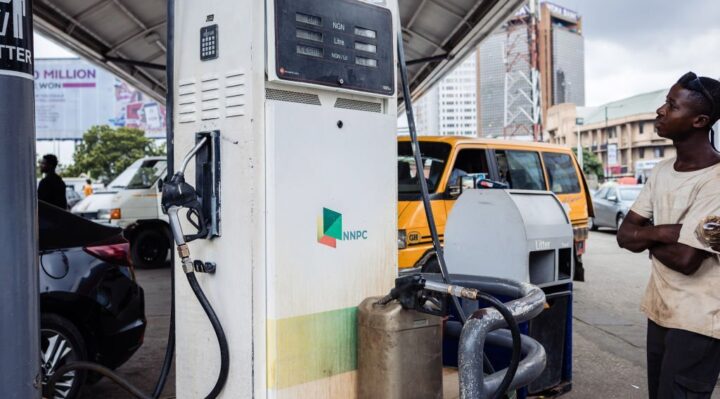


…DAPPMAN Responds To Dangote Refinery, Calls for Facts, not distortion
…Dangote Refinery accuse Marketers of being responsible for for price inflation through fuel importation, fraudulent subsidy claims
The spat between the Dangopte Refinery and the Depot and Petroleum Products Marketers Association of Nigeria (DAPPMAN) is getting messier as both parties have thrown caution into the wind and engage in accusation and counter accusation of one unethical activity or the other.
DAPPMAN categorically rejects what it described as misleading and factually incorrect statements made by the Dangote Petroleum Refinery in its press release of 15 September 2025.
But Dangote Refinery fired back and accused the marketers of being responsible for price inflation through fuel importation, fraudulent subsidy claims.
The fight for control of Nigeria’s downstream sector is taking another twist between Dangote Refinery and fuel importers .The facility has named major fuel importers allegedly involved in subsidy fraud and inflating prices to defraud Nigerians The development followed the accusation of depot owners that the mega refinery sells its fuel cheaper outside the country
Nigeria’s biggest refinery, Dangote Petroleum Refinery, has accused leading fuel importers of sabotaging its operations and defrauding Nigerians through inflated petrol consumption data, fraudulent subsidy claims, and the supply of substandard products.
According Dappman, it stated that as an association representing legitimate depot owners and marketers in Nigeria’s deregulated downstream sector, we are compelled to correct the record and address claims that threaten the integrity of our industry, mislead the public, and undermine regulatory confidence.
- NUPENG Strike Allegation: False and Baseless
The refinery’s claim that DAPPMAN sponsored NUPENG suggests a fundamental lack of understanding of how Nigeria’s downstream ecosystem works. Stakeholders such as NUPENG, NARTO, PETROAN, MEMAN, IPMAN, and DAPPMAN are independent entities, each with distinct roles and interests. DAPPMAN does not control labour unions or other industry associations and has no business interfering in their decisions.
DAPPMAN did not sponsor or support NUPENG’s proposed industrial action. Our role has been one of de-escalation, focused on averting disruption to fuel supply and national mobility.
- Market Pricing: Not a Dangote-Driven Outcome
The recent reductions in pump prices are primarily the result of:
- A stronger naira (₦1,500–₦1,550/$ since Q1 2025), supported by the fiscal and monetary reforms of President Bola Ahmed Tinubu’s administration and the Central Bank of Nigeria (CBN)
- Declining international crude prices (Brent crude fell from $92 to $76 per barrel)
- Market deregulation and improved FX liquidity under the current administration
- Dangote’s Exports Thrive in Open Markets, Why Not Nigeria?
The Dangote Refinery has, in recent times, successfully exported refined petroleum products to the United States and other countries with well-established refining capacity and competitive supply chains. These markets, despite having robust domestic production, remain open to external suppliers in the interest of supply diversity and market efficiency. If such countries had adopted restrictive trade practices, these export opportunities would not have existed. This underscores the global value of open, competitive supply chains, a principle Nigeria must uphold, not abandon.
- Round-Tripping Accusations: Misleading
Allegations that Nigerian marketers import Dangote-refined products from Togo are both misleading and ironic. For clarity, Offshore Lome is a recognized West African (WAF) trading hub, not a blending plant, as some commentators have suggested. Just
as the Dangote Refinery is a refinery and not a factory, Offshore Lome is a trading point where cargoes are exchanged, not processed.
Pricing “Offshore Lome” reflects international market transactions and is not the same as retail pricing within Lome, Togo.
It is, in fact, the Dangote Refinery that offers discounts of over $40/MT to foreign traders while denying Nigerian marketers access to coastal vessel loading and restricting them to gantry-only lifting. This restrictive access and pricing structure create the very arbitrage opportunity the refinery now criticizes.
- Product Quality Allegations: A Double Standard
Dangote’s claims that DAPPMAN members import fuels with sulphur levels above 50ppm contradict its own operational record. The refinery itself applied for waivers from NMDPRA to distribute high-sulphur products, in direct contravention of PIA Section 317(11).
We challenge the refinery to publicly deny this.
- Supply Volume Claims: NMDPRA Holds the Record
The Nigerian Midstream and Downstream Petroleum Regulatory Authority (NMDPRA) maintains daily logs of loading and dispatch volumes across all depots and terminals, including Dangote.
Claims about “actual consumption” volumes are outside the refinery’s jurisdiction. If Dangote seeks credibility, it should open its production and dispatch records to independent audit.
DAPPMAN maintains that the refinery currently supplies no more than 35% of national consumption.
- Market Structure: There is No Shortcut to Scale
DAPPMAN members operate hundreds of depots and thousands of filling stations across Nigeria. NARTO manages a fleet of over 30,000 trucks.
This national infrastructure cannot depend on a single supply source or be replaced by a one-location refinery. Attempts to do so signal a deliberate push toward monopolization.
We reject statements that belittle the infrastructure and investment of marketers and distributors as “mere assets.” Such remarks are disrespectful to the hundreds of billions invested by Nigerian entrepreneurs over decades.
Every player in the value chain, refiners, bulk traders, depot operators, transporters, and retailers, has a defined and vital role. Demanding that marketers build refineries betrays a lack of understanding of modern petroleum economies.
- CNG Trucks and Road Safety: Proceed with Caution
While DAPPMAN supports the introduction of CNG trucks as a cleaner energy initiative, safety cannot be compromised. The Dangote Group has a well-documented history of fatal road crashes linked to poorly trained or unsupervised drivers. Only weeks ago, Nigerians mourned the lives lost in tragic accidents involving Dangote cement trucks across multiple states.
Adding 4,000 new trucks to Nigeria’s already strained road network without mandatory training, retraining, and safety audits only heightens the risk of further tragedies, this time involving highly flammable petroleum products.
We therefore call on the FRSC, insurance industry, and relevant regulators to conduct a comprehensive audit of Dangote’s transport operations and road safety record. Mandatory driver vetting and retraining must be a precondition before widespread deployment of these trucks.
Residents along major corridors, such as the Lekki-Epe Expressway, are already experiencing worsening congestion and road wear due to increased truck traffic. Without immediate intervention, the risks to lives, property, and public infrastructure will escalate.
- Disparaging Regulators: A Dangerous Narrative
Dangote’s statements implicitly accuse NMDPRA, Customs, and border agencies of regulatory failure.
This not only undermines public confidence in these institutions but poses a subtle threat to the President Bola Ahmed Tinubu administration’s reform agenda. The administration has supported deregulation and competition. DAPPMAN supports these reforms fully. The refinery’s actions suggest a preference for protectionism and dominance.
- Allegations of Product Diversion: Produce Evidence or Retract
We challenge Dangote Refinery to present verifiable evidence that DAPPMAN members are diverting products to neighbouring countries.
Smuggling is a national security matter. If any member is complicit, let the relevant agencies act.
We issue a 7-day ultimatum to the refinery to either retract this allegation or provide documented proof. If neither occurs, we reserve the right to seek legal redress.
We Demand Fair Competition, Not Monopolies
DAPPMAN does not seek conflict. We seek a petroleum market where:
- All players follow the same rules
- Consumers benefit from efficiency and choice
- Supply is diversified, safe, and competitive
We will resist any attempt to create a monopoly masked as patriotism.
The Nigerian public, regulators, and media must remain vigilant and hold all market actors accountable to the same standards of transparency, fairness, and operational excellence.
Dangote Refinery allegation against DAPPMAN
In a paid advertorial response to the Depot and Petroleum Products Marketers Association of Nigeria (DAPPMAN), Dangote alleged that the widely quoted daily petrol consumption figure of 93 million litres is “grossly overstated,” insisting actual demand is less than half the figure.
Aliko Dangote’s refinery takes on fuel importers as he speaks on dirty fuel import practices in Nigeria.
According to the company, these inflated figures were used for years to justify subsidy payments, crude swap deals, and equalisation fund claims—while ordinary Nigerians endured fuel shortages and adulterated products.
According to Dangote’s statement reported by BusinessDay, members, including Matrix, AA Rano, AYM Shafa, and NIPCO, were accused of importing low-quality petrol in 2022 that contained over 15% methanol, a chemical mix that damaged thousands of engines nationwide. The refinery alleged that such practices, alongside inflated consumption claims, enabled round-tripping and drained public funds running into trillions of naira. It called for a forensic audit of fuel importers’ records, equalisation payments, and regulatory revenue accounts. The refinery added that publishing their financial statements for the past decade would show the scale of the alleged fraud.
Dangote also raised red flags over how imported fuel is certified. It dismissed claims that it supplies only 35% of Nigeria’s petrol demand, stressing that regulators have failed to publish transparent or independently verified daily consumption figures.
Without reliable data, the refinery said, proper quota allocation and planning under Nigeria’s Petroleum Industry Act (PIA) remain impossible. Price comparisons and market reform Dangote also pushed back against comparisons of its prices with those in neighbouring Togo. It noted that the average pump price in Lomé stands at 680 CFA francs per litre (₦1,826)—far higher than Nigeria’s ₦865. The company argued that its refinery has positioned Nigeria as West Africa’s hub for affordable petrol, even though more than 60% of its crude feedstock is imported. DAPPMAN has yet to respond to these allegations, but had accused the refinery of selling fuel cheaper in other countries than in Nigeria.
Dangote maintained that resistance from fuel importers is not about consumer welfare but about protecting arbitrage opportunities. “It is increasingly clear that DAPPMAN and some of its members remain disproportionately focused on the importation of refined products,” the refinery said.
For Nigerians, the battle could determine whether petrol becomes cheaper and more stable—or whether entrenched interests keep fuel prices artificially high.