


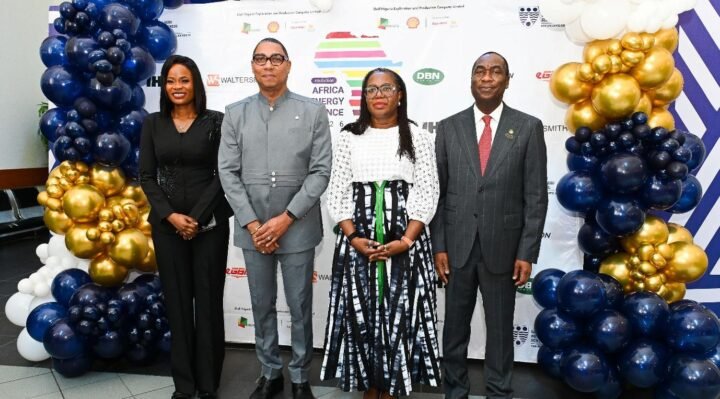


LAGOS, Nigeria — Shell has urged Nigeria to sustain its energy-sector reforms, attract fresh investment and strengthen collaboration among government, regulators, industry operators and host communities to unlock the country’s oil and gas potential and support long-term economic growth.
Ronald Adams, Managing Director of Shell Nigeria Exploration and Production Company Limited (SNEPCo), made the call while delivering a keynote address at the fourth Africa Energy Conference organised by Lagos Business School in Lagos at the weekend.
Adams said Nigeria’s energy future would depend on its ability to translate policy reforms and abundant natural resources into bankable projects, increased production, reliable energy supplies and broader economic opportunities.
He identified regulatory certainty, an attractive investment environment and effective collaboration among stakeholders as critical requirements for accelerating project development and strengthening the competitiveness of Nigeria’s energy industry.
According to him, reforms must be implemented efficiently to give investors the confidence to commit capital and enable energy projects to progress more quickly from discovery and development to production.
“Nigeria’s resources alone do not guarantee prosperity. Prosperity comes when resources are matched with investment, technology, sound policy and disciplined execution,” Adams said.
He added that the country’s success would be determined not by the size of its oil and gas reserves but by its ability to convert them into investment, production and sustainable economic growth.
Shell highlights Bonga, Bonga North investments
Adams reaffirmed Shell’s commitment to supporting Nigeria’s energy development, citing the company’s more than six decades of involvement in the country’s oil and gas industry.
He said Shell and its partners had contributed to the development of major energy infrastructure, supported Nigerian businesses, invested in human capital and participated in the country’s economic development.
The SNEPCo managing director pointed to the Bonga deepwater project as an example of how technology, partnerships and Nigerian expertise could support complex offshore oil and gas operations.
He also highlighted Bonga North as a continuation of that development, underscoring the importance of sustained investment and technical capabilities in Nigeria’s deepwater sector.
Deepwater projects require substantial upfront capital, advanced technology and long development timelines, making policy consistency and investor confidence particularly important for securing new commitments.
For Nigeria, attracting such investments is central to efforts to sustain oil production, generate export earnings, support government revenue and strengthen the domestic energy value chain.
Global competition raises pressure for reform
Adams warned that Nigeria must move quickly to improve its investment competitiveness as countries compete for increasingly mobile international capital and advances in technology reshape the global energy industry.
“The countries that attract investment tomorrow are those that improve competitiveness today,” he said, urging stakeholders to maintain the momentum of ongoing reforms.
He called for stronger coordination among oil and gas operators, regulators, Nigerian National Petroleum Company Limited (NNPC Ltd) and host communities to maximise the value of the country’s resources.
The appeal highlights a key challenge for Nigeria’s petroleum industry: translating regulatory changes into actual investment decisions, faster project execution and sustained production growth.
While the country possesses substantial hydrocarbon resources, investors also assess fiscal terms, regulatory predictability, security, infrastructure, financing conditions and the time required to bring projects online.
Adams said Nigeria needed to sustain reform efforts and turn them into tangible commercial and economic outcomes.
“Our task is to sustain the momentum and translate reform into projects, projects into growth, and growth into shared prosperity,” he said.
Lagos Business School conference focuses on energy security
The fourth Africa Energy Conference was held under the theme, “Securing Nigeria’s Energy Future: Policy Reform, Capital Mobilisation, and Pathways to a Sustainable Power and Energy Market.”
The event attracted government officials, industry executives, energy professionals and students to discuss policy reforms, investment mobilisation and the development of a sustainable energy market in Nigeria.
Lagos State Deputy Governor Obafemi Hamzat represented Governor Babajide Sanwo-Olu as the conference’s guest of honour.
SNEPCo was a principal sponsor of the event and mounted an exhibition showcasing its deepwater operations and social investment initiatives across Nigeria.
The conference provided a platform for discussions on the policy, financing and partnership requirements for developing Nigeria’s energy resources and strengthening the wider energy market.
For Nigeria, the challenge is to ensure that reforms create a predictable environment for investment while enabling the country to translate its oil and gas endowment into productive economic activity, employment and more widely shared benefits.