




LAGOS — Seplat Energy Plc has called for accelerated investment across Nigeria’s natural gas value chain, warning that the country’s vast gas reserves will deliver little economic value without sufficient production, processing, transportation and distribution infrastructure.
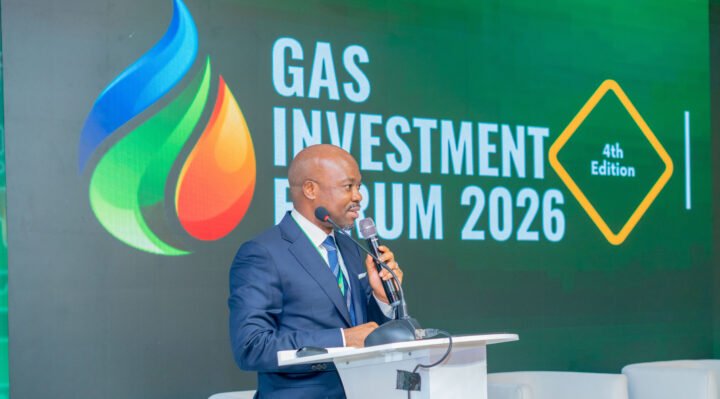
Speaking at the Gas Investment Forum (GIF) 2026 in Lagos, Seplat Energy Chief Executive Officer, Engr. Effiong Okon, represented by the company’s Director of Gas & New Energy, Okechukwu Mba, said Nigeria must urgently convert its gas resources into reliable energy for households, industries and power plants.
The forum was themed “Positioning Nigeria as Africa’s Global Gas Powerhouse.”
Nigeria has more than 215 trillion cubic feet of proven natural gas reserves, giving it one of the largest gas resource bases in the world. But Seplat said unlocking that potential will depend on sustained capital deployment across the entire gas value chain.
“Gas reserves in the ground do not power homes or factories. Gas creates value only when it is produced and reliably delivered to consumers,” Okon said.
He argued that Nigeria’s priority should now be to transform its gas endowment into industrial growth, electricity generation, energy security and wider energy access.
Gas investment critical to Nigeria’s energy security
Seplat’s intervention comes as Nigeria seeks to expand domestic gas supply to support power generation, manufacturing, fertiliser production and other gas-intensive industries.
Okon pointed to the scale of Africa’s energy-access challenge, noting that about 600 million people in sub-Saharan Africa still lack access to electricity.
For Nigeria, he said, developing the gas sector represents an opportunity to address domestic energy shortages while creating a platform for industrialisation and export growth.
He urged policymakers, investors, lenders and energy companies to focus on projects capable of moving gas from reserves to end-users.
Government reforms improving investment climate
The Seplat CEO commended the Federal Government for measures aimed at improving the investment environment for natural gas projects.
Of particular importance, he said, were efforts to address legacy debts in the gas-to-power value chain, which have historically weakened cash flows and undermined the bankability of new gas projects.
He also highlighted recent final investment decisions on major energy projects and described the commencement of operations on the OB3 gas pipeline as an important development for Nigeria’s domestic gas market.
The OB3 pipeline is strategically significant because improved interconnectivity between Nigeria’s major gas-producing regions and consuming markets could reduce transportation constraints and support more reliable gas deliveries.
Okon also pointed to the Petroleum Industry Act (PIA) as an important step towards creating a more transparent and predictable regulatory framework for investors.
He cited the roles of the Nigerian Midstream and Downstream Petroleum Regulatory Authority (NMDPRA) and the Midstream and Downstream Gas Infrastructure Fund (MDGIF) in strengthening regulatory certainty and supporting infrastructure development.
Nigeria positioned to compete in global gas markets
Beyond meeting domestic demand, Seplat sees an opportunity for Nigeria to become a major supplier to regional and international gas markets.
Okon said Nigeria’s geographical position in the Gulf of Guinea gives the country an advantage in serving growing gas demand across Africa while also providing access to international markets, including Europe.
However, achieving that ambition will require investment not only in upstream gas production but also in processing facilities, pipelines, LNG infrastructure and other transportation systems.
The challenge, therefore, is shifting from the size of Nigeria’s gas reserves to the commercial infrastructure required to monetise them.
Seplat expands domestic gas infrastructure
Seplat used the forum to highlight its own investments in Nigeria’s gas infrastructure over the past decade.
The company has developed the 375 million standard cubic feet per day (MMscfd) Oben Gas Plant, the 90 MMscfd Sapele Gas Plant and the 300 MMscfd ANOH Gas Plant.
Together, the facilities form a significant part of Seplat’s domestic gas supply portfolio.
The company currently supplies gas directly to six power stations and supports industrial customers through gas distribution networks.
The ANOH Gas Plant is also supplying gas to fertiliser manufacturers, linking gas development to Nigeria’s agricultural and food-security objectives.
Acquisition strengthens LPG and gas supply
Seplat said its acquisition of ExxonMobil’s onshore and offshore assets has also increased domestic supplies of butane and liquefied petroleum gas (LPG).
At the same time, the company is investing in compressed natural gas (CNG) infrastructure to extend access to cleaner and potentially more affordable gas-based energy beyond areas connected to pipeline networks.
The expansion of CNG infrastructure could become increasingly important as Nigeria seeks alternatives to conventional liquid fuels and attempts to broaden access to natural gas for transport and distributed energy applications.
Seplat targets lower emissions
Seplat also reiterated its commitment to reducing emissions from its operations.
According to the company, it successfully ended routine gas flaring across its onshore operations at the end of 2025, contributing to a reduction in operational emissions intensity.
The development is significant as Nigeria faces increasing pressure to reduce gas flaring while simultaneously increasing domestic gas utilisation.
For investors, reducing routine flaring can potentially improve both environmental performance and the commercial utilisation of gas that would otherwise be wasted.
From gas reserves to industrial growth
The central message from Seplat is that Nigeria’s gas opportunity can no longer be measured simply by the volume of resources underground.
The country needs capital, infrastructure and reliable markets to turn gas molecules into electricity, industrial output and export revenues.
Okon called for closer collaboration between government, regulators, energy companies and financial institutions to accelerate projects capable of converting gas into power and industrial production.
“Nigerians cannot wait any longer. We must move from discussions to implementation and create the partnerships and investments necessary to fully realise the promise of our gas resources,” he said.
The Gas Investment Forum 2026 brought together policymakers, regulators, investors and industry executives to examine investment opportunities and strategies for accelerating Nigeria’s gas development.
For Nigeria, the investment challenge is increasingly clear: the country does not have a gas-resource problem; it has a gas-monetisation challenge.
Turning more than 215 Tcf of proven reserves into reliable electricity, competitive industrial energy and export earnings will depend on whether Nigeria can attract the scale of capital required to build the infrastructure connecting its gas resources to domestic and international market