




US President Donald Trump has renewed threats to cripple Iran’s infrastructure if ongoing negotiations fail, as tensions deepen over stalled diplomacy and the continued closure of the Strait of Hormuz.
In a fiery post on Sunday, Trump declared “NO MORE MR. NICE GUY!”, warning that Washington would “knock out every single power plant and every single bridge in Iran” if no agreement is reached.
The warning comes as the United States prepares to send a delegation to Islamabad for fresh talks with Tehran. However, uncertainty hangs over the process, with no confirmed date for the next round of negotiations following an earlier 21-hour session on April 11 that ended without a breakthrough.
Iranian officials have downplayed expectations. Parliament Speaker Mohammad Bagher Ghalibaf said discussions were ongoing but emphasized that both sides remain “far from the final discussion,” despite noting limited progress.
At the heart of the dispute is Iran’s nuclear programme, which Washington insists must be curtailed to prevent weapons development—an allegation Tehran has consistently denied. The issue has been compounded by disagreements over Iran’s stockpile of near-weapons-grade enriched uranium. While Trump claimed Tehran had agreed to hand over roughly 440 kilograms of the material, Iranian authorities dismissed the assertion, insisting the stockpile would not be transferred.
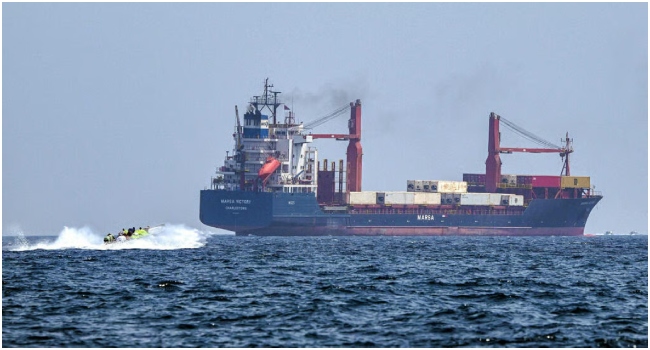
Adding a volatile dimension to the standoff is Iran’s decision to keep the Strait of Hormuz closed. The strategic chokepoint, through which about a fifth of global oil and liquefied natural gas flows, has become a major leverage tool in the conflict.
Tehran has tied any reopening of the waterway to the lifting of a US naval blockade on its ports. Ghalibaf warned that maritime traffic would remain restricted unless Washington reverses course, while Iran’s Revolutionary Guards cautioned that any vessel attempting passage without approval could be targeted.
The closure has already rattled global markets, with oil shipments disrupted and shipping activity in the strait dropping sharply. Although the route was briefly reopened following a temporary ceasefire linked to fighting in Lebanon, it was quickly shut again after the US maintained its blockade.
Meanwhile, security has been tightened in Islamabad ahead of expected talks, with road closures, checkpoints, and armed patrols deployed around key locations.
The broader conflict—sparked by US-Israeli strikes on Iran on February 28—remains under a fragile two-week ceasefire set to expire in the coming days. Despite what Trump described as “very good conversations,” both sides appear entrenched, with fundamental disagreements unresolved.
Iranian President Masoud Pezeshkian questioned why Tehran should relinquish what he called its “legal right” to nuclear development, underscoring the deep divide that continues to hinder progress.
With negotiations faltering and military rhetoric intensifying, the path to a lasting agreement remains uncertain, while the risk of renewed escalation looms large.