




$300,000 intervention keeps radiotherapy services running, supports patients across Nigeria, West Africa
Renaissance Africa Energy Company Limited and its joint venture partners have been commended for helping to sustain cancer treatment at the National Hospital Abuja, with hospital data showing that about 450 patients received radiotherapy between January and September 2026.
The National Hospital Abuja said the intervention had helped restore access to critical radiotherapy services after the facility’s cancer treatment equipment became non-operational, disrupting care for patients.
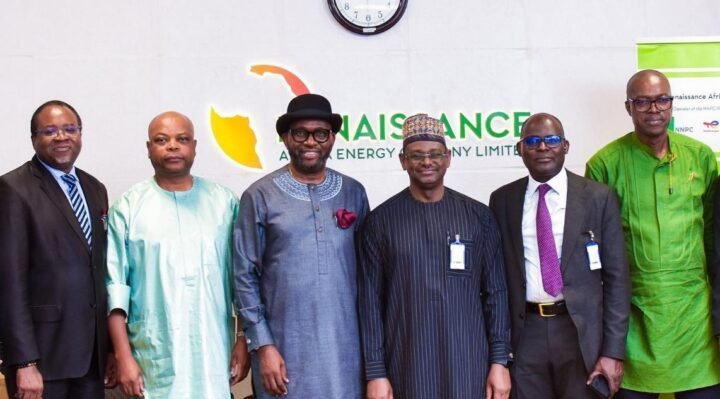
The hospital’s Chief Medical Director, Prof. Muhammad Raji Mahmud, made the disclosure during a courtesy visit by the hospital’s management team to Renaissance Managing Director and Chief Executive Officer, Tony Attah, and members of the company’s leadership team at Renaissance headquarters in Port Harcourt.
Mahmud said the hospital had faced a difficult period when its radiotherapy machines were unavailable, leaving patients without access to essential cancer treatment.
“We had lost hope before we contacted Renaissance. Our machines were down and it affected the treatment of patients. It was a difficult period, and after considering the options available to us, we reached out to Renaissance,” he said.
According to the hospital, Renaissance provided $300,000 to support the continued operation and maintenance of its Linear Accelerator (LINAC) radiotherapy machine.
Mahmud said the intervention had significantly improved the hospital’s ability to provide cancer treatment, describing its impact as extending beyond Nigeria because patients from other West African countries also seek treatment at the National Hospital Abuja.
“The $300,000 support has touched lives immensely. Renaissance has done enormously well not only for Nigeria, but for the entire West African sub-region because patients come here from across the region for treatment,” he said.
450 patients treated
The impact of the intervention is reflected in the hospital’s treatment figures.
Between January and September 2026, the National Hospital Abuja treated approximately 450 cancer patients through its Department of Radiotherapy and Oncology. Nearly two-thirds of the patients received treatment with curative intent.
The patients ranged in age from three to 100 years, including six children.
The hospital also reported a low treatment-default rate, with only six patients discontinuing treatment between January and August.
Breast, prostate, cervical, head and neck cancers were among the conditions treated, with breast cancer accounting for 44 per cent of cases during the period.
Beyond keeping equipment operational, the intervention has also contributed to making radiotherapy treatment relatively more affordable.
Hospital data indicates that a full course of radical breast cancer radiotherapy at the National Hospital Abuja costs about ₦800,000, compared with approximately ₦1.2 million at some centres and more than ₦3 million at others.
That cost differential is significant in a country where the financial burden of cancer treatment remains a major barrier to sustained care.
From maintenance to long-term sustainability
For Renaissance, the partnership is being positioned as more than a short-term intervention.
Attah said the company and its joint venture partners valued the opportunity to contribute to healthcare outcomes and make a measurable difference in patients’ lives.
“On behalf of our joint venture partners, our Board and management team, we appreciate the opportunity to partner with National Hospital Abuja to improve healthcare outcomes and touch lives,” he said.
He also commended Mahmud’s decision to continue serving in Nigeria and his efforts to strengthen healthcare delivery.
Attah said Renaissance intended to deepen its collaboration with the hospital, with future discussions expected to extend beyond maintenance and repairs.
“The next phase of our discussions will focus not only on maintenance and repair, but also on long-term equipment replacement, sustainability and ensuring that patients continue to have access to world-class cancer treatment services,” he said.
The shift towards equipment replacement and sustainability is important because the availability of sophisticated cancer-treatment equipment is only one part of the challenge facing radiotherapy services.
Keeping such equipment operational requires technical expertise, maintenance funding, spare parts and a reliable long-term financing model.
Partnerships fill critical infrastructure gaps
The Renaissance-National Hospital partnership also highlights the role that corporate and industry partnerships can play in addressing gaps in Nigeria’s healthcare infrastructure.
For patients, the immediate value of a functioning radiotherapy machine is access to treatment that may otherwise be unavailable or require travel to another facility.
For healthcare institutions, however, the longer-term challenge is ensuring that equipment remains operational after initial intervention.
That makes the proposed transition from maintenance support towards equipment replacement and sustainability potentially significant.
It could provide a framework for moving corporate healthcare interventions away from one-off donations towards longer-term partnerships tied to measurable service delivery.
For Renaissance and its joint venture partners, the National Hospital Abuja initiative forms part of a broader approach to creating social value beyond their core energy business.
For the hospital, the priority remains maintaining reliable cancer treatment services and expanding access to patients who might otherwise struggle to obtain care.
The two organisations said their continued engagement would focus on strengthening healthcare infrastructure, improving equipment reliability and expanding access to affordable cancer treatment.
The partnership ultimately underscores a broader challenge in Nigeria’s cancer-care system: access to treatment depends not only on the availability of specialists and medicines, but also on whether critical diagnostic and radiotherapy equipment remains functional and affordable.
Sustaining that infrastructure could therefore be as important as installing it in the first place.