



… Minimum wage N30,000

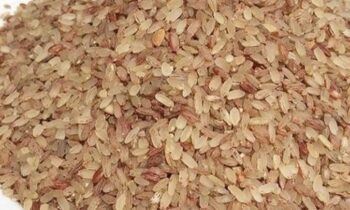
As December draws near, with many agricultural belts across the country currently devastated by flood, famine is now starring Nigerians in the face as the price of rice one of the most stable foods, has now hit N47, 000 per 50 kG.
As at Saturday 22, October 2022, the price of the same 50 kg was put at N45, 000 but by the following day which was Sunday 23, October 2022, it has hit N47,000. The local rice is now costing N35, 000 per 50 Kg.
At the popular Mile 12 market in Lagos, rice traders said the price of the commodity is longer stable and that they cannot predict it as it might even go above N50,000 per 50kg by Christmas.
Meanwhile, the minimum wage in the country is N30, 000 at the federal level while some states are still paying less than N25,000 per month.
With the price of rice becoming so exorbitant to cope with by average Nigerians, the charismas might be bleak for a number of families.
The real effect of the flood is yet to be felt because farmers are still counting their losses
Over $15 million worth of planted crops are under water as flood submerged 4,500 hectares of Olam rice farmland in Nassarawa state.
Other infrastructure such as dykes, canals, and drainage worth $8 million were equally destroyed.
Olam is just one, out of many farms, both large and small-scale farms that are currently suffering from this flood.
A farmer told Business Standards that the real effect of the flood would be felt next year and this might be a pointer to serious famine in the land.
Counting the losses, the Business Head and Vice President, Olam Rice Farm, Anil Nair, said in a statement that the losses are huge but can only be accurately estimated once the water recedes.
Olam Rice Farm, which is in Rukubi Doma Local Government Area of Nassarawa State, is seated on a 13,500 hectares land and operates a crop area of four 4,500 hectares. It is the largest rice farm with the state of the art equipment in Africa.
The company recently upgraded its milling capacity from 120 metic tonnes to 240 metric tonnes annually as part of the company’s efforts to ensure food availability and security in Nigeria.
Olam also has consistently supported its host communities as part of its social cooperate responsibility (CSR) initiatives.
The most recent reliable figures for production come from the US Department of Agriculture, which has projected that Nigeria’s rice production will reach five million tonnes in 2022, slightly above the previous year.
The US data show a significant increase in production between 2015 and 2017, which then slowed before another jump in 2020 when production reached a high point of 5.04 million tonnes.
The Nigerian government has data on rice production also showing a big rise between 2015 and 2016. But it does not have any figures for the last few years.
Ocheiga Enoch isn’t expecting much of a rice harvest from north-central Nigeria after floodwaters submerged his fields and those of so many other farmers this season.
Many in Benue state — known as the country’s “food basket” — now find themselves in the unusual position of looking for seedlings in preparation for next year’s farming season at a time when they should be harvesting the current crop.
“The kind of suffering we are passing through now is terrible,” Enoch said of the floods, now Nigeria’s worst in more than a decade after killing more than 600 people and forcing 1.3 million to flee their homes.
Above-average rainfall and devastating flooding have affected 5 million people this year in 19 countries across West and Central Africa, according to a new U.N. World Food Program situation report.
Nigeria has recorded at least 600 deaths while authorities in neighboring Niger authorities say at least 192 people have died there as the result of storms, either from homes collapsing or from drowning in flood waters.
Already the floods have led to “a major increase in cholera cases and other preventable diseases in Nigeria,” the International Rescue Committee (IRC) warned in a statement on Friday, calling for more resources to scale up its response.
Experts point to unusual rainfalls and the failure of governments to set up early warning systems to better prepare for climate extremes.
The floods in West Africa are “majorly due to government negligence to environmental related issues like climate change over a period of time,” said Ibrahim Raji, a climate researcher focusing on the region. The situation “boils down to the government’s reluctance to address environmental issues,” Raji added.
Long before the floods and Russia’s war in Ukraine, West Africa already was facing its worst food crisis in 10 years with more than 27 million hungry people, according to a report released by international aid organizations in April.
Chi Lael, a spokeswoman for the U.N. World Food Program in Nigeria, is concerned about the “worrying harvest season ahead.”
Some farmers have lost close to 75% of everything planted this year, said Kabir Ibrahim, national president of the local farmers association.
The damage caused by the floods in Nigeria also extends to livestock in areas like Bayelsa state, where Innocent Aluu said he lost nearly 10,000 fowl in his poultry farm to the floods, most of them dying from waterborne diseases.
“I feel like running away — nobody can think straight,” a devastated Aluu said by phone, estimating his losses at 30 million naira ($68,600).
Experts fear that the damaged farmlands will further increase food prices at a time when inflation rates are already at record highs — Nigeria and Ghana at 20.7% and 37% respectively.
In Nigeria, WFP said it is providing emergency assistance in the state of Yobe, one of the hardest-hit places. But the agency urgently needs $129 million to support its operations in Nigeria over the next five months, its spokeswoman said.
Olusola Bello with agency report