


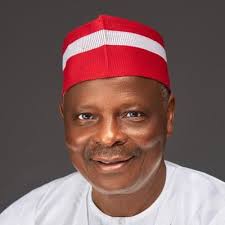


Former Kano State governor Rabiu Musa Kwankwaso has formally joined the African Democratic Congress (ADC), ending months of speculation about his political future and marking a significant realignment ahead of the 2027 general elections.
Kwankwaso, who registered as a card-carrying member of the party in Kano on Monday, declared his intention to mobilise Nigerians against the ruling All Progressives Congress (APC), which he accused of presiding over hardship and insecurity.
In a symbolic show of commitment, the former presidential candidate said he would insist on both ADC and Independent National Electoral Commission (INEC) voter registration as a condition for access to his residence, underscoring the seriousness of his political push.
“I am happy to have collected my membership card. I urge all my supporters to register with the party and also with INEC to be eligible to vote for change,” he said.
Collapse of APC Talks
Kwankwaso’s move effectively ends a prolonged and discreet engagement with President Bola Ahmed Tinubu and the APC, which dates back to the lead-up to the 2023 elections.
Negotiations, which reportedly included discussions around a possible vice-presidential slot, repeatedly stalled over mutual distrust and concerns about political leverage. Despite renewed outreach after the elections, both sides failed to reach a workable agreement.
Sources indicate that tensions escalated following alleged attempts by the APC to court key figures within Kwankwaso’s political base, including Kano State governor Abba Kabir Yusuf—a development the former governor has publicly condemned as betrayal.
ADC Positions Itself as Opposition Hub
Welcoming the defection, ADC National Chairman David Mark described Kwankwaso’s entry as a turning point for Nigeria’s opposition politics, framing it as part of a broader effort to consolidate democratic forces.
Mark warned against what he characterised as attempts by the ruling party to weaken opposition voices, stressing that Nigeria’s democracy depends on a vibrant, competitive political environment.
“The future of Nigeria cannot be built through domination; it must be built through participation,” he said, urging Nigerians across divides to rally behind a broad-based coalition.
Similarly, the party’s National Publicity Secretary, Bolaji Abdullahi, described Kwankwaso as a “game-changer,” noting that his entry has already triggered a surge in party registrations nationwide.
Political Heavyweights in Attendance
The event drew several prominent political figures, including former APC national chairman John Odigie-Oyegun and ex-governors such as Rotimi Amaechi, Emeka Ihedioha, Aminu Tambuwal, Liyel Imoke, and Rauf Aregbesola, signalling growing elite interest in opposition realignment.
Son Joins, Expands Political Base
Kwankwaso’s son, Mustapha Kwankwaso, also announced his resignation from the New Nigeria Peoples Party (NNPP) and confirmed he is in the process of joining the ADC.
He described the move as a “deliberate and well-considered decision,” expressing confidence that the party offers a credible platform for governance reform and national development.
Internal Dissent Emerges
However, the development has not been without controversy. A faction of the ADC led by Nafiu Bala Gombe cautioned Kwankwaso to follow due process in joining the party, warning against attempts by any group to “hijack” its structure.
The faction insisted that the ADC remains committed to democratic ideals and is “not for sale,” urging adherence to internal procedures and transparency.
2027 in Focus
With his formal entry into the ADC, Kwankwaso appears to be positioning himself—and his political movement—for a central role in shaping the opposition landscape ahead of 2027.
His defection not only reshapes alliances but also signals the intensifying battle for Nigeria’s political future as parties begin early manoeuvres for the next electoral cycle.