




By Dan D. Kunle
Nigeria’s four government-owned refineries have become symbols of one of Africa’s most persistent industrial failures.
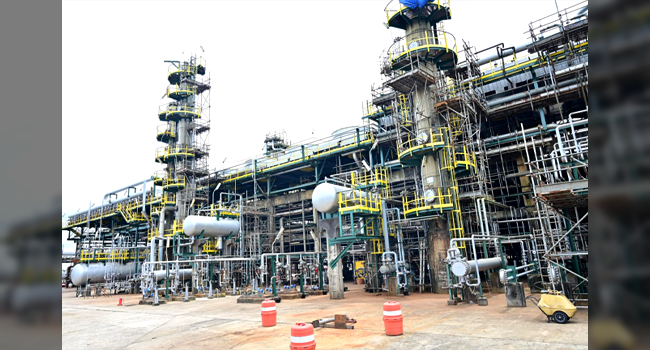
Located in Port Harcourt, Warri and Kaduna, the facilities were once expected to anchor Africa’s largest oil producer with domestic refining capacity. Instead, after decades of repeated rehabilitation programmes, billions of dollars in public spending and numerous government promises, they continue to deliver little commercial value while consuming scarce national resources.
President Bola Tinubu has already demonstrated political courage by removing the country’s long-standing fuel subsidy and liberalising the foreign exchange market—two reforms successive administrations had largely avoided. The next major structural reform should be the transparent privatisation or concession of Nigeria’s remaining state-owned refineries.
A Costly Cycle of Failure
For more than three decades, Nigeria has invested heavily in maintaining four ageing refineries under the control of the Nigerian National Petroleum Company (NNPC) Limited.
Successive governments have announced turnaround maintenance programmes, rehabilitation contracts, technical partnerships and commissioning dates. Yet the facilities have repeatedly failed to operate sustainably at commercially viable levels.
The economic consequences extend far beyond the oil sector.
Revenue generated from Nigeria’s upstream petroleum industry—which should finance investments in healthcare, education, infrastructure, electricity, security and economic diversification—has instead been repeatedly channelled into assets that continue to underperform.
For a country seeking fiscal stability amid mounting public debt and development needs, this model has become increasingly difficult to justify.
The Case for Privatisation
Nigeria has already demonstrated that privatisation can succeed.
The former Eleme Petrochemicals complex, privatised during the administration of former President Olusegun Obasanjo and now operated by Indorama, has evolved into one of the country’s leading petrochemical producers.
Its transformation illustrates an important principle: governments are not always the best managers of commercial enterprises. When experienced investors bring capital, technology, operational expertise and commercial discipline, struggling assets can often be revitalised.
The same logic should now be applied to Nigeria’s remaining refineries.
A Transparent Process Matters
Any transfer of these assets should follow Nigeria’s established legal framework through the National Council on Privatisation and the Bureau of Public Enterprises.
The process should include:
- open international bidding;
- transparent asset valuation;
- appointment of independent transaction advisers;
- public disclosure of bidding criteria;
- publication of winning bids and investment commitments; and
- clear operational and performance obligations for successful investors.
Transparency is essential not only for public confidence but also for investor certainty.
Nigeria’s history of opaque public asset transactions has often produced legal disputes, policy reversals and arbitration risks that discourage long-term investment.
Global Investors Should Compete Equally
If Chinese companies—or investors from any other country—wish to acquire or operate these assets, they should participate through an open competitive process.
Their technical capability, financial strength, refinery operating experience and investment commitments should be assessed alongside bids from Nigerian and other international investors.
National assets should never change hands through opaque administrative arrangements disguised as technical partnerships, memoranda of understanding or evaluation exercises.
Competitive bidding remains the best safeguard for value, transparency and public accountability.
A Balanced Ownership Structure
One possible ownership model would allocate:
- 85% to strategic core investors;
- 5% to host state governments; and
- 10% retained by the Federal Government.
Such a structure would reduce political interference while preserving a strategic national interest, encouraging host community participation and giving investors sufficient operational control to justify long-term capital commitments.
Let NNPC Focus on Its Core Business
As a commercially oriented national oil company, NNPC Limited should concentrate on areas where it holds strategic advantages.
These include expanding crude oil production, securing reserves, strengthening pipeline infrastructure, improving gas development and enhancing value creation across Nigeria’s upstream petroleum sector.
Operating ageing refineries that have consistently failed to generate sustainable commercial returns should no longer be central to its mission.
A Defining Reform
Nigeria has reached a pivotal moment in its energy transition.
The country can continue allocating public resources to repeated refinery rehabilitation programmes with uncertain outcomes, or it can embrace a transparent restructuring that attracts private capital, modern technology and professional management.
Not every refinery may ultimately prove commercially viable. Some may warrant concessioning, others outright privatisation, while facilities that cannot be economically justified may need to be decommissioned.
What matters is that every decision follows the law, is conducted transparently and serves Nigeria’s long-term economic interests.
The future of these refineries will be remembered as one of the defining tests of Nigeria’s commitment to economic reform.
Ending decades of public-sector underperformance in refining would not only strengthen investor confidence but also allow scarce national resources to be redirected toward sectors capable of delivering broader economic and social returns.
The time for repeated rehabilitation announcements has passed. The case for transparent reform has become increasingly compelling.