




Nigeria’s oil and gas regulator, the Nigerian Upstream Petroleum Regulatory Commission (NUPRC), has declared an end to the era in which companies held oil prospecting licences for years without developing the assets.
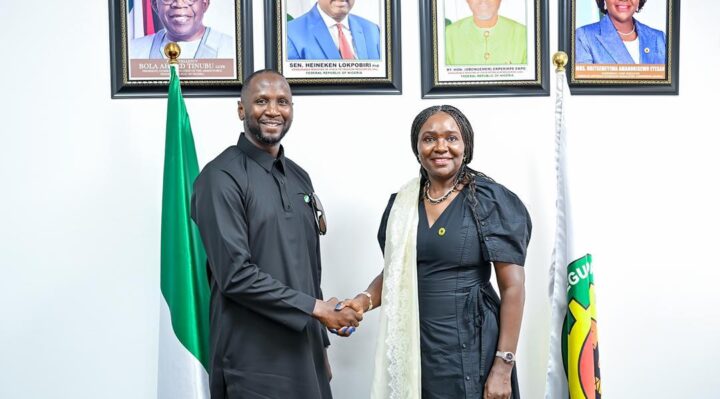
The Commission’s Chief Executive, Oritsemeyiwa Eyesan, disclosed this during a meeting with the management of the Petroleum Directorate of Sierra Leone at the commission’s headquarters in Abuja.
Eyesan explained that the introduction of the “drill or drop” provision under the Petroleum Industry Act (PIA) now compels licence holders to actively develop their assets or relinquish them.
According to her, the provision—contained in Section 94 of the Act—has helped eliminate the long-standing practice where operators held oil blocks for decades without undertaking exploration or development activities.
She noted that the enforcement of the rule is already attracting more serious investors to Nigeria’s upstream sector, particularly in the ongoing 2025 licensing round, which is expected to boost the country’s petroleum reserves.
“The PIA also opened opportunities for both small and large players because there is now a ‘drill or drop’ provision in the Act,” Eyesan said. “In the past, we had operators who held licences for up to 20 years and did absolutely nothing. That era is over.”
She added that the commission now has more assets available for bidding, creating the possibility of conducting licensing rounds more frequently, potentially on an annual basis.
Eyesan also expressed satisfaction with the level of interest shown by investors in the 2025 licensing round. She disclosed that 50 oil blocks have been offered, while the guidelines restrict any company—either independently or as part of a consortium—from bidding for more than two blocks.
“The outcome of the pre-qualification submissions demonstrates that there is strong appetite for the bid round,” she said.
To ensure transparency in the process, Eyesan said the NUPRC has introduced an additional layer of validation by engaging an independent audit firm to review and verify the licensing system.
She added that the results of the audit would be made public to further strengthen investor confidence.
Speaking during the visit, the Director-General of the Petroleum Directorate of Sierra Leone, Foday Mansaray, said the delegation came to study Nigeria’s petroleum regulatory framework and draw lessons to support the development of Sierra Leone’s hydrocarbon sector.
Mansaray emphasised the need for stronger energy cooperation between the two countries and called for a more sustainable partnership.
“We are here to collaborate with the NUPRC at a bilateral level and learn from Nigeria, our big brothers in the industry,” he said, noting that Sierra Leone, despite its relatively small population of about eight million people, remains ambitious about developing its oil and gas resources.