




…Regulatory officials address feedstock security, refinery competitiveness, petroleum logistics, gas infrastructure and project financing as Nigeria reshapes its downstream market.
The Nigerian Midstream and Downstream Petroleum Regulatory Authority (NMDPRA) has used OTL Africa Downstream Energy Week 2026 to outline key regulatory priorities shaping Nigeria’s evolving petroleum industry, with senior officials participating in discussions on domestic refining, fuel distribution, gas development, energy financing and market competitiveness.
The Authority’s participation across several high-level sessions reflected its engagement with industry stakeholders as Nigeria seeks to strengthen domestic refining, improve petroleum supply chains, expand gas utilisation and attract investment into midstream and downstream infrastructure.
Representing the Executive Director, Hydrocarbon Processing Plants, Installations and Transportation Infrastructure (HPPITI), Engr. Francis Ogaree, Dr Stanley Ngene participated in a panel on Feedstock Strategy and Refinery Competitiveness.
The discussion examined the importance of reliable crude oil supply, feedstock availability and efficient refinery operations in improving the competitiveness of Nigeria’s expanding domestic refining industry.
The session came amid significant changes in the country’s petroleum supply structure, with the Dangote Petroleum Refinery increasingly influencing domestic petrol supply and renewed attention on optimising the country’s 445,000 barrels-per-day installed capacity in state-owned refineries.
Engr. Olakanmi Ayodeji, Director of Distribution Systems, Storage and Retailing Infrastructure (DSSRI), also participated in discussions on the African Energy Outlook and the Tanker Shipping and Logistics Forum.
His contributions focused on issues central to petroleum distribution efficiency, storage infrastructure optimisation, retail market standards and maritime logistics as Nigeria’s downstream market adjusts to changing supply and trading patterns.
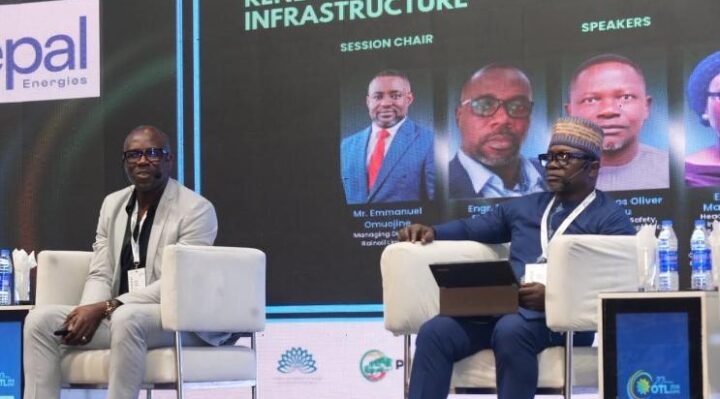
On gas development and energy transition, Engr. Elvis Duruji, Deputy Director, Midstream and Downstream Gas Infrastructure Fund (MDGIF), and Engr. Amos Oliver, Assistant Director, Health, Safety, Environment and Community (HSEC), contributed to a session titled Scaling Energy Options: Unlocking Gas and Renewables through Processing and Infrastructure.
The discussions aligned with the Authority’s responsibility to promote gas infrastructure development, deepen domestic gas utilisation through the MDGIF and strengthen health, safety and environmental compliance across petroleum operations.
The investment and market regulation agenda also featured prominently, with Engr. Adedayo Oyinlola of Economic Regulations and Strategic Planning (ERSP) participating in the West African Fuels Congress: What’s New and What’s Next?
Dr Priscilla Ekpe, also of ERSP, contributed to the Energy, Finance and Investment Forum, where discussions addressed regulatory economics, petroleum pricing, investment conditions and the bankability of downstream projects.
The participation of officials from multiple NMDPRA directorates highlighted the growing importance of regulatory coordination in addressing the commercial, infrastructure and operational challenges confronting Nigeria’s midstream and downstream petroleum sectors.
As domestic refining expands and regional petroleum trade evolves, the industry faces critical questions around crude supply, refinery utilisation, product distribution, storage capacity, pricing transparency, gas infrastructure and access to long-term financing.
OTL Africa Downstream Energy Week, one of Africa’s major downstream petroleum industry gatherings, provides a platform for regulators, operators, investors and policymakers to examine these challenges and identify opportunities for collaboration.
The NMDPRA’s engagement at the 2026 edition underscored the Authority’s commitment to industry consultation and regulatory cooperation in building a more efficient, competitive and sustainable petroleum market across Nigeria and West Africa.