




Nigeria’s ambition to use natural gas as a catalyst for industrialisation, job creation and economic growth will depend as much on developing a skilled workforce as on building pipelines, processing plants and other gas infrastructure, the Minister of State for Petroleum Resources (Gas), Rt. Hon. Ekperikpe Ekpo, has said.
Ekpo said Nigeria’s Decade of Gas initiative cannot achieve its objectives without deliberate and sustained investment in human capital, warning that infrastructure alone would not translate into lasting economic value without professionals capable of designing, financing, constructing, operating and maintaining the assets.
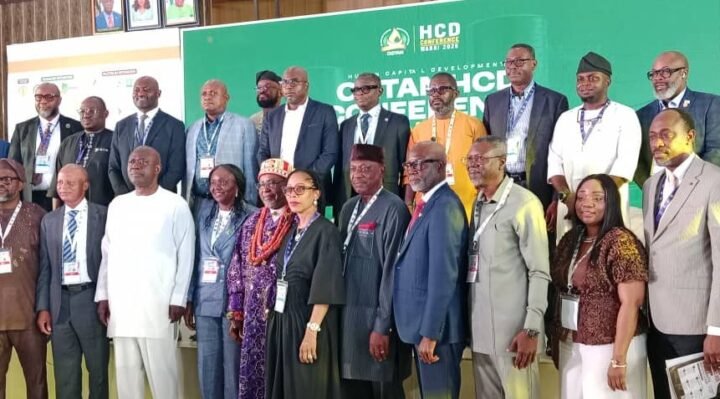
The minister made the remarks in his keynote address at the Oil and Gas Trainers Association of Nigeria (OGTAN) Human Capacity Development Conference 2026, themed “Empowering People. Driving Performance. Shaping the Future of Oil & Gas,” held in Warri, Delta State.
Ekpo, who was represented by the Chief Geologist/Technical Assistant to the Director, Gas Department, Ministry of Petroleum Resources, said the conference theme was consistent with the Federal Government’s efforts under President Bola Tinubu to reposition the energy sector as a driver of industrialisation, investment, employment and sustainable economic growth.
He said Nigeria’s substantial oil and gas reserves would not automatically translate into prosperity.
“It is people who transform natural resources into national prosperity.”
Gas expansion needs skills to match infrastructure
Ekpo described the Decade of Gas (2021–2030) as more than a government policy programme, saying it represents a national development strategy built around the role of natural gas in transforming Nigeria’s industrial and economic base.
According to him, the initiative encompasses greater domestic gas utilisation, increased power generation, cleaner cooking and transportation fuels, as well as efforts to strengthen Nigeria’s position in regional and international energy markets.
But he warned that the scale of infrastructure development required to achieve these goals must be matched by an equally ambitious workforce strategy.
As Nigeria expands gas processing facilities, pipelines, liquefied natural gas (LNG) and compressed natural gas (CNG) infrastructure, liquefied petroleum gas (LPG) distribution networks and petrochemical projects, he said the country must simultaneously develop the personnel needed to operate them efficiently.
“Infrastructure creates opportunity, but human capacity converts opportunity into sustainable value. Human Capacity Development must therefore remain at the centre of the Decade of Gas and Nigeria’s broader energy transformation.”
The minister’s warning comes as Nigeria seeks to attract fresh investment into its gas value chain and use its large gas reserves to address electricity supply constraints, expand industrial production and reduce dependence on traditional and more polluting fuels.
AI, cybersecurity and carbon management emerge as priority skills
Ekpo said rapid technological change was fundamentally altering the skills required across the global energy industry.
Artificial intelligence, automation, digital twins, data analytics and growing cybersecurity risks, he noted, are creating new requirements for oil and gas professionals.
The minister said the traditional technical skills that supported Nigeria’s energy industry in previous decades would no longer be sufficient to compete in an increasingly digital and energy-transition-driven market.
He called for training programmes to incorporate artificial intelligence, digital technologies, automation, cybersecurity, gas commercialisation, carbon and emissions management, project finance, contract negotiation and energy economics.
He also highlighted critical thinking, adaptability and communication as increasingly important capabilities for the modern energy workforce.
Training must deliver measurable productivity
Ekpo urged training institutions and employers to move away from measuring human-capital development primarily by the number of courses completed or certificates awarded.
The real test of training, he said, should be whether it produces measurable improvements in competence, productivity, safety, operational efficiency, innovation and organisational performance.
“The true measure of training is not the number of courses attended or certificates issued. It is the measurable improvement in competence, productivity, safety, operational efficiency, innovation and organisational performance.”
The minister therefore called for closer alignment between training programmes and the skills actually demanded by companies operating across Nigeria’s oil and gas value chain.
NOGICD Act has strengthened local capacity
Ekpo attributed much of Nigeria’s progress in developing indigenous oil and gas capabilities to the implementation of the Nigerian Oil and Gas Industry Content Development (NOGICD) Act 2010.
He specifically commended the Nigerian Content Development and Monitoring Board (NCDMB) for its contribution to indigenous participation, skills development and technology transfer.
The minister noted that Nigerian professionals and indigenous companies are increasingly undertaking more complex responsibilities across the upstream, midstream and downstream segments of the petroleum industry.
He said maintaining that momentum would require stronger collaboration among government agencies, oil and gas companies, universities, research institutions and professional training organisations.
Universities, industry urged to close skills gap
Ekpo called on universities to produce more industry-ready graduates while urging companies to expand internship, apprenticeship and mentorship programmes.
Training providers, he said, must continuously update their curricula to reflect changing industry requirements rather than relying on static programmes.
He also advocated greater participation of young Nigerians and women in technical, commercial and leadership positions across the energy industry.
The Ministry of Petroleum Resources (Gas), he said, would continue to support the development of a globally competitive petroleum workforce through industry-academia partnerships, technical and vocational education, professional certification, research, technology transfer and the establishment of centres of excellence.
Nigeria should export energy expertise, not just crude and gas
Beyond meeting domestic labour requirements, Ekpo said Nigeria should begin viewing its large pool of professionals as a potential export industry.
He argued that Nigeria’s workforce strategy should ultimately enable the country to export expertise, technology, innovation and professional services alongside its traditional energy exports.
“Nigeria should not only export energy resources. We must increasingly position ourselves to export energy expertise, technology, innovation and professional services.”
That approach, he said, would allow Nigeria to capture a larger share of the value generated by Africa’s expanding energy markets while creating higher-value employment opportunities for its citizens.
OGTAN urged to anticipate future workforce needs
Ekpo described OGTAN as a strategic partner in Nigeria’s energy transformation and urged the association to focus not only on current skills shortages but also on identifying the capabilities the industry will require in the next decade.
As the global energy industry becomes increasingly digital, automated and carbon-conscious, he said Nigerian trainers must prepare professionals capable of competing beyond the domestic market.
For Nigeria, the message is increasingly clear: the success of the Decade of Gas will not be determined solely by the number of kilometres of pipelines laid, tonnes of LNG produced or CNG and LPG facilities commissioned.
It will also depend on whether the country can build the engineers, technicians, digital specialists, commercial experts, project managers and energy professionals capable of turning those investments into productive, competitive and sustainable businesses.