


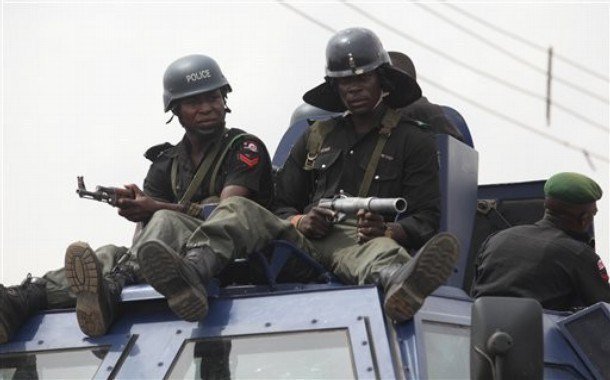


ABUJA — Nigeria’s security agencies have stepped up surveillance around schools, places of worship, NYSC orientation camps and other vulnerable locations following intelligence indicating that terrorist groups may be planning coordinated attacks in parts of the country.
The warning comes as schools reopen for the 2026/2027 academic session, heightening concerns among parents, education authorities and communities over the security of children and teachers.
The Nigeria Police Force, in a security alert circulated to commands and formations nationwide, said intelligence available to its Department of Operations indicated an “increased mobilisation of terrorist elements for possible coordinated attacks” on schools, worship centres, NYSC camps and other potential targets.
The alert was distributed to Assistant Inspectors-General of Police overseeing Zones 1 to 17, Commissioners of Police in all states, Mobile Police formations, counter-terrorism units and other specialised commands.
It was also circulated to key departments at Force Headquarters, including Intelligence, the Force Criminal Investigation Department, Research and Planning, ICT, Training and Development, Finance and Administration, and the Force Security Department.
Police Warn of Movement of Armed Elements
According to the police alert, intelligence indicated the movement of armed elements from Katsina through Kaduna towards Plateau State.
The Force also said suspected Islamic State West Africa Province (ISWAP) operatives and local collaborators were conducting surveillance and reconnaissance of potential targets.
The reported reconnaissance has heightened concern because schools, religious centres and NYSC camps can attract large gatherings and may be vulnerable to attacks if security arrangements are inadequate.
The police therefore directed affected commands to increase intelligence-led surveillance, patrols, stop-and-search operations, access control and rapid-response capabilities around identified vulnerable locations.
“All personnel should maintain heightened vigilance and report suspicious persons, vehicles, movements or objects through established channels,” the police said.
Commissioners of Police were also directed to strengthen security along state borders, entry and exit routes and other strategic approaches in an effort to prevent the movement and infiltration of armed groups.
Military Monitoring Threat
The Defence Headquarters confirmed that it was monitoring the situation.
“We are monitoring the situation,” the Director of Defence Media Operations, Maj. Gen. Michael Onoja, said.
The brief response reflects the sensitivity surrounding the intelligence alert, particularly as security agencies attempt to prevent the disclosure of operational details that could compromise counter-terrorism efforts.
NSCDC Strengthens School Security
The Nigeria Security and Civil Defence Corps (NSCDC) said it had expanded its intelligence-gathering network across its state commands to strengthen protection around schools and other educational institutions.
NSCDC spokesman Babafemi Afolabi said the Commandant-General had briefed state commandants and directed personnel to maintain heightened vigilance following the reopening of schools.
He said intelligence-driven operations involving federal and tactical units had helped thwart more than 100 attempted attacks on schools.
According to Afolabi, the NSCDC is also working with other security agencies, community leaders and private security companies to identify threats before they escalate.
He urged parents not to allow the latest security concerns to prevent children from returning to school, while stressing the importance of community cooperation.
“Security is a collective responsibility,” he said, urging residents to promptly report suspicious activities to security agencies.
The NSCDC is also engaging private security personnel, who Afolabi said could provide valuable intelligence from communities where they operate.
Former Security Chiefs Urge Vigilance
Former Assistant Inspector-General of Police Ali Amodu and former Director of the Department of State Services Mike Ejiofor urged Nigerians to take the warning seriously without allowing fear to overwhelm communities.
Amodu said security alerts were part of the responsibility of intelligence and law-enforcement agencies, arguing that timely warnings could help prevent attacks by encouraging citizens and authorities to take precautionary measures.
He urged residents to report suspicious people, vehicles and movements, particularly around schools and places of worship.
“Security is everybody’s business,” Amodu said, stressing that Nigerians could no longer afford to ignore unusual activities in their communities.
He also noted that heightened vigilance would be particularly important as the country moves closer to the 2027 general elections, a period that could increase political and security tensions.
Ejiofor similarly urged security agencies and citizens to treat intelligence advisories seriously and act on preventive information.
“If you get such an advisory, we should take it seriously so that people are not caught unawares,” he said.
He called for stronger coordination among the military, police, intelligence agencies, federal and state governments and local communities.
According to Ejiofor, intelligence supplied by residents can be critical in identifying suspicious activities before they develop into attacks.
He encouraged citizens to embrace the principle of “see something, say something” by promptly reporting potential threats to security authorities.
Parents Fearful as Schools Reopen
The security alert has also exposed growing anxiety among parents, particularly in communities with a history of terrorism, banditry and kidnapping.
Ibrahim Nabayi, National Secretary of the Uche Onyia-led faction of the National Parent Teacher Association of Nigeria (NAPTAN), said parents were increasingly concerned about sending their children back to school.
“Parents are worried now, parents are scared of sending children back to school,” Nabayi said.
He urged the Federal Government and state governments to deploy additional resources, technology and personnel to protect educational institutions.
Nabayi argued that schools in high-risk areas should receive priority security interventions, including surveillance technology capable of detecting suspicious activity around school premises.
He also called for stronger implementation of the Safe School Initiative, which he said was designed to improve surveillance, coordination and rapid response around vulnerable schools.
According to him, the initiative should not be allowed to suffer from changing government priorities.
NAPTAN Wants Safe School Initiative Revived
Nabayi said the government should strengthen collaboration between security agencies, school administrators, parent-teacher associations and host communities.
He argued that communities could provide crucial information about unfamiliar persons, vehicles and objects around schools.
“We want synergy between the government and the communities where schools are located,” he said.
Rather than shutting schools across entire regions, Nabayi suggested temporarily relocating pupils from extremely high-risk locations to safer schools where necessary.
He said such an approach would allow children to continue their education while reducing exposure to immediate security threats.
His position reflects a difficult policy balance confronting governments: keeping schools open to prevent further disruption to education while ensuring that pupils and teachers are not exposed to unacceptable risks.
Technology Proposed to Protect Schools
Nabayi also called for greater use of technology in school security.
He proposed surveillance systems capable of monitoring activity within a defined radius around schools and transmitting alerts to central monitoring centres.
The objective, he said, should be to detect threats before attackers reach school premises rather than relying entirely on security personnel to respond after an incident begins.
He also urged the government to involve parent-teacher associations in security planning and community sensitisation.
According to Nabayi, NAPTAN had previously undertaken awareness programmes for school administrators, pupils and other stakeholders but faced funding constraints.
He called for renewed investment in the Safe School Initiative and urged independent assessments of how effectively security measures are being implemented at individual schools.
“Once the government can create a safe environment, education thrives. When there is fear, nothing can be learned,” he said.
Previous School Attacks Fuel Concerns
The latest security warning comes against the backdrop of repeated attacks and abductions involving schools and other public institutions in Nigeria.
In May 2026, dozens of students and teachers were reportedly abducted in separate incidents.
On May 15, armed men reportedly attacked three schools in Oriire Local Government Area of Oyo State, abducting 49 pupils, teachers and a toddler. A mathematics teacher was subsequently reported killed while in captivity.
The incidents have reinforced concerns that schools in poorly protected communities remain attractive targets for criminal and terrorist groups seeking to exploit weak security arrangements.
The Department of State Services has also previously alerted Muslim and Christian leaders in Osun State to an alleged plan by terrorists to attack places of worship and other public gathering centres ahead of the 2027 elections.
Security Alert Puts Safe Schools Back on National Agenda
The latest warning has therefore put the protection of schools and other public institutions back at the centre of Nigeria’s national security debate.
For the government, the immediate priority is to convert intelligence into preventive action without creating unnecessary panic.
For schools, the challenge is to strengthen access control, emergency communication, evacuation procedures and cooperation with local security commands.
For communities and parents, the message from security officials is equally clear: vigilance and timely reporting could help security agencies disrupt attacks before they occur.
The broader issue, however, is whether Nigeria can build a sustainable security architecture around schools rather than relying primarily on emergency deployments after threats emerge.
With the 2027 elections approaching and terrorist and criminal networks continuing to exploit vulnerable communities, the ability of security agencies to protect schools, religious centres and other public gathering points will remain a critical test of the country’s internal security preparedness.