




…. Deployed approximately ₦501 billion under Series I, comprising ₦300 billion in cash and about ₦201 billion in non-cash bond instruments, covering roughly 22 per cent of obligations under executed settlement agreements with electricity generation companies.
.Nigeria has launched the Series II bond under the Presidential Power Sector Financial Reforms Programme, following the successful settlement of ₦333.12 billion to power generation companies, as the government seeks to restore investor confidence and strengthen the electricity value chain.
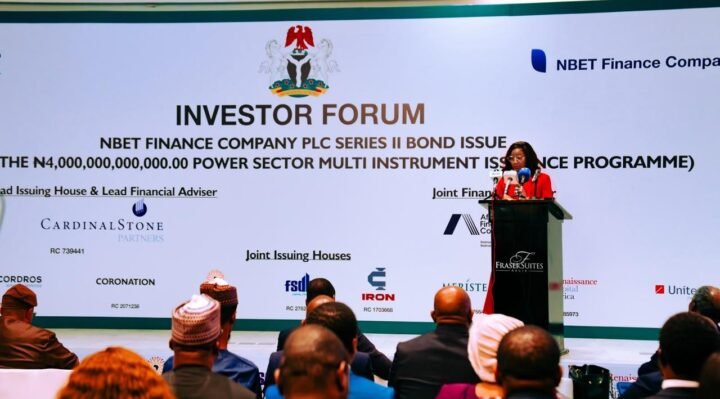
The Federal Government has launched the Series II bond issuance under the Presidential Power Sector Financial Reforms Programme (PPSFRP), positioning the initiative as a key step in restoring liquidity to Nigeria’s electricity market and attracting long-term private investment into the power sector.
Speaking at the Investor Forum for the Series II bond issuance in Abuja on Tuesday, the Special Adviser to the President on Energy, Olu Arowolo Verheijen, said the administration of President Bola Ahmed Tinubu was rebuilding investor confidence by honouring financial commitments and addressing legacy debts that have constrained Nigeria’s electricity industry for years.
According to Verheijen, the government is transforming what was once a major fiscal burden into a credible investment opportunity through disciplined financial reforms and predictable policy execution.
“Every successful capital market tells the same story: investors return where governments keep their promises,” she said, adding that the administration is “converting yesterday’s liabilities into today’s liquidity and tomorrow’s investment capacity.”
She explained that improved liquidity would strengthen the entire electricity value chain, enhance operational performance and restore confidence among investors, power producers and other market participants.
The Presidential Power Sector Financial Reforms Programme was established under President Tinubu’s Renewed Hope Agenda to resolve longstanding payment challenges in the electricity sector while creating a financially sustainable market capable of attracting private capital.
Series I Performance Builds Investor Confidence
Verheijen said the government’s decision to launch Series II followed the successful implementation of the first phase of the programme, which demonstrated its commitment to meeting financial obligations.
She disclosed that in February 2026, the Federal Government deployed approximately ₦501 billion under Series I, comprising ₦300 billion in cash and about ₦201 billion in non-cash bond instruments, covering roughly 22 per cent of obligations under executed settlement agreements with electricity generation companies.
According to her, the remaining obligations are expected to be settled through Series II and subsequent bond issuances.
She further revealed that the government has so far settled ₦333.12 billion owed to eight participating generation companies (GenCos) covering 17 power plants that signed participation agreements under the programme.
Verheijen also highlighted that the Federal Government met its debt servicing obligations by paying the first Series I coupon of approximately ₦63.5 billion on July 14, 2026, describing the payment as evidence of the government’s commitment to maintaining credibility in the capital market.
“In sovereign finance, trust compounds just as powerfully as interest. Governments that expect private capital to invest must first demonstrate that their own commitments will be honoured,” she said.
Series II to Strengthen Electricity Value Chain
The presidential adviser noted that the Series II bond would expand the settlement of verified legacy obligations across the power sector while injecting additional liquidity into the electricity value chain.
She said the new issuance is expected to improve cash flow for electricity generation companies, enabling them to meet outstanding obligations to gas suppliers, lenders and operations and maintenance contractors.
According to Verheijen, stronger financial discipline will improve the overall bankability of Nigeria’s electricity market and create conditions necessary to attract long-term domestic and international investment.
She stressed that investor confidence is built on predictable governance, honouring contractual obligations and consistent policy implementation rather than policy declarations alone.
“Series I proved the model. Series II scales it,” she said.
Power Reforms Target Economic Growth
Beyond the financial market, Verheijen said the reform programme is designed to deliver wider economic benefits by improving electricity reliability for households, businesses and industries.
She noted that more dependable electricity would reduce dependence on diesel-powered generators, lower operating costs for businesses, improve manufacturing competitiveness and enhance productivity across the economy.
The presidential adviser described the programme as both a financial reform initiative and a national development strategy aimed at unlocking sustainable economic growth through a more efficient electricity sector.
She also encouraged investors to engage with government officials and transaction advisers during the forum to better understand the structure of the Series II issuance and the safeguards supporting the programme.
Government Reaffirms Reform Commitment
Verheijen acknowledged the contributions of the Federal Ministry of Finance, the Federal Ministry of Power, the Debt Management Office (DMO), the Bureau of Public Enterprises (BPE), Nigerian Bulk Electricity Trading Plc (NBET), members of the Presidential Power Sector Financial Reforms Programme Committee and financial advisers, including Africa Finance Corporation (AFC), CardinalStone Partners, ENR Resources Limited and Olaniwun Ajayi LP, for supporting the implementation of the initiative.
She reaffirmed the Federal Government’s commitment to sustaining reforms in Nigeria’s electricity sector, stating that the administration remains focused on restoring financial stability, strengthening investor confidence and creating a commercially viable power market capable of supporting the country’s long-term economic development.
“The reforms are real. The commitments are being honoured. The opportunity is significant,” Verheijen told investors, urging continued participation in Nigeria’s evolving power sector reform programme