




LAGOS — Nigeria has secured about $3.5 billion in committed investment in four major gas projects as the Federal Government steps up efforts to raise production, expand infrastructure and position natural gas as a driver of industrial growth and energy security.
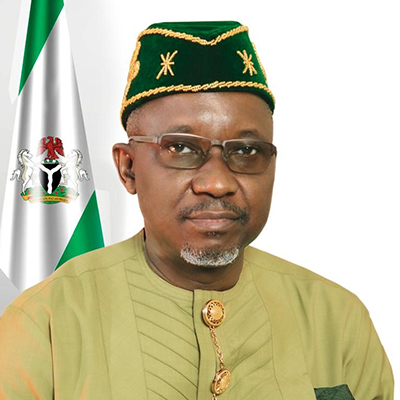
Minister of State for Petroleum Resources (Gas), Ekperikpe Ekpo, disclosed this at a media engagement, saying the projects that have reached Final Investment Decision (FID) include the Iseni Project ($122 million), Ubeta ($566 million), HI Project ($2 billion) and Ima Project ($800 million).
The $3.5 billion Brass Methanol Project has also moved closer to execution following the resolution of its Gas Sales and Purchase Agreement.
Ekpo said the investments demonstrate growing confidence in Nigeria’s gas sector but stressed that faster execution is needed to convert the country’s large reserves into reliable energy and economic output.
Production target
Nigeria’s proven 2P gas reserves rose from 208.83 trillion cubic feet (Tcf) in 2023 to 215.19 Tcf as of January 2026, while average production increased from about 6.86 billion cubic feet per day (Bcf/d) to 7.5 Bcf/d, according to the minister.
Domestic supply has crossed 2 Bcf/d, with the government targeting 10 Bcf/d in the near term and 12 Bcf/d by 2030.
The additional supply is expected to support power generation, manufacturing, fertiliser and petrochemical production, LNG, transportation and other domestic and export markets.
LNG capacity set to expand
Nigeria LNG’s capacity utilisation has also recovered sharply, rising from about 59% in 2023 to 87% in 2026, Ekpo said.
The recovery is expected to strengthen further when Train 7 is completed in June 2027.
The project will add about 8 million tonnes per annum (MTPA) to NLNG’s existing 22 MTPA capacity, taking total capacity to approximately 30 MTPA.
Gas infrastructure expands
Ekpo said the OB3 gas pipeline is now 100% complete, with pre-commissioning concluded ahead of first gas following completion of the River Niger crossing.
The 2 Bcf/d pipeline is expected to unlock more than 500 MMscf/d of additional domestic gas supply.
The Ajaokuta-Kaduna-Kano (AKK) pipeline is about 95% complete, he added.
Meanwhile, the Midstream and Downstream Gas Infrastructure Fund has deployed about ₦671 billion, attracting approximately ₦1.6 trillion in private investment across 31 projects and 205 infrastructure assets.
The projects could deliver about 475 MMscf/d to the domestic market when fully operational.
The government is targeting about $30 billion in total gas investment by 2030.
Government tackles gas-to-power debt
The National Economic Council has also approved approximately ₦185 billion in validated legacy debts owed to upstream gas producers, Ekpo said.
The government expects the settlement to improve commercial discipline, strengthen gas supply to power generators and restore investor confidence in the gas-to-power market.
CNG and LPG expansion
Nigeria’s CNG programme has grown rapidly, with vehicle conversions increasing from about 11,000 in 2023 to more than 120,000, according to Ekpo.
The government is targeting at least one million CNG-powered vehicles and up to 1,000 refuelling stations nationwide.
On LPG, the government aims to reach 5 million households by 2030, while President Bola Tinubu has approved the extension of the National Grassroots LPG Penetration Programme to 2060.
Ekpo said 27,000 free LPG cylinders per state are being distributed as part of the programme.
Gas flaring targeted for 2030
The government has awarded contracts to 42 companies to commercialise flare gas, converting it into energy, feedstock, LPG, CNG and power.
Nigeria aims to end routine gas flaring by 2030, according to the minister.
The administration’s broader Decade of Gas programme is focused on increasing supply, developing demand, expanding infrastructure, attracting investment and reducing emissions.
Nigeria is also seeking a larger role in global gas markets. Philip Mshelbila became Secretary-General of the Gas Exporting Countries Forum (GECF) in January 2026, while Nigeria has been accepted as an Association Country of the International Energy Agency (IEA).
Ekpo said the government’s priority now is to move from policy announcements to execution by increasing production, expanding processing and pipeline capacity, improving gas supply to power plants and ensuring greater benefits for producing communities.
For investors, the immediate test will be whether Nigeria can translate its growing project pipeline and gas reserves into reliable supply, commercially viable infrastructure and sustained production growth.
The government’s target is clear: 12 Bcf/d of gas production by 2030 and roughly $30 billion of investment to help make it possible