




… says 75 enterprises would not significantly impact the economy.
The Lagos Chamber of Commerce and Industries LCCI has expressed concerns about the role of the State and Local governments as well as transparency in the implementation of the palliative strategies as the government plans to introduce an Infrastructure Support Fund for the states to invest in critical areas and revamp healthcare and educational infrastructure.
The organization has therefore urged the government to ensure smooth and promising implementation of the measures and regularly engage the citizens and the organized private sector to ensure accountability.
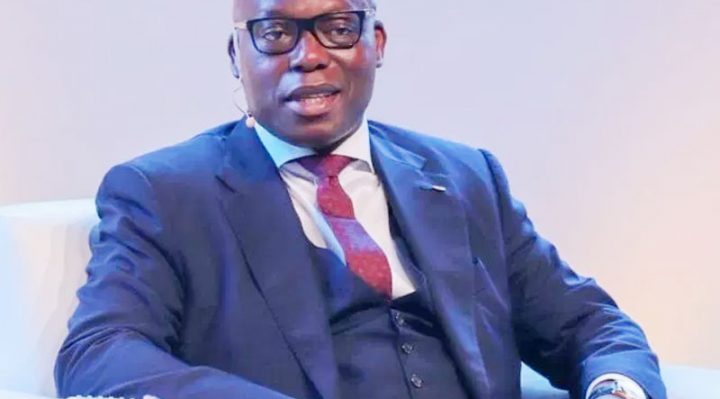
According to the President/chairman of the Council, Michael Olawale-Cole, he stated that there should be proper monitoring and evaluation of the implementation process to ensure benefits to the people.
- We also wish to nudge the government to share in the sacrifice made by Nigerians by reducing the high cost of governance in all its tiers and ensuring fiscal leakages and corruption are strategically dealt with. As we commend the government’s courage in enacting a series of policies, we trust that government would be courageous enough to cut the cost of governance. This will demonstrate to Nigerians that the leaders share in the suffering and sacrifice of the people. The perks available to public office holders are so enormous that it is difficult for the average Nigerian to understand why they suffer so much and those in leadership are unaffected. We urge Mr. President to do the needful, and we expect further announcements on the measure to cut the cost of governance.
- As earlier stated, security has not been given sufficient attention. It is also of utmost importance to deal with the issue of insecurity because, without security, there can be no prosperity. If the issue of insecurity is not adequately dealt with, the implementation of these strategies could be in jeopardy.
- The issue of oil theft must not be sidelined at this stage, as it has critical implications for the rule of law and our economic well-being as a nation. This will demonstrate that there is a holistic effort to revamp the economy and chart a new path for Nigerians. Government should also track down and apprehend the culprits of oil theft as this will act as a deterrent and communicate powerfully that crime must be punished.
- The fuel subsidy regime is sometimes described as a scam due to the opacity and lack of integrity of the arrangement, and it has indeed become a burden on the economy and a source of enrichment for a select group of individuals. Therefore, the Chamber calls on the government to make the required effort to identify and investigate the select group of individuals that plundered our national wealth and enriched themselves through the fuel subsidy regime. They should be brought to book to prevent a recurrence of such criminal actions that have destroyed our economy. Going forward, the system should also have sufficient transparency, accountability, and integrity, particularly with product pricing.
- We urge Nigerians to exercise some patience, as emphasized by the President. The degradation of our economy has occurred over several decades and it cannot be reversed within a few short months. It would take a concerted effort by all and focus on the strategic alignment of our national goals for change to occur. In reality, it is inevitable that we suffer some pain for these reforms to be successfully implemented. We all want a better and brighter future for Nigeria, so let us work together to make it happen.
“We wish to call attention to the cost of funds. The plan is to offer loans to 75 scalable enterprises with enormous prospects at 9% per annum, repayable over a maximum period of 60 months. The government would need to closely monitor the banking sector in the provision of these loan facilities so that the eventual cost of funds is not above 9% from other banking fees and charges. It may be judicious to stipulate that the total costs of funds is benchmarked to 9% regardless of the charges and fees.”
LCCI commends President Bola Tinubu on his second State of the Nation address as the country grapples with the short-term economic hardship resulting from subsidy removal and exchange rate harmonization.
It however, stated the President’s address showed leadership, responsibility, and accountability, and he demonstrated empathy as he unveiled a broad plan to ease the cost of living pains for Nigerians. He also provided clarity on the palliative measures and strategies for implementation.
LCCI also commends the President on the palliative plan to support businesses, the working class, and the most vulnerable, as well as a policy intervention to check rising inflation and ensure exchange rate stability, stating further that the President covered most of the strategic sectors of the economy, but nothing was said about security, which is a critical factor in national development.
“The President described the plan to spend the 500 billion naira ($652 million) package to boost the economy by easing transportation costs, boosting manufacturing, and enhancing food supply. It will also provide conditional grants to at least a million small businesses. To ensure affordable food prices, it is good that strategic reserves of grains will be released to households, and support for agriculture, including farmland cultivation, will be a priority.”
“These plans demonstrate that the President is listening to Nigerians. The Chamber supports the move to invest in the manufacturing sector. However, it would be pertinent to consider more enterprises as 75 enterprises would not significantly impact the economy. However, we commend the effort to kick-start sustainable economic growth and improve productivity. We believe that if this plan is rigorously pursued, economic growth through the real sector of the economy would be achieved and could revive Nigeria’s sluggish industrialization and expand the GDP.
“The focus on improving public transportation, including providing buses to be fueled by compressed natural gas (CNG) for deployment in all the states, is a means to provide affordable transportation across Nigeria. This will help ease the problem of moving persons and goods across the nation. It will also reduce the cost of doing business which burdens most small enterprises.”