


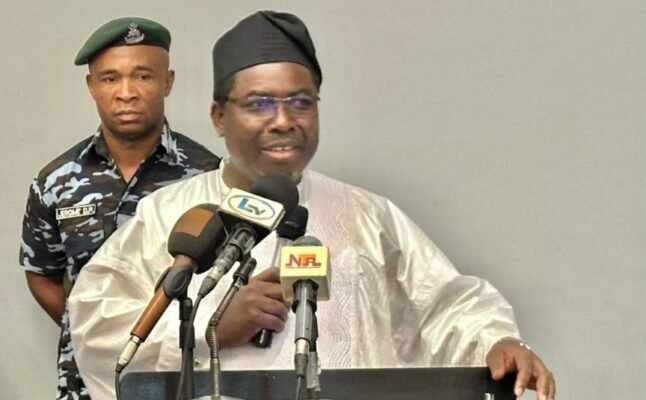


ABUJA — The Independent National Electoral Commission (INEC) has warned that artificial intelligence-generated deepfakes and synthetic disinformation could undermine confidence in Nigeria’s 2027 elections, even when official results are genuine.
INEC Chairman, Prof. Joash Amupitan, said the commission was deploying artificial intelligence tools to detect discrepancies and administrative errors in election results while strengthening its cybersecurity defences against increasingly sophisticated digital manipulation.
Amupitan spoke at the 24th All Nigeria Editors Conference in Enugu, where he said INEC had established an Artificial Intelligence Division within its ICT Department and developed an AI Roadmap and Governance Framework built around human oversight, transparency, accountability, data protection, cybersecurity and public trust.
The commission, he said, was already using AI in its results-management process to identify inconsistencies before final validation.
“Technology must complement, rather than replace constitutional institutions,” Amupitan said, stressing that every automated result check would remain subject to human auditing and legal verification.
INEC Engages Microsoft, Google on Cybersecurity
Amupitan disclosed that INEC had engaged senior executives of Microsoft and Google on cybersecurity resilience, cloud infrastructure protection and threat mitigation ahead of the 2027 polls.
The commission has also been discussing technical capacity building, risk management and responsible AI deployment with the International Foundation for Electoral Systems.
The focus reflects a growing concern within election management that the information environment surrounding an election can be manipulated almost as quickly as voting data itself.
Amupitan said fabricated result sheets, cloned voices of electoral officials, manipulated videos and forged official documents could be produced and circulated within minutes.
The greater threat, he argued, was not simply that voters could be deceived by individual falsehoods, but that the volume and sophistication of fake content could make citizens question authentic information.
“When deepfakes render lies believable, real truth is greeted with skepticism,” he said.
He warned that fabricated videos purporting to show electoral officials announcing false results, cloned audio directing manipulation of voting equipment, forged notices postponing elections and manipulated result sheets could be circulated immediately after voting.
Such material, he said, could create the appearance of electoral fraud before genuine results had been fully collated.
INEC Puts Media at Centre of AI Election Defence
The INEC chairman urged news organisations to make verification a central component of election coverage, arguing that the media would be a critical gatekeeper between synthetic information and voters.
He urged newsrooms to establish dedicated fact-checking desks and deploy deepfake-detection software, digital verification tools and forensic image analysis as part of their election reporting operations.
Amupitan also warned editors against premature publication of election results, noting that the statutory responsibility for declaring official results rests with INEC.
The commission has previously warned that misinformation, deliberate distortion and foreign information manipulation could undermine electoral processes.
The 2027 presidential and National Assembly elections are scheduled for January 16, 2027, while the governorship and State House of Assembly elections are scheduled for February 6, according to INEC’s official election calendar.
Amupitan contrasted the scale of the 2027 polls with the recent Osun governorship election, noting that a nationwide election would involve all 36 states and the Federal Capital Territory.
He said 3,556 of Osun’s 3,763 polling units, representing 94.5 per cent, had opened for accreditation and voting by 8:30 a.m., while 5,130 BVAS devices, including 1,328 backups, were deployed for the exercise.
Onaiyekan Calls for Electoral Overhaul
While Amupitan focused on the emerging technology threat, keynote speaker John Cardinal Onaiyekan used the conference to raise broader concerns about the credibility and institutional architecture of Nigeria’s electoral system.
Onaiyekan argued that electoral disputes were increasingly being settled through litigation rather than solely through the ballot, and called for reforms aimed at strengthening the independence of INEC and improving the handling of election petitions.
He proposed a new process for appointing the INEC chairman and national commissioners that would reduce their dependence on the executive.
The cardinal also called for a special election tribunal capable of concluding electoral disputes before elected candidates are sworn into office.
He further argued that voters should have a direct avenue to challenge disputed election results, saying citizens whose votes are at stake should not be excluded from the legal process.
Cardinal Seeks 50% Presidential Threshold
Onaiyekan also proposed changing the presidential electoral system to require a candidate to secure at least 50 per cent of votes cast.
Where no candidate reaches that threshold, he proposed a runoff between the two leading candidates.
He argued that a president elected with substantially less than half of the votes could face questions about the breadth of the mandate.
“A 50 per cent minimum would ensure that whoever becomes our president has a traceable margin of endorsement by the Nigerian people,” Onaiyekan said.
The proposal would require changes to Nigeria’s existing constitutional framework governing presidential elections.
The cardinal also advocated independent candidacy, particularly for local government elections, and proposed that lawmakers who defect from the political parties under which they were elected should return to their constituencies to seek fresh mandates.
Achebe: Media Must Defend Democracy
The Obi of Onitsha and conference chairman, Igwe Nnaemeka Achebe, warned that the spread of AI-generated falsehoods could distort citizens’ understanding of electoral choices.
He described the media as a critical link between voters and reliable information, urging editors to verify claims regardless of which political party or candidate stood to benefit.
“True journalistic integrity in this era will require you to correct falsehoods regardless of who benefits from them,” Achebe said.
He challenged journalists to maintain the same verification standards before, during and after elections.
“Even if politicians, electoral body, institutions, and other things fail, you must be the ultimate last man standing in the task of defending democracy,” he said.
The conference was organised around the challenge of protecting democratic processes from misinformation and AI-generated disinformation, with more than 500 editors and other stakeholders expected to participate.
Information Integrity Becomes 2027 Election Issue
Minister of Information and National Orientation Mohammed Idris also urged editors to subject statements from government and political actors to the same standards of verification.
He said professional journalism should establish facts, provide context and allow citizens to make their own judgments rather than amplify politically attractive claims.
Idris called for stronger collaboration between news organisations, fact-checking bodies, technology companies, civil society groups, political parties and electoral authorities as Nigeria approaches the 2027 elections.
For INEC, the challenge now extends beyond securing polling units and election technology. It increasingly includes protecting the information environment in which voters interpret results.
With the 2027 presidential and National Assembly elections scheduled for January 16, the commission has less than four months to strengthen its systems against a digital threat that can manufacture convincing evidence of electoral wrongdoing before any genuine result is announced.