




Heirs Energies’ OML 17 Turnaround Offers Blueprint for Nigeria’s 3 Million bpd Ambition
… doubles OML 17 Production to 55,000 bpd, Revives More Than 100 Wells
Heirs Energies has demonstrated that Nigeria’s mature oil fields still hold significant potential for production growth, with the company more than doubling output from its OML 17 onshore asset to about 55,000 barrels per day (bpd) from approximately 25,000 bpd.
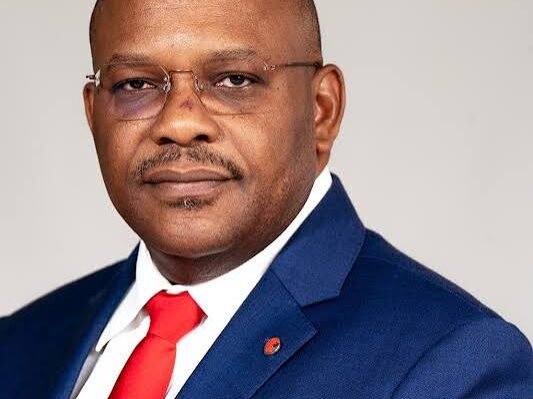
Speaking at a recent Society of Petroleum Engineers (SPE) conference and exhibition in Lagos, Heirs Energies Chief Executive Officer, Osa Igiehon, outlined the strategy behind the turnaround of OML 17 and argued that Nigeria’s focus should shift from simply increasing reserves to delivering higher and more sustainable production.
According to Igiehon, the OML 17 experience demonstrates that rehabilitating existing brownfield assets can deliver production more quickly and at significantly lower cost than relying exclusively on new drilling.
“We acquired the field in January 2021 and took over operations in July 2021,” Igiehon said.
He explained that the company’s acquisition plan required a substantial increase in production to generate sufficient returns and repay the investment. Rather than immediately embarking on an extensive new-drilling programme, Heirs Energies examined the potential of wells and infrastructure that had been abandoned or underutilised for decades.
A significant number of the wells had reportedly been out of production for as long as 40 years, leading to the assumption that they could no longer contribute meaningfully to output.
Heirs Energies took a different view.
The company launched an aggressive well-reactivation campaign shortly after taking over the asset. At the time, only about 40 wells were producing. Within roughly 100 days, the number had doubled as additional wells were brought back into production.
The initial intervention helped lift production to about 50,000 bpd.
But the rapid increase in production exposed a much bigger problem.
From production growth to evacuation crisis
As Heirs Energies increased output, the volume of crude reaching the export terminal began to fall sharply. According to Igiehon, the decline became increasingly severe, falling through 60%, 50% and 40% levels.
By October 2021, the company had concluded that increasing production without fixing the evacuation infrastructure was unsustainable.
“We realised that we had a crisis in our hands,” Igiehon said, explaining that the company was effectively increasing production without being able to move the crude to the terminal.
Heirs Energies subsequently suspended production and shifted its attention to the evacuation system, particularly the pipeline infrastructure.
The situation reached a critical point in December 2021, when only about 3% of the crude produced was reportedly reaching the terminal.
The company then shut in production while working with the government and other stakeholders to develop a solution to the evacuation challenge.
Igiehon said resolving the problem was ultimately bigger than Heirs Energies because it addressed one of the structural constraints that had contributed to Nigeria’s declining onshore oil production.
The episode, he argued, illustrates why crude production cannot be viewed separately from evacuation infrastructure, pipeline security, community relations and the broader operating environment.
OML 17 and Nigeria’s wider production recovery
Igiehon linked the OML 17 experience to the broader decline and recovery of Nigeria’s crude oil production.
He noted that Nigeria’s production had reached significantly higher levels before the combination of crude theft, pipeline vandalism and operational disruptions caused output to fall dramatically.
At the height of the country’s production crisis in 2022, he said, output fell to around 700,000 bpd, compared with about 2.2 million bpd during the 2020 period.
The subsequent restoration of production across the Niger Delta has helped Nigeria recover to approximately 1.7 million-1.8 million bpd, according to Igiehon, with much of the increase coming from onshore assets that were particularly affected by crude theft and pipeline vandalism.
For Heirs Energies, OML 17 has become a flagship example of what can be achieved through brownfield optimisation.
As of August 3, 2026, the company said production from the asset had reached about 55,000 bpd.
The asset also produces natural gas used to supply power plants in the Eastern Niger Delta, making its contribution extend beyond crude oil production.
Why brownfield assets matter
Igiehon described Heirs Energies as a “brownfield champion” and challenged other operators to reconsider the economics of mature assets.
The central question, he said, should be whether an existing field is producing at its full potential.
For a mature asset, operators need to determine whether wells, facilities and infrastructure are functioning at their optimum levels and, where there is a gap, whether it is more economical to rehabilitate existing infrastructure or drill new wells.
The conventional approach, according to Igiehon, has often been to drill new wells.
Heirs Energies chose a different path at OML 17.
“If you cannot take care of old things, you cannot take care of new things,” he said.
The company’s analysis showed that restoring old wells and infrastructure could be faster, cheaper and more financially attractive than developing entirely new wells.
That strategy is particularly relevant to Nigeria, where hundreds of shut-in or marginal wells could potentially be restored to production.
Igiehon argued that bringing such wells back online could make a significant contribution to Nigeria’s ambition of raising crude production to more than 3 million bpd.
“If the well can still produce, it costs a fraction to restore it compared with drilling a new one,” he said.
Refurbishing instead of replacing
The company’s approach extends beyond wells to surface infrastructure.
Igiehon cited Heirs Energies’ fleet of pumping equipment as an example.
The company inherited 18 pumps, many of which were about 50 years old because the fields had been producing since before Nigeria’s independence.
Rather than replace the entire fleet, Heirs Energies refurbished the existing pumps.
The company now has 24 pumps, of which only two are new, while the refurbished equipment operates at about 85% uptime, according to Igiehon.
The strategy illustrates the economics behind brownfield optimisation: extracting additional value from existing infrastructure rather than committing large amounts of capital to entirely new facilities.
Lower capital intensity, stronger returns
Another advantage of the brownfield strategy is its relatively low capital requirement.
Igiehon said rehabilitation projects typically require only a fraction of the capital needed to build entirely new facilities.
He said that, apart from the acquisition financing, Heirs Energies did not take on additional financing between 2021 and 2025, with the company funding its projects from its balance sheet.
The company’s ability to finance its development programme internally, he said, demonstrated the potential financial benefits of improving existing assets before embarking on capital-intensive new developments.
The approach also has implications for investors.
Nigeria’s onshore oil sector has historically struggled to attract capital because of concerns over crude theft, pipeline vandalism, security risks and the difficulty of recovering investments.
Heirs Energies effectively took on those challenges when other investors were reluctant to return to the onshore sector.
“We took the bull by the horns and tried to solve the problem,” Igiehon said.
Building a Nigerian operating model
The company also sees its Nigerian ownership and local workforce as an important part of its operating model.
Heirs Energies is a wholly Nigerian-owned company, and Igiehon said about 95% of its contractors are Nigerians.
He said the company’s technologies, operating methods and innovations were developed largely within the organisation rather than relying exclusively on imported approaches.
That local operating capability, he argued, has helped the company understand and respond to the technical, security, community and infrastructure challenges associated with mature Niger Delta assets.
The company also reported a strong safety record, saying it had operated for five years without a Lost Time Injury (LTI).
For Heirs Energies, production growth therefore represents only one measure of the OML 17 transformation. Safety performance, cost management, infrastructure reliability and operational efficiency are equally important.
The bigger lesson for Nigeria
The OML 17 experience comes at a critical time for Nigeria’s oil industry.
The country needs higher production to strengthen government revenues, improve foreign-exchange liquidity and support investment across the wider petroleum value chain. But achieving that objective will require more than new discoveries and licensing rounds.
Existing producing assets also need investment.
Nigeria has a large inventory of mature fields, shut-in wells and ageing infrastructure. Some of these assets may still contain significant recoverable resources if operators can overcome technical, commercial, security and evacuation constraints.
This is where the brownfield model becomes particularly relevant.
Rather than viewing production growth solely through the lens of new drilling, operators can identify production gaps in existing assets, determine why those gaps exist and deploy targeted interventions to close them.
The economic argument is straightforward: where an existing well or facility can be restored at a fraction of the cost of constructing a new one, rehabilitation can deliver faster production and potentially stronger returns on capital.
For Nigeria, the implication is significant.
If the country is to move towards a production target of more than 3 million bpd, the fastest gains may not necessarily come from drilling thousands of new wells. A substantial portion could come from restoring production from existing assets.
From OML 17 to a national strategy
The OML 17 turnaround has therefore evolved beyond a company success story. It offers a possible template for addressing some of the structural challenges confronting Nigeria’s upstream industry.
Community relations, crude theft, pipeline vandalism, ageing infrastructure, evacuation constraints, financing and technical capability all converged on the asset.
Heirs Energies’ response was to address those problems as an integrated operating challenge rather than treating production as an isolated technical objective.
The company’s experience also reinforces Igiehon’s argument that Nigeria should place greater emphasis on production equity — the ability to translate existing reserves into actual barrels — rather than focusing primarily on reserve additions.
For an industry seeking to attract capital and restore production, the distinction matters.
A barrel sitting underground contributes little to government revenue, exports or economic growth until it is safely and economically brought to market.
The OML 17 story suggests that Nigeria’s next production frontier may therefore not be entirely new.
It may be hidden in the country’s old wells, ageing infrastructure and mature fields — assets that still have life left in them, provided operators are prepared to invest in understanding, restoring and optimising them.
For Heirs Energies, that has become the central proposition of its brownfield strategy: revive what already exists, spend capital more efficiently and turn dormant production potential into commercially viable barrels.
As Nigeria seeks to move towards 3 million bpd and beyond, that proposition could become increasingly important to the country’s upstream strategy.