


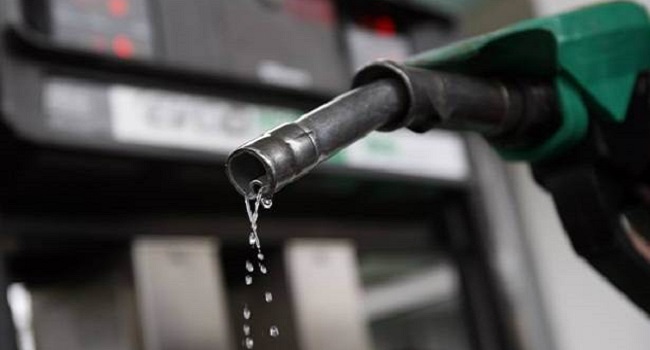


….Subsidising Prejudices: The Fuel Subsidy Fallacy
By Tayo Ayodele
Few economic policy issues in Nigeria have generated as much public controversy as fuel subsidy. For decades, subsidised petrol has been treated by many Nigerians as an entitlement, particularly among urban households and the middle class. Low-income earners, who also benefit indirectly through transport fares and the prices of goods and services, have equally strong reasons to be concerned about its removal.
These concerns are understandable. Nigeria’s inadequate transport infrastructure, limited mass-transit systems and heavy dependence on road transportation make petrol prices a major determinant of household welfare and business operating costs.
Yet, because fuel subsidy is an emotionally charged subject, public discussions frequently privilege political sentiment over economic facts. Misconceptions are repeated as established truths, while the fiscal implications of subsidy policies are often overlooked.
The result is a debate shaped more by prejudice, political expediency and ideological positions than by a clear understanding of how subsidies work, what they cost and whether they represent the most efficient use of public resources.
Understanding what fuel subsidy really means
One of the most persistent misconceptions is that a subsidy cannot exist unless a product is sold below its production cost. This argument has featured prominently in Nigeria’s petroleum debate, including in the famous question attributed to the late businessman and politician, Moshood Kashimawo Olawale (MKO) Abiola, in 1983: What is the cost of a barrel of crude oil?
Another popular political refrain is that Nigeria was subsidising corruption rather than petrol. The implication is that subsidy was merely a vehicle for fraud and that eliminating corruption would automatically eliminate the need for government support.
Both arguments obscure the fundamental economics of subsidy.
A subsidy exists when government financial support enables consumers to obtain a product or service at a price below the price that would otherwise prevail in the relevant market. It may take the form of direct budgetary payments, tax concessions, preferential foreign-exchange arrangements, regulated prices or other interventions that reduce the effective cost to consumers.
Consequently, the existence of corruption does not mean that subsidy itself is imaginary. Corruption can inflate the cost of a subsidy, divert public funds and undermine its intended beneficiaries. But even in a system without corruption, government would still incur a fiscal cost if it deliberately kept consumer prices below the market-determined level.
Nigeria’s experience demonstrates why the distinction matters. The country could incur substantial costs supporting petrol prices even if every naira spent on the programme were accounted for transparently.
The appropriate question, therefore, is not whether subsidy exists, but whether its economic and social benefits justify its cost compared with alternative uses of public resources.
Nigeria’s crude oil wealth: An asset is never free
The controversy surrounding petrol subsidy is particularly pronounced in Nigeria because the country produces crude oil. This has sustained the popular belief that Nigerians should enjoy cheaper petrol because crude oil is a God-given national resource.
The underlying principle is legitimate: natural-resource wealth should improve citizens’ living standards and accelerate national development. The critical question is how that wealth should be managed to deliver the greatest public benefit.
Consider the contrast between Nigeria and Norway, or between Venezuela and Canada. These countries possess different natural-resource endowments and have adopted different approaches to managing them. Their experiences underline an important lesson: possessing natural resources does not automatically translate into broad-based prosperity. The institutions, fiscal rules and investment decisions governing those resources matter enormously.
If an individual discovers diamonds on their property, the diamonds do not become worthless simply because they were obtained without a purchase price. Their value is determined by what they could command in the market. The owner must then decide whether to sell them, retain them or use the proceeds to meet competing needs.
The same principle applies to crude oil.
Nigeria’s crude oil has an opportunity cost: the revenue the country could earn by selling it at the prevailing market price. Using that oil domestically at a price below its economic value means sacrificing potential revenue, regardless of whether the government makes an explicit cash payment.
This is why crude oil should not be treated as a free input in determining the economic cost of domestically consumed petrol.
The appropriate approach is to aggregate the value of national resources and allocate the resulting public wealth according to clearly defined priorities, including education, healthcare, transportation, agriculture, infrastructure and social protection.
When those priorities compete for limited resources, subsidising petrol must be evaluated against the benefits that could be obtained by investing the same resources elsewhere.
Fuel subsidy is an inefficient way to support transportation
One of the strongest arguments advanced in defence of petrol subsidy is that it helps to keep transportation costs down. There is merit in this position. Lower fuel prices can reduce transport operators’ costs and, under certain conditions, moderate fares and the prices of goods.
However, the existence of a benefit does not establish that fuel subsidy is the most efficient instrument for delivering it.
A general petrol subsidy benefits consumers according to how much fuel they purchase. Households and businesses that consume more fuel can receive larger absolute benefits, while people who do not own vehicles may benefit only indirectly through transport fares and commodity prices.
This makes universal fuel subsidy a poorly targeted instrument for protecting the most vulnerable members of society.
A more effective strategy would direct public resources towards improving road infrastructure, expanding urban mass transit, supporting affordable public transportation and providing targeted assistance to low-income households.
Such interventions would address the underlying transportation problem rather than attempting to solve it indirectly through the price of petrol.
They could also deliver more durable economic benefits by reducing commuting costs, improving productivity, easing congestion and strengthening connections between workers, markets and businesses.
Fuel subsidy has another fundamental weakness: its cost is difficult to control when the government is committed to maintaining a particular price regardless of changes in market conditions.
The fiscal burden can rise sharply when crude oil prices, refining costs, exchange rates or distribution expenses increase. Because the full cost may become apparent only after the relevant transactions and accounting adjustments, the government faces considerable uncertainty in planning expenditure.
An open-ended subsidy can therefore undermine budget discipline and crowd out spending on essential public services.
Why Nigeria delayed the transition
The logical question is whether Nigeria should have significantly improved public transportation before deregulating petrol prices.
That was precisely the argument I advanced in a 2005 write-up on deregulation: the country needed to develop more effective alternatives to private and commercial road transport before exposing consumers fully to market-driven fuel prices.
Nigeria, however, failed to make sufficient progress on that front. Opportunities to invest oil revenues in public infrastructure and more efficient transportation systems were repeatedly lost, leaving the country vulnerable when fiscal pressures eventually made the existing arrangement increasingly difficult to sustain.
By the time major reforms became unavoidable, the government’s room for manoeuvre had narrowed considerably. Weak revenue generation, rising financing requirements and dependence on Central Bank of Nigeria financing had intensified the pressure to restore fiscal and monetary stability.
This context is essential to understanding the removal of petrol subsidy and the foreign-exchange reforms introduced in 2023.
The argument is not that subsidy removal automatically guarantees economic recovery or that its immediate costs to households and businesses should be ignored. Rather, it is that the long-term sustainability of public finances matters, and policies must be assessed against the resources available to fund them.
Reform also carries responsibilities. Removing a broad subsidy without adequate transport alternatives, effective social protection and credible measures to cushion the transition can impose severe costs on households and small businesses.
The failure to prepare adequately for reform does not, however, establish that an unsustainable policy should be retained indefinitely.
Subsidy is an economic instrument, not an ideological taboo
Removing petrol and foreign-exchange subsidies can help strengthen fiscal and monetary stability. But these measures should be understood as economic instruments rather than ideological commitments that must be applied regardless of circumstances.
This distinction is important because Nigeria’s public debate often treats subsidy as an inherently unacceptable policy. As a result, governments can become reluctant to acknowledge that they are providing support, even when the economic substance of their interventions amounts to a subsidy.
Consider the period following the foreign-exchange reforms of 2023, when exchange-rate movements and related market conditions affected petrol pricing. Where government intervention or preferential arrangements enabled consumers to pay less than the relevant market-based cost, the economic substance of the intervention needed to be assessed transparently, regardless of the official label attached to it.
Energy security may be a legitimate policy objective, but describing an intervention as an energy-security measure does not, by itself, settle whether it constitutes a subsidy. The objective and the instrument are separate questions.
Nigeria must therefore develop a more honest framework for discussing such interventions. The government should identify their objectives, quantify their fiscal implications, disclose their duration and establish clear criteria for their introduction and withdrawal.
A related question concerns the possibility of a major international oil-price shock.
In my 2005 analysis, I asked what Nigeria would do if a crisis in the Middle East pushed crude oil prices to $200 per barrel. The question remains relevant today: should the government allow domestic petrol prices to rise without limit, regardless of the consequences for inflation, transport costs and economic activity?
The answer need not be an unconditional yes or no.
A severe energy-price shock can destabilise household budgets, raise production costs, intensify inflationary pressures and weaken business confidence. Under certain circumstances, temporary and carefully designed government intervention may cost less than the wider economic damage caused by an uncontrolled shock.
The appropriate response would depend on the scale and duration of the shock, the country’s fiscal capacity, the distributional consequences and the availability of more targeted alternatives.
Temporary assistance, targeted transport support or a time-limited price-smoothing mechanism could be considered where the circumstances justify them. But any such intervention should have a transparent funding arrangement, explicit eligibility criteria and a credible exit strategy.
The objective should be economic stability and sustainable development, not adherence to an ideological position that prohibits intervention under every circumstance.
Fuel taxes can create room for crisis intervention
Countries with substantial fuel-tax revenues may have greater fiscal flexibility to moderate the effects of sudden energy-price increases.
Germany provides an illustration of how a government can use its tax system to cushion consumers while retaining a significant tax component in petrol prices. The figures cited in this debate—approximately €33 billion in fuel-tax revenue in 2025 and a proposed or reported €3.5 billion in tax relief—illustrate the potential scale of such fiscal interventions, although the precise figures and the scope of the measures should be verified against official German fiscal data before being used as definitive comparisons.
The broader lesson is that a country with a relatively strong revenue base may be better positioned to offer temporary relief without destabilising its public finances.
Nigeria’s circumstances are markedly different. The country has a narrow revenue base, substantial expenditure commitments and limited fiscal room to absorb unexpected shocks.
It cannot simply replicate the interventions of wealthier economies without considering the resources available to finance them.
The more important lesson is that fiscal flexibility must be built before a crisis occurs. Governments need sufficient revenue, credible budgets and manageable financing obligations to respond when households and businesses face exceptional pressures.
Nigeria’s weak revenue base is the real constraint
This brings us to one of the most neglected dimensions of Nigeria’s subsidy debate: the country’s underlying fiscal condition.
During the COVID-19 crisis, the International Monetary Fund highlighted the importance of fiscal space and the ability of governments to respond to emergencies. Countries with limited revenue capacity face greater difficulties protecting their economies when unexpected shocks occur.
Nigeria’s vulnerability is especially pronounced because public revenue remains inadequate relative to the country’s development needs and expenditure obligations.
The concerns expressed by credit-rating agencies, including Moody’s, about weak revenue generation and debt affordability reflect this structural challenge. A country can have a moderate debt burden relative to its economy and still face considerable fiscal pressure if the revenue available to service that debt is insufficient.
The scale of Nigeria’s revenue shortfall is particularly revealing when compared with other African economies.
According to figures cited from the World Bank’s 2026 reporting, the Federal Government generated approximately ₦6.2 trillion in revenue in the first half of 2026. The comparison advanced in this debate is that this amount is equivalent to roughly two weeks of tax collections in South Africa during its 2025/26 fiscal year.
Such a comparison must be interpreted carefully because the two countries have different fiscal structures, revenue classifications and institutional arrangements. South Africa’s comparatively centralised fiscal system also differs from Nigeria’s federal structure.
Nevertheless, the comparison raises an important question: how can Nigeria sustainably finance infrastructure, education, healthcare, security, social protection and debt service with such a limited pool of public revenue?
The answer cannot be to treat the removal of subsidy as a complete solution. Nor can it be to restore an open-ended subsidy without explaining how it would be funded.
Nigeria needs broader tax compliance, stronger non-oil revenue mobilisation, more efficient public expenditure and a credible framework for managing oil revenues. Without these measures, the country will remain vulnerable to both domestic policy pressures and external economic shocks.
Why an open-ended subsidy could undermine reform
If subsidy is ultimately a fiscal instrument, any serious discussion about restoring it must begin with the government’s overall financial position.
Nigeria’s present fiscal constraints make an additional, unpredictable first-line expenditure commitment particularly risky. A subsidy whose cost rises automatically with market prices and exchange-rate movements could undermine efforts to stabilise public finances.
The term first-line charge is used here in an economic sense: an expenditure commitment that must be financed before the government can allocate the remaining resources to competing priorities. It should not be confused with a specific statutory classification of expenditure.
The central concern is the opportunity cost. Every naira committed to subsidising petrol is a naira that cannot be used for another purpose unless additional revenue or borrowing is available.
This does not mean that every subsidy is necessarily wrong. It means that the government must demonstrate why a particular subsidy is justified, how much it will cost, who will benefit and what other expenditure will be reduced or additional revenue raised to finance it.
Without these answers, a subsidy can become a politically attractive promise that imposes a substantial and poorly understood burden on future budgets.
Three-year fiscal plans should anchor the debate
Nigeria’s fuel subsidy debate would benefit from a more disciplined framework that connects political promises to measurable fiscal realities.
Any serious proposal to restore, introduce or substantially expand petrol subsidy should be accompanied by provisional three-year budget projections showing:
- Revenue assumptions: Expected oil and non-oil revenues, tax collections, exchange-rate assumptions and the sensitivity of revenue to changes in global oil prices.
- Expenditure commitments: Projected spending on debt service, education, healthcare, security, infrastructure, transportation and social protection.
- Subsidy costs: Estimated annual expenditure under different crude-oil prices, exchange rates and domestic fuel-market conditions.
- Financing requirements: The implications for borrowing, fiscal deficits, debt affordability and possible monetary financing.
- Distributional effects: The households, businesses and economic sectors likely to benefit, including the extent to which low-income groups would receive the intended support.
- Exit and review mechanisms: Clear conditions for reducing or ending temporary interventions, alongside measurable performance indicators.
Such a framework would compel policymakers to confront the trade-offs involved in their proposals. It would also allow citizens, investors and businesses to assess whether the promised benefits are realistic and financially sustainable.
The debate should not be reduced to whether subsidy is morally good or bad, nor should every proposal be dismissed as an attempt to revive corruption. The central issue is whether a policy delivers sufficient economic and social value relative to its cost.
Nigeria needs an approach that recognises both the hardship caused by high petrol prices and the damage that poorly designed, unfunded subsidies can inflict on public finances.
The country must also recognise that removing subsidy without building efficient transportation systems and credible social-protection mechanisms leaves households exposed to costs they may be unable to absorb.
Ultimately, the choice is not between compassion for consumers and fiscal discipline. Sound policy must pursue both.
Fuel subsidy should neither be treated as an unquestionable entitlement nor condemned as an ideological heresy. It should be judged by its cost, its beneficiaries, its economic consequences and the alternatives available.
Until Nigeria anchors this debate in transparent revenue projections, credible expenditure plans and a clear understanding of its fiscal constraints, the politics of subsidy will continue to obscure the economic decisions that matter most.
© Tayo Ayodele, October 2026
Tayo Ayodele is a treasury analyst ba