


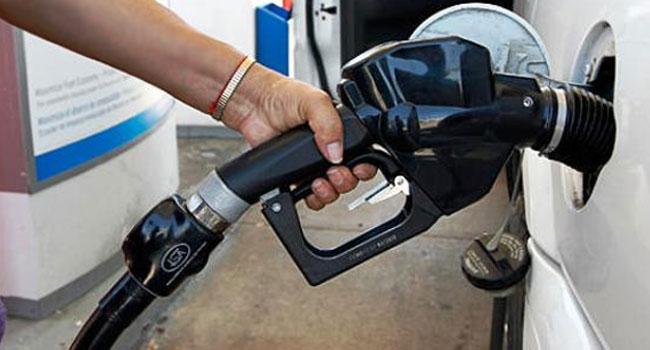


Nigerians are grappling with rising fuel prices across major cities as global oil market volatility linked to the Middle East conflict continues to push up the cost of petrol and transportation.
Amid growing public concern over the surge, President Bola Tinubu has directed the immediate deployment of 100,000 Compressed Natural Gas (CNG) conversion kits nationwide to help reduce reliance on petrol and ease transportation costs.
The directive was disclosed by the Executive Chairman of the Presidential Initiative on Compressed Natural Gas (Pi-CNG), Ismaeel Ahmed, after a meeting with the President at the State House in Abuja.
Ahmed said the President was closely monitoring global developments, particularly the impact of the ongoing conflict involving the United States, Israel and Iran, which has driven up international oil prices and increased domestic fuel costs.
According to him, Tinubu instructed the Pi-CNG programme to accelerate the rollout of gas-powered mobility solutions and expand infrastructure that will enable Nigerians to adopt cheaper and cleaner energy alternatives.
“The President is always seeking updates on global developments, especially the war in the Middle East and the rising cost of petrol and diesel. He wanted to know what we are doing at Pi-CNG and in the electric vehicle programme to scale up the availability of gas across the country so that Nigerians can enjoy lower transportation costs,” Ahmed said.
He disclosed that about 100,000 CNG conversion kits would be deployed within the next two to three weeks, enabling vehicle owners, including commercial tricycle operators, to convert their engines to run on natural gas.
Ahmed added that the initiative would also fast-track the development of CNG refuelling stations and electric vehicle charging infrastructure across the country, particularly along major transport corridors.
He noted that about 77 CNG refilling stations are currently at various stages of development nationwide, while discussions are ongoing with manufacturers interested in establishing assembly plants in Nigeria to support the emerging gas-powered mobility ecosystem.
The Pi-CNG programme is also collaborating with the Rural Electrification Agency (REA) to deploy solar-powered charging stations that will support electric mobility, especially in off-grid communities.
Meanwhile, petrol prices continue to vary across major cities, reflecting supply dynamics, logistics costs and fluctuations in global crude prices.
In Abuja, motorists currently buy petrol between N1,260 and N1,280 per litre, while prices in Lagos range from N1,200 to N1,300 per litre across different filling stations. In Kano, petrol sells for as high as N1,350 per litre, although some NNPC outlets offer slightly lower prices of about N1,240 per litre.
The rising fuel prices have triggered increases in transport fares, with commuters bearing the brunt of the adjustment as operators pass on higher fuel costs.
However, there may be some relief ahead as the Dangote Refinery recently reduced its petrol gantry price by N100 per litre, bringing it down to about N1,075, while the coastal price was adjusted to N1,050 per litre.
Global benchmark Brent crude had earlier surged to $115 per barrel before retreating to about $90, a development analysts say could help moderate fuel prices if the trend continues.
Chief Executive Officer of Petroleumprice.com, Jeremiah Olagide, said the reduction in Dangote Refinery’s gantry price could push petrol pump prices down to between N1,110 and N1,120 per litre in the coming days.
Despite these projections, motorists across the country continue to feel the immediate impact of higher pump prices, with transport costs rising sharply in cities where daily commuting distances and traffic congestion are significant.