
Olusola Bello
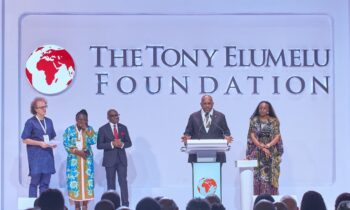
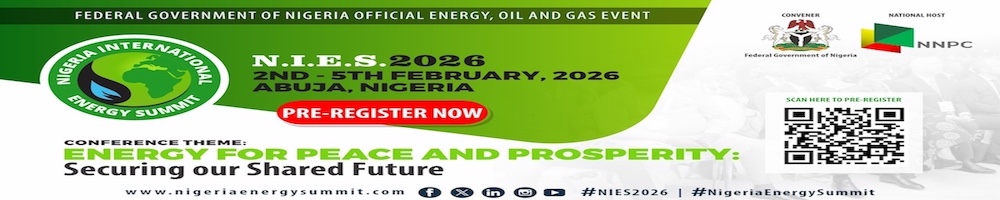
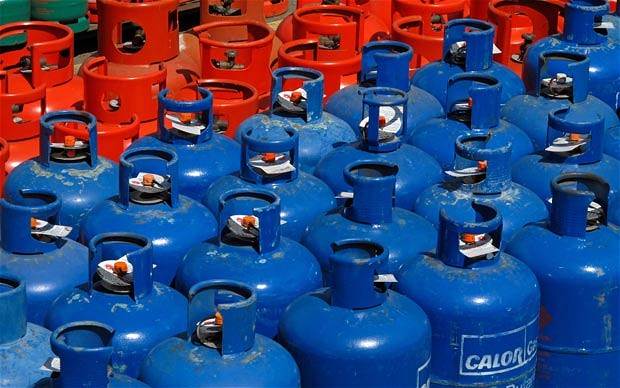
The Federal Government has established a 20 million Cylinder Injection Scheme through the National Gas Expansion Programme (NGEP) to solve the problem associated with the inability of Nigerians to embrace the use of cooking gas in the country. The minister of state for Petroleum Resources, Timipre Sylva stated this on Monday, at the opening ceremony of the 5th edition of the Nigeria International Energy Summit (NIES) held at State House, Aso Rock Abuja.
According to the minister, between5-10 million of these are to be introduced in pilot states this year.
He also disclosed that Liquefied Petroleum Gas (LPG) Fund in order of $50 million, in its first phase, in partnership with AfreximBank.
“LPG is set to be part of the destination as it is being used as a precursor for green hydrogen with zero emission. An eventual move to bio-LPG will allow countries like Nigeria to keep existing infrastructure in place, capitalize on already existing supply and distribution chains and reach net-zero at far lower cost. This, no doubt will help overcome the concern of stranded assets and Consumers will not have to re-invest in expensive electrical solutions if their gas appliances can be re-purposed for zero carbon LPG.”
He said at the heart of this administration is the vision to drive infrastructure and industrial development of the country in order to prosper her citizens and make life more meaningful to all.
“Natural gas ticks all the boxes as the vehicle to help government achieve the aspiration and that is why we embraced the resource to help turn around the economy by declaring year 2021-2030 as Nigeria’s decade of gas.”
“To demonstrate that we are indeed committed to our vision, the Decade of Gas has now become an integral part of the Federal Government Oil and Gas Road map.”
According to him, the government has embarked on a critical pathway to ensuring that the over 200 Trillion Standard Cubic Feet (TSCF) proven reserves of Natural gas in Nigeria is marshalled to engender domestic economic growth and development beyond 2030. Thus, we are driving to make natural gas our dominant primary energy source for use in the medium to Long term.
“Thankfully, our reliable partner, the Nigeria LNG Limited is not backing out. They are fully backing this initiative all the way,” he said.
He stated that in adopting global future fuels, energy-poverty and climate change nexus have to be both addressed simultaneously. It must be geared towards clean and sustainable sources.
“For countries such as Nigeria, which is rich in natural resources but still energy poor, the transition must not come at the expense of affordable and reliable energy for people, cities, and industry. On the contrary, it must be inclusive, equitable, and just—which means preserving the right to sustainable development and poverty eradication as enshrined in global treaties such as the Paris accord. It is evident that what makes the most sense from the point of view of “balancing energy security with environmental sustainability is the use of gas as a transition fuel.”