




…What Nigeria’s power sector has never lacked is funding announcements. What it has always lacked is accountability with consequences, regulation with genuine independence, and reform that ordinary citizens can feel in their homes and businesses.
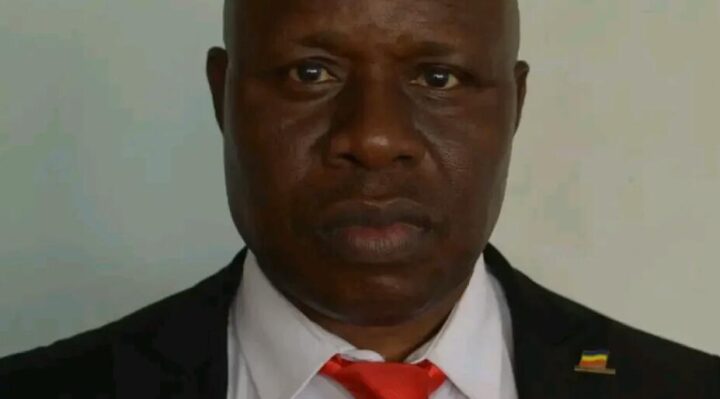
*By Ade Adesokan*
Your piece on the ₦3.3 trillion power plan arrives at a moment when Nigerians are exhausted by promises and starved of delivery, and you have done justice to that exhaustion with commendable intellectual honesty.
Your opening question cuts to the heart of the matter: can this sum be described as a “full and final settlement” of legacy debts accumulated between February 2015 and March 2025, meaningfully resetting a sector burdened by over a decade of unresolved obligations? It is the right question, and you pursue it with the rigour the subject demands.
You are correct to foreground the institutional dimension of the crisis. By highlighting the call for NERC to act dispassionately, you signal something that financial analysts often miss: that money without credible oversight has a way of disappearing in Nigeria’s power sector without leaving much light behind.
President Tinubu’s approval of the Presidential Power Sector Financial Reforms Programme, with 15 power plants already signing settlement agreements totalling ₦2.3 trillion and ₦223 billion already disbursed from the ₦501 billion raised so far, does suggest a more structured approach than previous interventions.
Special Adviser on Energy Olu Arowolo-Verheijen’s framing of the programme as being about restoring confidence across the entire value chain, not merely settling debts, is the kind of language that sounds right.
The question your article correctly raises is whether it will also prove true.
However, there is a context your article does not sufficiently address. The ₦3.3 trillion figure was not the original claim on the table.
The legacy debt was initially put at over ₦4 trillion before stakeholder scrutiny forced a downward revision to ₦3.3 trillion.
That disputed gap is not a minor accounting footnote. It speaks directly to the verification integrity you rightly question in your piece. If the headline figure itself had to be challenged and reduced before settlement could even begin, then the foundation of the entire exercise deserves sharper interrogation than you give it.
Your transparency argument is strong, but it would be stronger still if you had pressed that specific contradiction harder.
There is also a structural conflict of interest, that your article leaves largely unexamined. The Federal Government retains equity shareholding in all eleven Distribution Companies.
This means the FG is simultaneously a creditor, a shareholder, and the authority overseeing regulation of the same sector it is bailing out. Who then truly benefits from this debt settlement? That question sits uncomfortably at the centre of the ₦3.3 trillion plan, and your call for transparency would carry far sharper force if it confronted this reality directly.
On the ₦501 billion already raised and the ₦223 billion disbursed as initial funding tied to the 15 power plants, you acknowledge the structured approach and that is fair. But the more urgent question your article stops short of demanding is what those funds have actually produced in electricity supply hours. Nigerians do not measure reform in disbursement tranches. They measure it in hours of power per day. Holding the government to that standard explicitly and consistently would have sharpened your arguement considerably.
Your article would also have benefited, from engaging the broader structural reforms already in motion within the electricity value chain.
President Bola Tinubu has constituted an 11-member committee to ensure the smooth incorporation of the Grid Asset Management Company Limited, GAMCO, a development that represents a significant and concrete step in restructuring how grid electricity is managed in Nigeria.
This is not a proposal on paper. It is an institutional process already set in motion and it deserves prominent mention in any serious assessment of the reform landscape.
Equally significant is the unbundling of the Transmission Company of Nigeria into two distinct entities, separating its functions in a manner designed to improve efficiency and reduce the concentration of failure risk at a single point.
Add to this the decentralisation of NERC into state-level regulatory structures, bringing oversight closer to the distribution realities on the ground, and you have a reform architecture that goes well beyond debt settlement.
These are credible pathways forward in the electricity value chain that your piece would have been stronger for interrogating.
Your conclusion, remains the most powerful passage in the entire piece. The observation that every new bailout will be greeted with doubt rather than applause until delivery is demonstrated is not pessimism.
It is the rational response of a population that has been promised the same outcomes too many times.
President Tinubu’s confirmation that Series II of the programme will commence this quarter adds urgency to that observation.
The clock is already running on the next phase, and the benchmarks for the first have not yet been publicly met.
Your piece asks the right questions. The sector’s history, unfortunately, already whispers the answers. What Nigeria’s power sector has never lacked is funding announcements. What it has always lacked is accountability with consequences, regulation with genuine independence, and reform that ordinary citizens can feel in their homes and businesses.
The 11-member GAMCO committee, the TCN unbundling, and the decentralisation of regulatory authority are promising architectural changes, but architecture without enforcement remains blueprints.
Until those conditions are consistently met, the size of any intervention will remain secondary to the credibility of its execution. You have made that case well. Push it even harder next time.
*Ade Adesokan is a public affairs commentator and international human rights advocate*