




Nigeria’s electoral umpire now finds itself at the centre of a deepening political storm—one that raises uncomfortable questions about the integrity of democratic institutions and the future of multiparty politics ahead of the 2027 general elections.
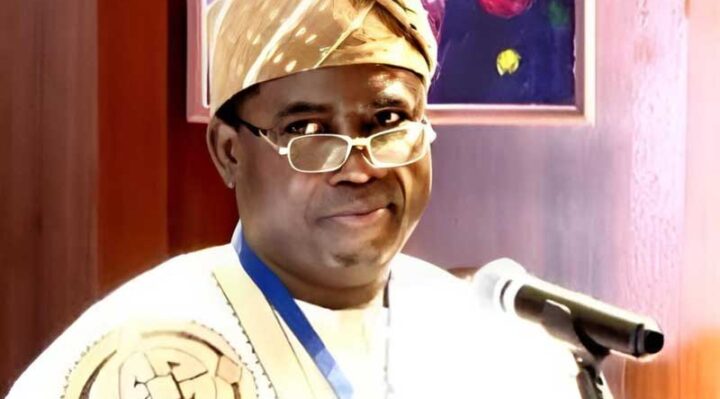
At the heart of the controversy is Joash Amupitan, Chairman of the Independent National Electoral Commission (INEC), who has firmly denied allegations that he is complicit in any plan to steer Nigeria toward a one-party state. Speaking on national television, Amupitan insisted that Nigeria’s constitutional framework remains firmly rooted in multiparty democracy, dismissing claims of institutional bias as unfounded.
Yet, his defence has done little to calm a rapidly escalating backlash from opposition leaders, who argue that recent actions by INEC tell a different story.
Leading the charge is David Mark, National Chairman of the African Democratic Congress (ADC), flanked by a formidable coalition of political heavyweights including Atiku Abubakar, Peter Obi, Rabiu Kwankwaso, Rauf Aregbesola, and Rotimi Amaechi. Their accusation is stark: that the administration of Bola Ahmed Tinubu is leveraging INEC to systematically weaken opposition parties and consolidate political dominance.
The immediate trigger for this confrontation is INEC’s decision to delist key ADC leaders from its official portal, citing compliance with a court order to maintain the status quo ante bellum pending resolution of an internal leadership dispute. While INEC maintains that it is merely obeying judicial directives, the opposition sees something more troubling—a selective interpretation of the law that effectively paralyses a political party at a critical moment.
This is where the controversy sharpens into a broader democratic dilemma.
INEC’s argument rests on legal caution: that actions such as party congresses or conventions could violate subsisting court orders and ultimately invalidate electoral outcomes, as seen in past cases like the Zamfara State electoral debacle of 2019. The Commission’s warning is not without precedent; Nigerian courts have repeatedly nullified victories where due process was breached.
However, the opposition counters that INEC’s interpretation of “status quo” is not only flawed but dangerously interventionist. By effectively stripping the ADC of recognized leadership, they argue, the Commission has overstepped its constitutional bounds and assumed powers it does not possess—namely, determining internal party leadership.
For critics, this is not an isolated incident but part of a broader pattern. With the ruling All Progressives Congress (APC) already commanding overwhelming influence—controlling a vast majority in the National Assembly and most state governments—the fear is that institutional neutrality is eroding at a time when it is most needed.
Statements from the Peoples Democratic Party (PDP) further underscore the growing anxiety. The party warns of a creeping normalization of institutional capture, where agencies meant to safeguard democracy are perceived to be instruments of political advantage. Such perceptions, whether accurate or exaggerated, carry real consequences: they erode public trust, heighten political tension, and risk delegitimizing future elections.
What makes this moment particularly delicate is timing. With key off-cycle elections in states like Osun and Ekiti approaching, and the broader 2027 electoral cycle on the horizon, any hint of bias—real or perceived—could inflame an already polarized political environment.
To be clear, INEC is right to emphasize adherence to the rule of law. Electoral credibility depends on strict compliance with legal frameworks. But legality, in isolation, is not enough. In a democracy as fragile and contested as Nigeria’s, perception is as powerful as procedure. When decisions appear to disproportionately disadvantage opposition actors, even if legally justified, they risk being interpreted as politically motivated.
The opposition’s demand for the resignation or removal of the INEC Chairman may be politically charged, but it reflects a deeper crisis of confidence. And confidence, once lost, is difficult to restore.
Ultimately, this episode is a test—not just for INEC, but for Nigeria’s entire democratic architecture. The Commission must not only be impartial; it must be seen to be impartial. Where ambiguity exists, transparency must prevail. Where legal interpretations are contested, judicial clarification—not administrative action—should be the path forward.
Nigeria has walked this road before. The lessons of past electoral crises are clear: when institutions falter, the entire democratic system bears the cost.
As the 2027 elections draw closer, the stakes could not be higher. The question is no longer just whether Nigeria is constitutionally a multiparty state. It is whether, in practice, its institutions are strong—and fair—enough to keep it that way.