


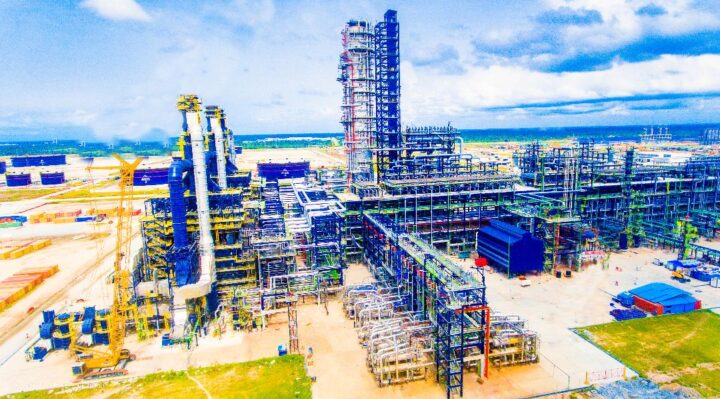


The Dangote Petroleum Refinery has resumed the domestic sale of Premium Motor Spirit (PMS), commonly known as petrol, in naira after a week-long switch to dollar-denominated transactions, while increasing its ex-depot price by N140 per litre, a move expected to influence fuel prices across Nigeria.
The 650,000-barrel-per-day refinery announced the decision in a notice issued by its commercial department on Wednesday, confirming that local marketers can once again purchase petrol in naira under a revised pricing structure.
The refinery’s gantry price has increased from N1,075 per litre to N1,215 per litre, representing a 13.02% rise. Its coastal loading price also climbed from N1,441,575 per metric tonne to N1,602,495 per metric tonne, with the new rates taking immediate effect.
According to the notice titled “PMS Price Change Communication,” all pending gantry orders would be repriced under the new pricing template.
“Please be advised that all unloaded gantry volumes will be subject to repricing at the new price, which is effective 22nd July 2026. Kindly proceed with placing your order,” the refinery said.
Return to Naira Sales Ends Brief Dollar Pricing Regime
The announcement ends a controversial one-week period during which Dangote Refinery suspended truck loading and introduced dollar-denominated pricing for refined petroleum products, citing challenges in sourcing crude oil under the Federal Government’s naira-for-crude arrangement.
The temporary policy disrupted fuel supply across the downstream market, forcing marketers to rely on private depots where ex-depot prices surged as product availability tightened.
Industry pricing platform Petroleumprice.ng confirmed the refinery’s return to naira transactions.
Chief Executive Officer of Petroleumprice.ng, Jeremiah Olatide, said marketers had already been notified of the resumption of gantry operations under the revised pricing structure.
“Yes, the refinery has returned to pricing its product in naira,” he confirmed.
Dollar Sales Triggered Market Disruptions
The refinery had suspended both gantry and coastal loading operations on July 15, introducing dollar pricing for petrol, diesel and aviation fuel.
During that period, private depot prices reportedly rose from about N1,075 per litre to approximately N1,275 per litre, reflecting an increase of about 18.6% as available supplies tightened.
Independent petroleum marketers also halted purchases from the refinery, arguing that sourcing foreign exchange for domestic fuel transactions was unsustainable.
Industry stakeholders warned that continued dollar pricing would significantly increase Nigeria’s foreign exchange demand, weaken the naira and ultimately raise fuel prices nationwide.
Based on Nigeria’s estimated daily petrol consumption of around 50 million litres, analysts estimated that marketers would require approximately $40 million every day, or more than $14 billion annually, to sustain purchases under the dollar payment model.
Refinery Cited Crude Supply Challenges
Dangote Refinery had defended the temporary policy, explaining that inadequate crude oil supply under the government’s naira-for-crude initiative forced it to procure additional crude on the international market using US dollars.
Under the suspended pricing regime, the refinery sold:
- Petrol (PMS): $0.779 per litre
- Automotive Gas Oil (Diesel): $1.087 per litre
- Jet A1 Aviation Fuel: $0.942 per litre
A senior regulatory official had earlier stated that the refinery’s decision did not violate the provisions of Nigeria’s Petroleum Industry Act (PIA).
According to the official, the refinery was seeking to recover rising operating costs after absorbing higher crude procurement expenses.
Government Intervention and Ongoing Talks
The Federal Government subsequently intervened following concerns raised by petroleum marketers over the implications of dollar-denominated fuel sales for foreign exchange demand, fuel availability and consumer prices.
Industry sources say discussions between the Dangote Group and the government regarding the future of the naira-for-crude arrangement are continuing.
While the refinery has resumed naira transactions, its new ex-depot price of N1,215 per litre remains below the approximately N1,275 per litre charged by fuel importers, potentially preserving some price competitiveness.
Market analysts expect the return to naira transactions to restore normal product evacuation and improve fuel distribution after the week-long disruption.
Higher Prices May Push Up Pump Prices
Despite the return to local currency sales, the increase in the refinery’s ex-depot price is expected to feed through the downstream supply chain, potentially resulting in higher retail pump prices unless offset by increased competition or a decline in international crude oil prices.
Petrol was already selling for about N1,300 per litre in Lagos and several other parts of Nigeria on Wednesday as global oil prices hovered around $94 per barrel, driven by renewed geopolitical tensions in the Middle East.
The latest pricing adjustment underscores the growing sensitivity of Nigeria’s downstream petroleum market to both domestic crude supply arrangements and global energy market developments, as policymakers seek to balance energy security, foreign exchange stability and fuel affordability.