


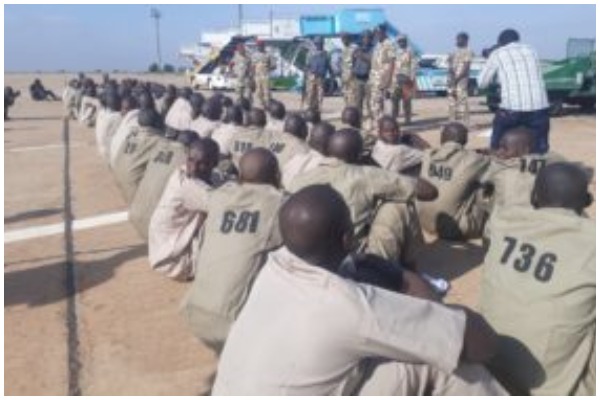


The government of Borno State has defended Nigeria’s controversial rehabilitation and reintegration programme for former insurgents, insisting that safeguards are in place to discourage repentant militants from returning to extremist violence.
State Commissioner for Women Affairs and Social Development Zuwaira Gambo said former fighters undergoing the deradicalisation process are required to swear an oath on the Quran before being reintegrated into society.
Speaking in a televised interview, Gambo said the oath forms part of the broader “Borno Model” rehabilitation framework aimed at reducing recidivism among former insurgents linked to extremist groups operating in northeastern Nigeria.
“When they come to us through all the processes of the Borno model, the last thing they do is take an oath with the Quran,” she said, arguing that the religious implications of violating such an oath serve as a deterrent against rejoining armed groups.
Debate Intensifies Over Nigeria’s Reintegration Strategy
The comments come amid growing public debate over Nigeria’s Operation Safe Corridor initiative, a federal deradicalisation, rehabilitation and reintegration programme for former insurgents.
In April, authorities graduated and prepared to reintegrate 744 former militants under the programme, including hundreds from conflict-affected northeastern states such as Borno, Adamawa and Yobe.
The move sparked criticism from civil society groups, legal experts and victims’ advocates, who questioned transparency, accountability and the long-term security implications of reintegrating former fighters into local communities.
Human Rights and Accountability Concerns
Nigerian Bar Association President Afam Osigwe said reintegration efforts should not overlook the concerns of victims affected by years of insurgency and violence.
Critics argue that communities devastated by extremist attacks may view the programme as rewarding perpetrators without sufficient justice, disclosure or reconciliation measures.
Similarly, Amnesty International Nigeria Country Director Isa Sanusi called for greater transparency regarding the identities and backgrounds of those being rehabilitated.
Sanusi said authorities should provide clearer information about the roles former fighters played during the insurgency and whether they were directly involved in violent crimes.
“There are serious concerns that some of those called repentant sometimes go back to what they do,” he warned.
Security and Funding Challenges Persist
Borno officials acknowledged that the reintegration programme faces significant operational challenges, particularly around funding and long-term support.
According to Gambo, authorities must provide food, housing, education and social support services for participants undergoing rehabilitation and reintegration.
The programme forms part of broader efforts by Nigerian authorities to address the long-running insurgency in the northeast, where extremist violence has displaced millions, disrupted economic activity and strained humanitarian systems for more than a decade.
Broader Implications for Stability and Recovery
Security analysts say the debate reflects the complex balance between counterterrorism, reconciliation and post-conflict recovery in Nigeria’s northeast.
While reintegration programmes are widely recognised internationally as part of post-conflict stabilization efforts, experts note that success often depends on transparency, community acceptance, victim support and sustained economic reintegration opportunities.
For international observers and development partners, the controversy also highlights the wider challenge facing African states attempting to combine military operations with rehabilitation strategies in regions affected by violent extremism.