




By Dan D. Kunle
Nigeria’s ambition to become Africa’s dominant gas economy is both understandable and necessary. With more than 200 trillion cubic feet of proven natural gas reserves—the largest in Africa—the country possesses a resource capable of transforming its economy, strengthening energy security and accelerating industrialisation.
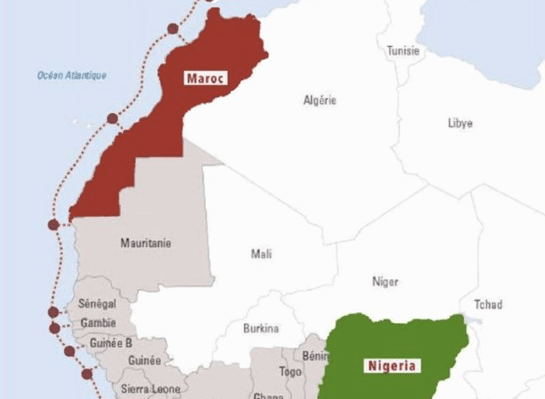
That ambition underpins the proposed African Atlantic Gas Pipeline (AAGP), formerly known as the Morocco–Nigeria Gas Pipeline. The project envisions a nearly 7,000-kilometre pipeline stretching from Nigeria’s Niger Delta through more than a dozen West African coastal states before terminating in Morocco, where the gas could ultimately be transported into European markets.
At an estimated cost of $27 billion, the pipeline ranks among Africa’s most ambitious energy infrastructure proposals. It promises regional integration, expanded energy access, new export markets and stronger economic cooperation across West Africa.
Those aspirations deserve recognition. Yet infrastructure of this scale cannot be justified by political goodwill alone. It must ultimately satisfy the far less forgiving tests of commercial viability, financing, resource availability and long-term economic value.
The critical question is no longer whether the project is politically attractive. It is whether it represents the best strategic use of Nigeria’s natural gas resources.
That question deserves careful examination before the country commits itself to another multi-decade infrastructure undertaking.
The Difference Between Gas Reserves and Commercial Gas
Much of the optimism surrounding the African Atlantic Gas Pipeline rests on a familiar statistic: Nigeria possesses more than 200 trillion cubic feet of proven gas reserves.
The figure is impressive, but it is also widely misunderstood.
Gas reserves beneath the ground do not automatically translate into gas available for domestic consumption or export. Commercial gas requires years of investment across the entire value chain. Fields must be developed. Wells drilled. Gathering systems constructed. Processing facilities installed. Compression stations commissioned. Transmission pipelines completed. Buyers secured through long-term contracts. Financing arranged across upstream and midstream operations.
Only then does underground gas become a marketable commodity.
Nigeria has abundant geological resources, but converting those resources into reliable commercial supply has proved far more difficult.
That distinction lies at the heart of the debate surrounding the African Atlantic Gas Pipeline.
Nigeria’s Domestic Energy Challenge Remains Unresolved
Despite its vast reserves, Nigeria continues to struggle with chronic shortages of commercially available natural gas.
Power generation remains constrained by inconsistent gas supply. Electricity plants frequently operate below installed capacity because sufficient feedstock is unavailable. Manufacturers continue to cite unreliable energy as one of their greatest operational challenges, while several gas-dependent industrial projects have experienced years of delay.
The consequences extend far beyond electricity generation.
Reliable gas supplies are essential for fertiliser production, petrochemicals, methanol, steel manufacturing, aluminium smelting, glass production and numerous other industries capable of generating employment, exports and economic diversification.
These sectors represent the foundation of any modern industrial economy.
Yet many remain constrained by inadequate domestic gas infrastructure.
Against that backdrop, Nigeria’s pursuit of a large-scale export pipeline inevitably raises an uncomfortable policy question: should the country prioritise transporting gas thousands of kilometres to overseas markets before fully supplying its own economy?
That is not an argument against exports.
It is an argument about sequencing.
Countries that have successfully built globally competitive energy industries typically secured domestic supply before committing large volumes to long-term export obligations.
Nigeria should be no exception.
The Questions Investors Will Ask
Political agreements can launch diplomatic initiatives. They cannot replace commercial fundamentals.
Before the African Atlantic Gas Pipeline progresses beyond political declarations, several questions require clear and transparent answers.
How much natural gas will Nigeria require to meet domestic electricity demand over the next three decades?
How much gas has already been committed under existing domestic and international contracts?
Which producing fields will supply the proposed pipeline?
Who will finance the upstream developments necessary to sustain export volumes?
Have long-term gas purchase agreements been negotiated with credible buyers?
What commercial framework will underpin investment decisions?
These are not academic questions.
They are the same questions international lenders, institutional investors and infrastructure funds will ask before committing billions of dollars to a project whose commercial lifespan could extend beyond forty years.
Without satisfactory answers, the pipeline remains a strategic aspiration rather than an investment proposition.
Infrastructure Alone Does Not Create an Energy Economy
Large infrastructure projects often create the impression that physical assets automatically generate economic activity.
Experience suggests otherwise.
Pipelines transport gas.
They do not produce it.
Nor do they guarantee that sufficient gas will be available when operations commence.
The commercial success of any transmission pipeline depends entirely on the strength of the upstream production system, the reliability of processing infrastructure, the availability of paying customers and the contractual arrangements linking every stage of the value chain.
Absent those conditions, even the most sophisticated pipeline risks becoming an underutilised national asset.
Nigeria’s experience over the past two decades demonstrates that infrastructure planning must proceed in tandem with upstream development, market creation and industrial policy.
Separating those elements creates significant commercial risk.
A National Gas Strategy Must Come Before Export Expansion
The African Atlantic Gas Pipeline should not be assessed solely as a transportation project.
It should be evaluated within the broader context of Nigeria’s long-term gas strategy.
That strategy should begin with a comprehensive national gas balance—one that transparently identifies commercially developed reserves, domestic demand projections, existing contractual obligations, industrial requirements and realistic export capacity.
Such a framework would enable policymakers, investors and citizens to understand how much gas Nigeria can reliably dedicate to domestic development and how much remains available for future export commitments.
Without that clarity, the country risks making international commitments before fully understanding its own resource allocation.
Natural gas represents one of Nigeria’s greatest competitive advantages.
Managing it effectively will require discipline, transparency and careful prioritisation—not simply ambitious infrastructure announcements.
The African Atlantic Gas Pipeline may yet become a transformative regional project.
But before Nigeria builds a pipeline across West Africa, it must first answer a more fundamental question: does it have a commercially sustainable gas strategy at home?
To be continued in Part II tomorrow: Lessons from the AKK Pipeline, Financing Risks, and the Commercial Reality of a 13-Country Gas Corridor.