


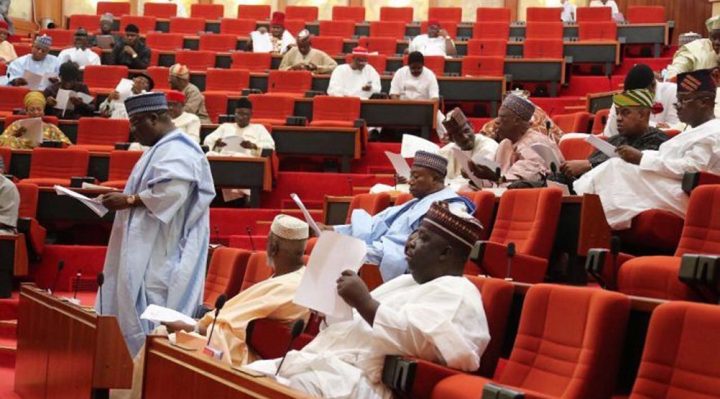


Akpabio, Oshiomhole Clash as Nigerian Senate Tightens Leadership Eligibility Rules
Tensions flared in Nigeria’s Senate on Wednesday as Senate President Godswill Akpabio and Senator Adams Oshiomhole engaged in a heated exchange, just a day after lawmakers amended standing rules to restrict eligibility for key leadership positions.
The confrontation briefly disrupted plenary proceedings, underscoring rising political friction within the upper chamber following the rule changes—seen by analysts as a move with implications for power dynamics in Africa’s largest democracy.
The dispute began when Akpabio commenced reading the Votes and Proceedings from Tuesday’s session. Oshiomhole attempted to raise a point of order but was ruled out of order, with the Senate President citing the Senate Standing Orders 2023 (as amended), which prohibit such interventions at that stage.
Despite clarification from former Chief Whip Orji Uzor Kalu, who confirmed that points of order are not permitted during the process, Oshiomhole persisted. Senate Whip Tahir Monguno subsequently warned against further disruption, noting that disciplinary measures could be enforced.
Akpabio issued a stern warning during the session: lawmakers must adhere strictly to parliamentary rules or face sanctions, reinforcing the leadership’s intent to maintain order amid heightened sensitivities.
Proceedings resumed after about 10 minutes, with Senator Adamu Aliero moving for adoption of the Votes and Proceedings, seconded by Senate Minority Leader Abba Moro.
Rule Changes Reshape Senate Power Structure
The clash comes against the backdrop of newly amended Senate rules that significantly tighten eligibility for presiding and principal offices in the 11th National Assembly.
Under the revised framework:
- Only senators with at least two consecutive terms immediately preceding nomination can contest presiding positions.
- Leadership nominations must follow a strict ranking hierarchy, prioritizing former Senate Presidents and ranking lawmakers.
- The same two-term requirement applies to principal offices.
The amendments effectively exclude first-term legislators—including Oshiomhole—from contesting top leadership roles.
Market and Governance Implications
For international investors and policy watchers, the development signals potential shifts in Nigeria’s legislative stability and governance outlook. While rule-based institutional strengthening can enhance predictability, internal disputes may also reflect underlying political contestation that could influence legislative efficiency—particularly on economic reforms, fiscal policy, and energy sector legislation.
Nigeria’s Senate plays a critical role in approving budgets, confirming executive appointments, and shaping regulatory frameworks that directly impact the business environment. As such, evolving power dynamics within the chamber are closely monitored by global stakeholders.
The Senate has yet to issue an official statement elaborating on the broader rationale behind the amendments, though insiders suggest the move is aimed at reinforcing experience-based leadership and institutional continuity.